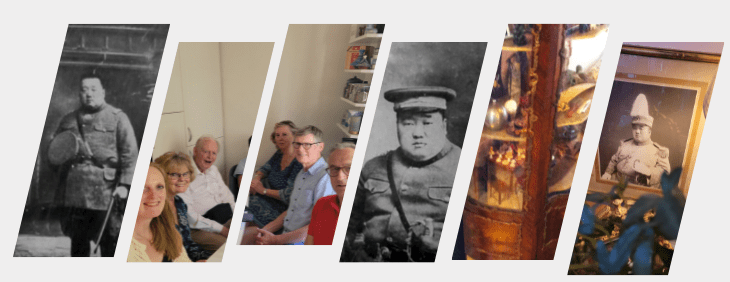
Time has come for the Mystery Man to be properly named and put in context. Thanks to Haifeng, a Chinese blogreader and avid researcher, the mystery man from my grandmother’s old glass cabinet has now been identified!
If you have followed my blog, you know that I have written about this man and tried to connect his photo to a name for quite some time.
And, you would also know that I have recently gotten some unexpected and much appreciated help from this very Haifeng concerning my family’s history in China. Haifeng has written a book about the Swedish missionaries, and we started to email each other with some questions to fill in blanks in our respective research. One day, I thought to ask about the portrait of the Mystery Man that I have wondered about for so long. I did not have much hope that Haifeng would know anything about this man, but perhaps he could tell me what kind of uniform the man was wearing? Much to my surprise, Haifeng could answer this question quite easily:
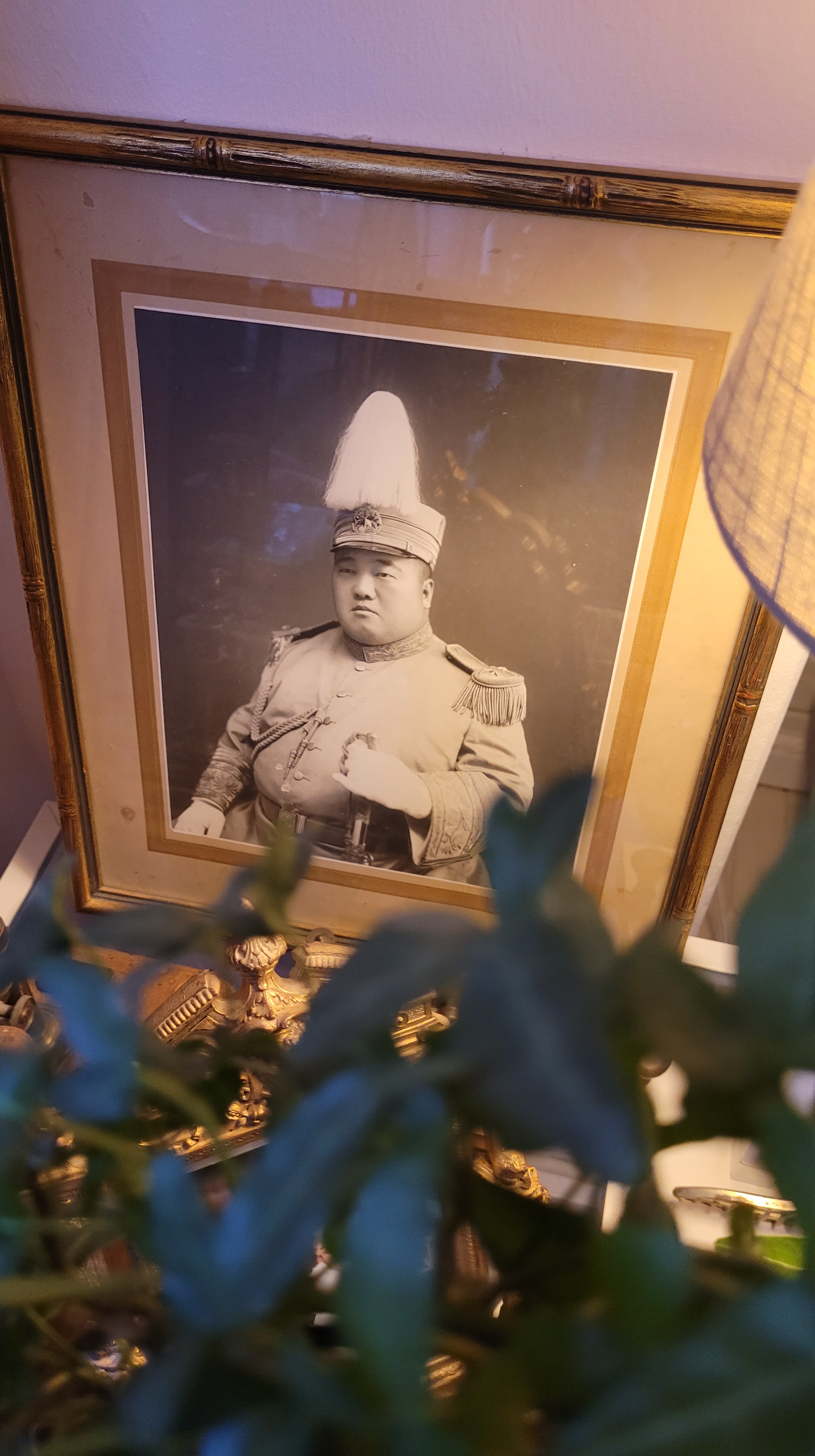
“…it is a uniform of the Beiyang Army (from 1895 to 1928). The army’s clothing in the photo is that of a senior officer. The General’s clothes has three stars on shoulder, your picture has two stars.”
Apparently the Beiyang Army was a Qing Dynasty army. My Mystery Man’s photo must have been taken when he was a captain or similar in that army. Haifeng asked if I wanted to know his name, and said that he might have to go to the national archives to try to find out, but that it wouldn’t be easy finding a person from nothing more than a photo and the connection to an army. Of course, I could not ask him to do that, but I did say it would be wonderful if he would let me know, should he stumble across any information about this man.
Much to my surprise, Haifeng got back to me not long after. When I opened his email I got to read the following:
“Hu Jingyi (胡景翼,1892-1925), also known as Li Sheng , was born on 14 June 1892 in Fuping County, Shaanxi Province.
Hu Jingyi signed his name “Fifteen Years Old” in 1906 and posted his own leaflet “Advising Women to Let Go of Their Feet”; in 1908, he was admitted to the Jianben Academy founded by Jiao Zijing and other revolutionaries of the League of Nations, where he studied the war and the biographies of famous people in China and abroad. Because of his admiration for the achievements of King Xu Da of the Ming Dynasty.
When he was in school, he secretly called a meeting with his classmates to promote the awakening of the people against the partition of China by the Great Powers, and in 1909, he and Jing Miemiao raised money to buy guns to help Zheng Sicheng, an anti-Qing volunteer, to carry out his activities in the northern part of Shaanxi Province. In 1910, he was introduced to the United League of Nations (ULD) by Jing Miemiao, Song Xiangchen, and others to join the United League of Nations (ULN) to advocate the unification of the Gothamist Society and the Swordsmen to oppose the Qing Dynasty.
He attended the ceremony of the alliance between the League and the Gothic Church held at the Big Wild Goose Pagoda in Xi’an on 9 July 1910. In the summer of 1911, he liaised with Jing Bimiao and Zou Ziliang to gather more than 2,000 people in Miaowan, Yaozhou, to wait for an opportunity to revolt. In October of the same year, he rose up in response to the Xi’an Uprising at Yawang Mountain in Yaoxian County, served as the first standard of the Jingbimiao Department, and led his department to fight with the Qing army in Xunyi, Chunhua and other places, with outstanding achievements.
After the establishment of the Republic of China, he went to Japan to study and enrolled in the Zhenwu Preparatory School. After that, because of the independence of Mongolia instigated by the Czarist Russia, the students who stayed in Japan pushed Hu Jingyi to be the representative, and returned to his country to organise the army of conquering Mongolia. After arriving at Shanghai, because Yuan Shikai had already compromised with the Tsarist Russia, he took part in the “Second Revolution”.
He went to Japan again in the summer of 1914 to study military affairs in Hao Ran Lodge, and before he returned to China after graduation, he visited Sun Yat-sen through the recommendation of Yu Youren, and gained great respect from him. Later served as right wing army commander-in-chief of Shaanxi Jingguo army, the fourth road commander, commander-in-chief. He was the important leader of the capital revolution in October 1924, after the overthrow of Cao Kun’s regime, served as deputy commander-in-chief of the national army and commander of the second army, Henan military affairs supervisor and governor of the province, etc.
On 10 April 1925, he died in Kaifeng Henan province after a long illness. In November of the same year, buried in the northern foot of Mount Hua under Wang Mangtai.
General Hu Jingyi Mausoleum, located in the southeast corner of Huashan Rongjun Martyrs’ Mausoleum, with a length of 36 metres from north to south and a width of 15.5 metres from east to west, covering an area of about 558 square metres, is an important patriotism propaganda and education base in Huayin City, and is included in the seventh batch of key cultural relics protection units in Shaanxi Province.”
More than I imagined
Imagine my surprise reading all of this! This man, Hu Jinqyi, was a revolutionary leader and a warlord, and is obviously revered in China today – with a whole maoseleum to his name. The photo I have must be from the beginning of his career, though he did not live for very long.
He was of course an important man in the area where my missionary great grandparents worked. My grandmother always told me about him as being a nice man, saving the family. Exactly which situation they were saved from, I cannot remember. But, I think it is safe to say that a man who published a leaflet about letting women’s feet go, would be sympathetic to missionaries with the same agenda. The missionaries were advocating against the foot binding practice in China, and Christian women were to let their feet grow naturally.
Family reunion
The other day, I held a small family gathering at my place, where my father’s cousins met and exchanged stories and looked at photographs from China. My aunt also remembered this story about Hu Jingyi, but noone could specify the situation further. We all agreed that the fact that he was in the glass cabinet, was proof enough that he had been instrumental for the family in a great way.
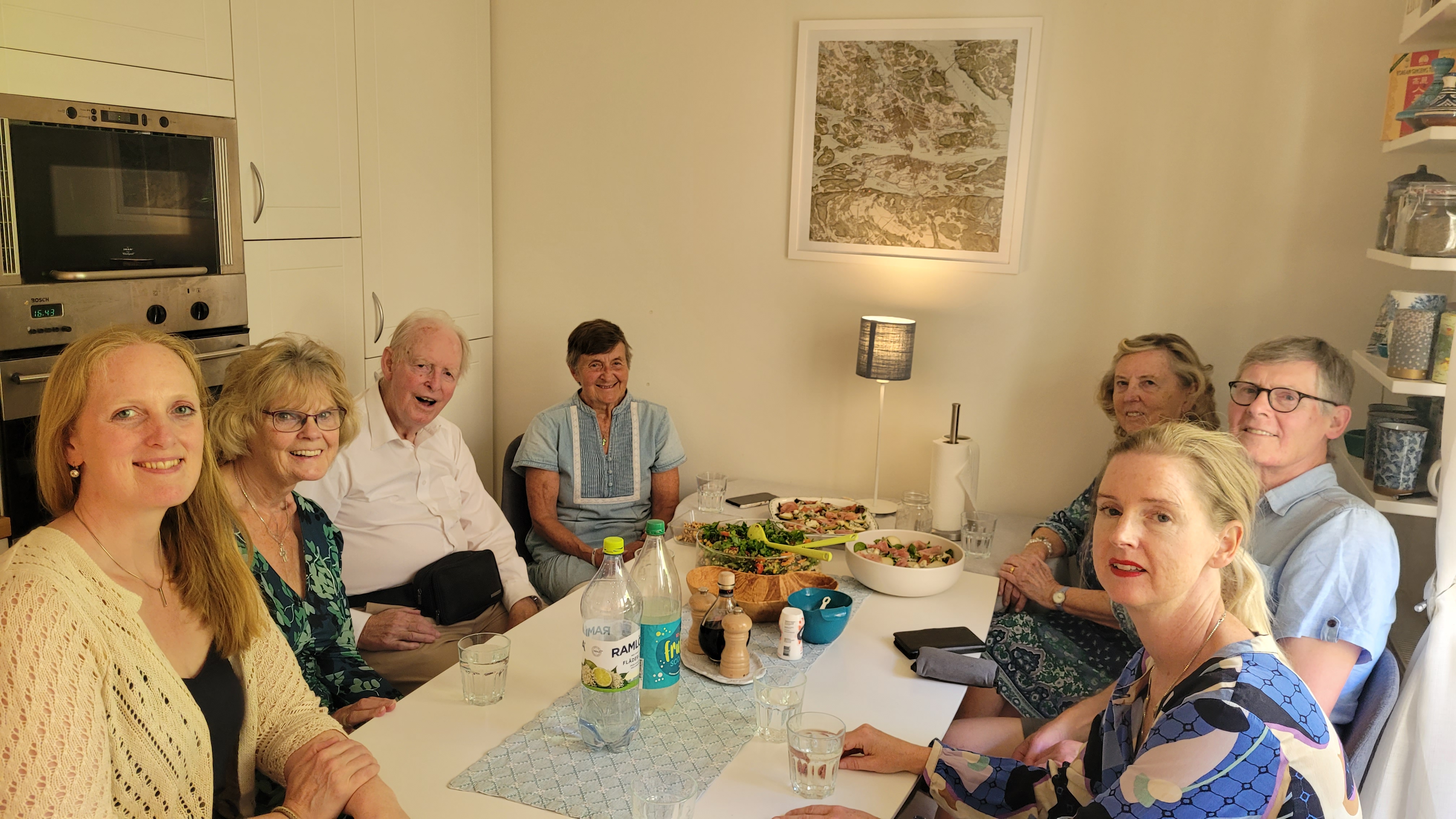
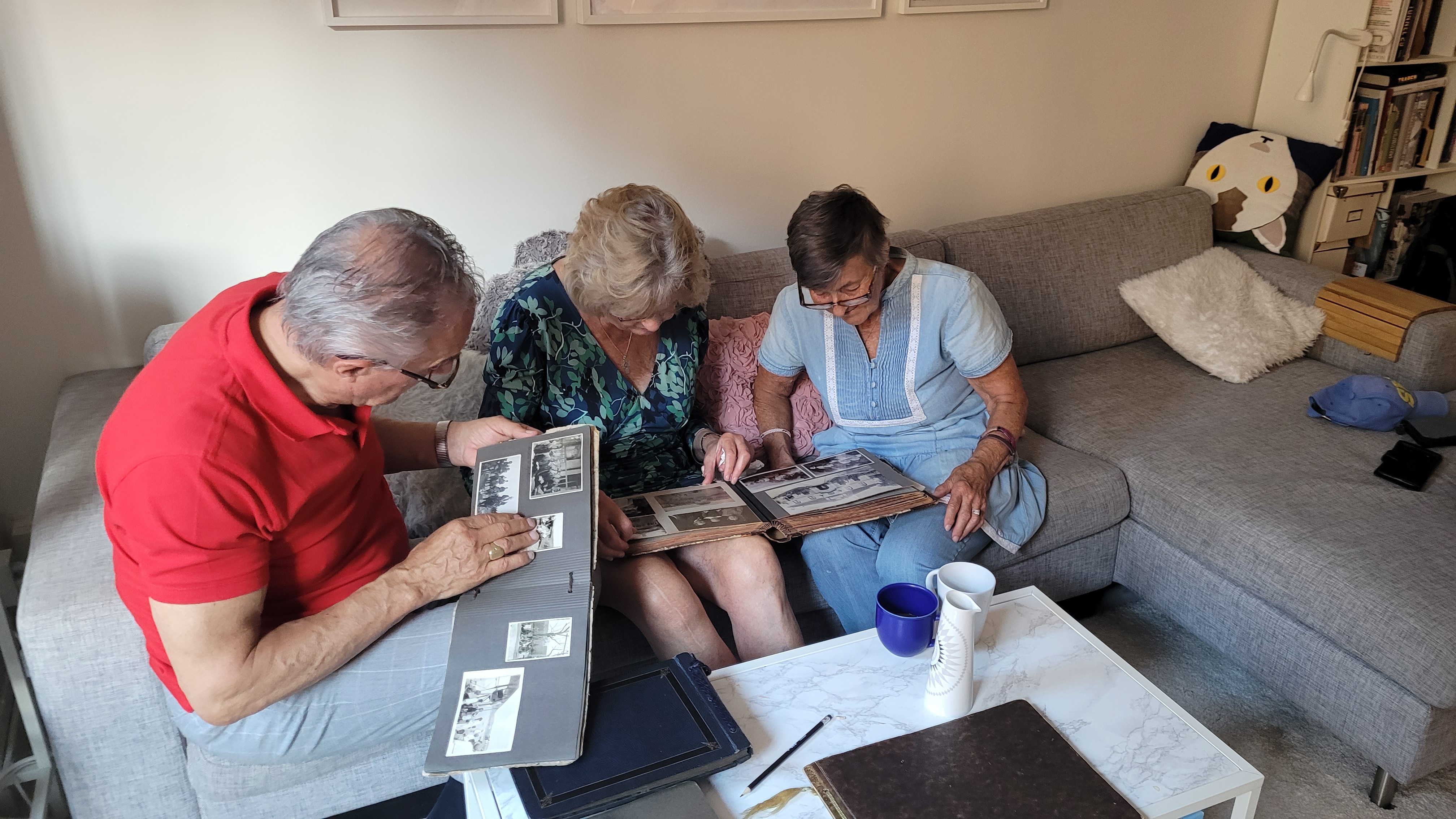
At the time of Mr Hu joining the Chinese Revolutionary army in 1910, Olga had been in China for 5 years, and Robert and Dagny had been there for 17 years. In 1913, both my grandparents – Edna and Rudolf – were born in the region Shaanxi in China. Mr. Hu led the Wuhan uprising in 1911, at 19 years of age. In 1913, he was a general on the Kuomintang side in the “Second revolution” against Yuan Shikai. Thus, the photo my grandparents kept, must have been taken before that, as he was not yet a general at the time of the photo.
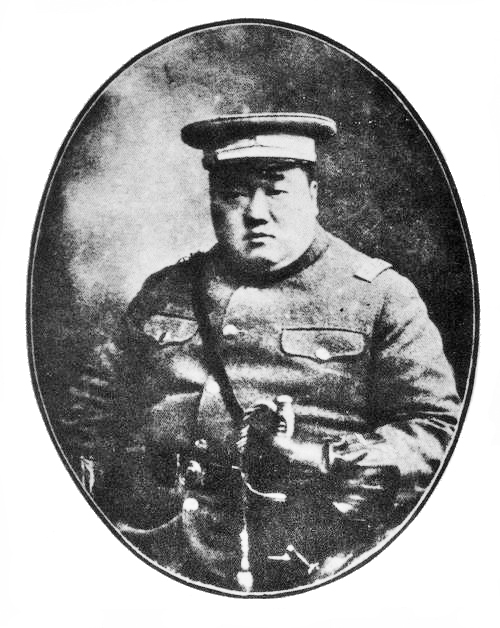
Haifeng also sent me links to several documentaries about Hu Jingyi, who died pretty young at only 33 years of age.
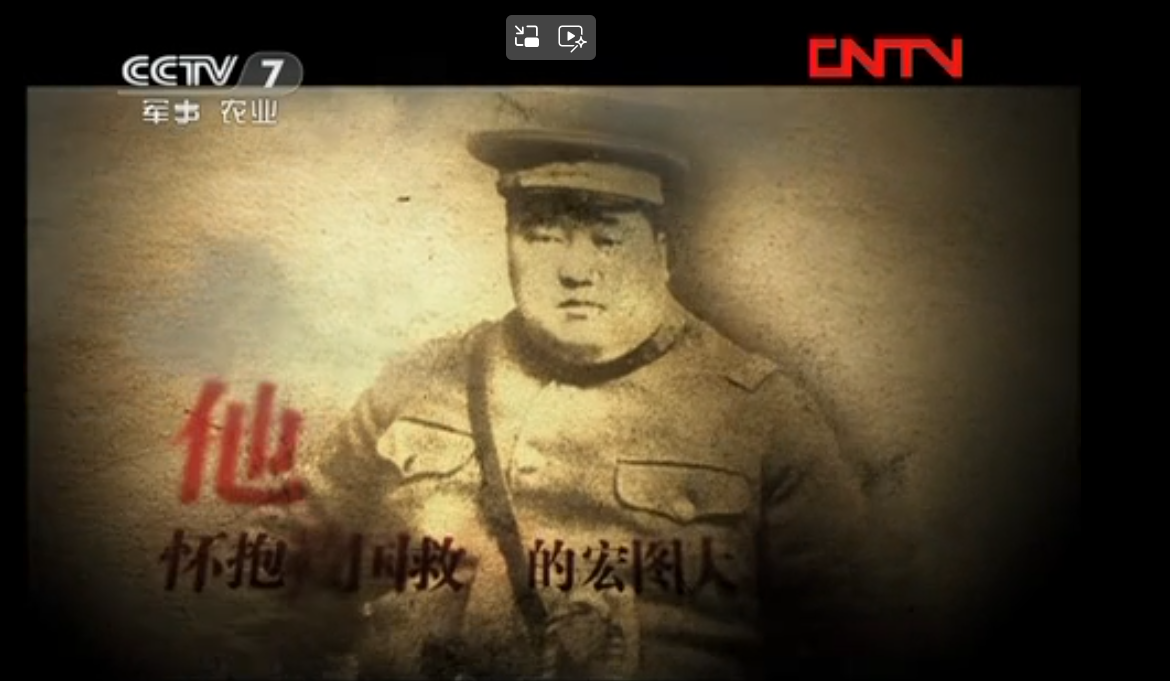
CCTV Video with the story of Mr Hu. Unfortunatly I cannot understand what is being said, but it contains a lot of visual material of Mr Hu, which correspond to the framed photo in my possession.
CCTV Videos:
《传奇将军胡景翼 第1集 锋芒初显》 20120214 (cctv.com), 《传奇将军胡景翼 第2集 靖国之军》 20120215 (cctv.com), 《传奇将军胡景翼 第3集 忍辱负重》 20120216 (cctv.com), 《传奇将军胡景翼 第4集 北京政变》 20120217 (cctv.com), 《传奇将军胡景翼 第5集 荟萃中州》 20120218 (cctv.com)
Addition
After writing this post, I noticed that Haifeng also sent me some photos from the maoseleum and a statue of General Hu. There also seems to be a lot of Chinese literature about him. How exciting! A similar photo as the one in my frame is being used for the book covers. It must be his official photo, that could be used for different objectives.
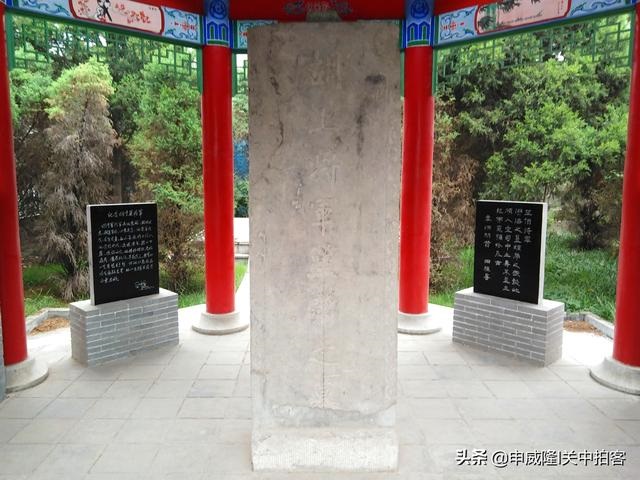
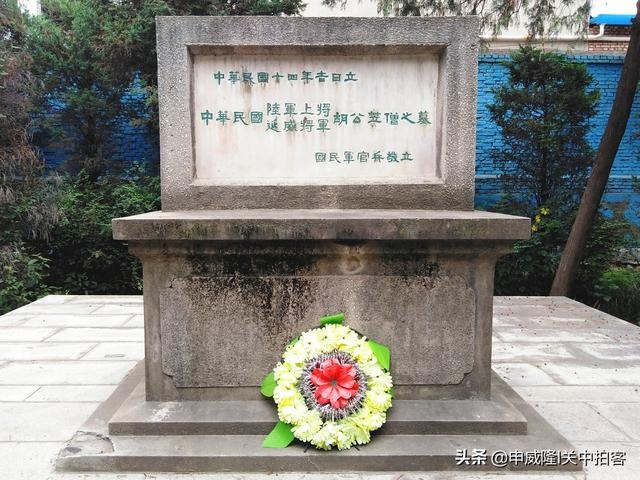
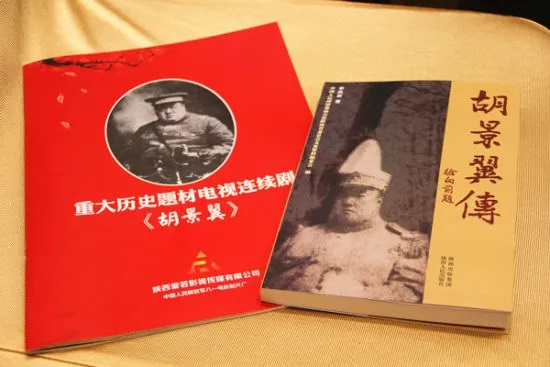
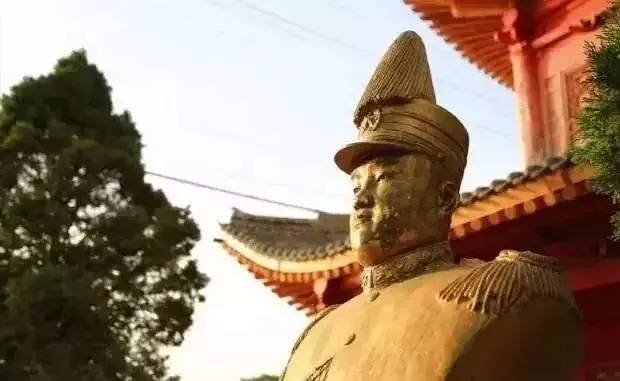
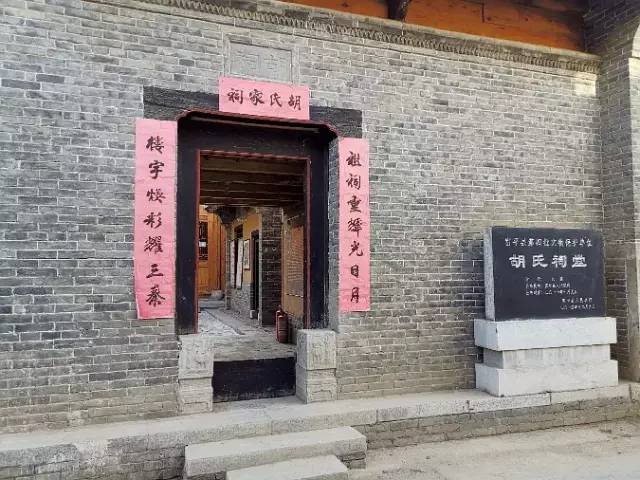
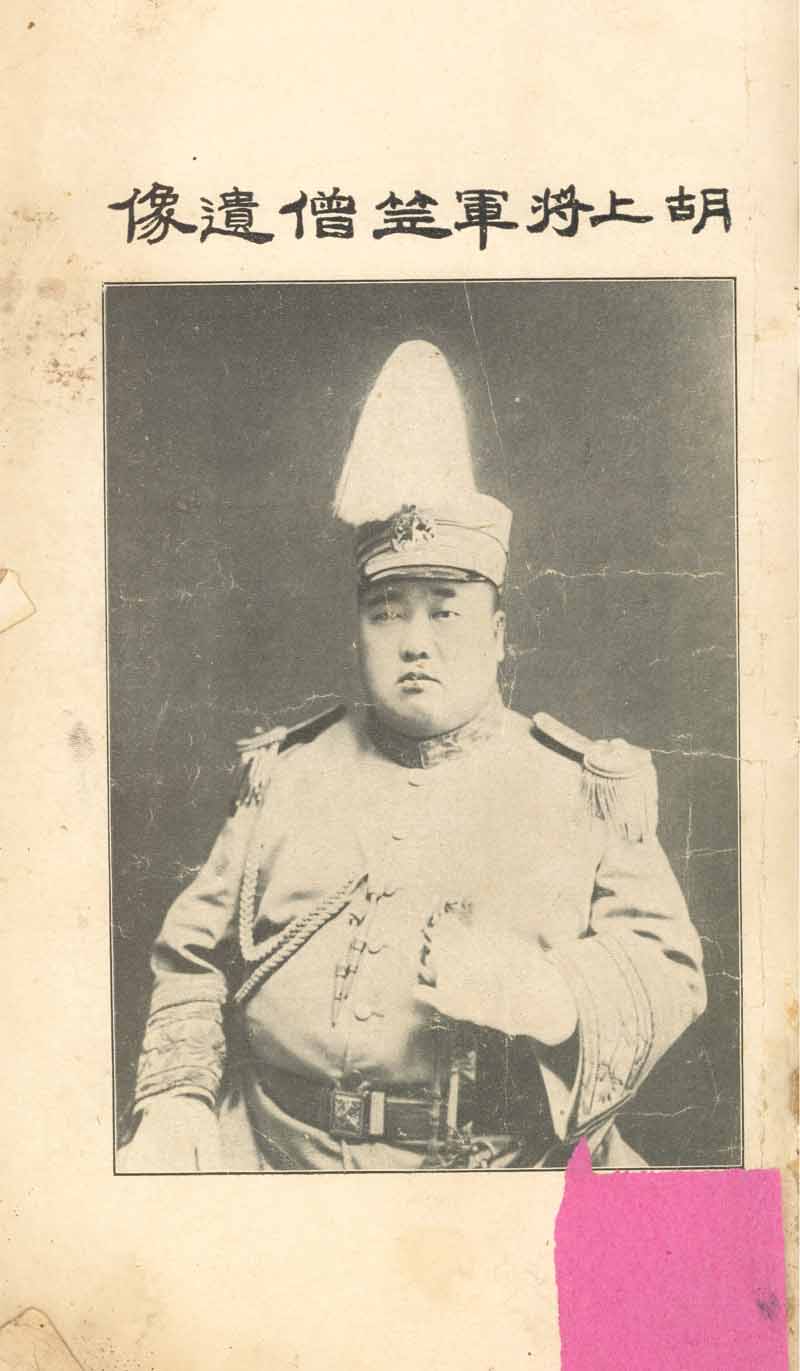
I would like to extend an immense thanks to Haifeng, for helping our family find out the name and history of this man! ❤
Is it not amazing how this blogosphere can help solve even the most impossible mystery?


I can just imagine how excited you must have been to learn not only the identity of the mystery man, but also his life history! You are so right about the blogosphere.
LikeLiked by 2 people
Hi Liz! Never in my life did I think someone today would be able to tell me anything about this man! When I asked Haifeng, I knew it was a long shot, why I was immensely surprised and happy that he could provide me with all of this information. It has taken a long time for this blog to reach China, and as soon as it did – it was also the right person who got in touch from there – almost like it was meant to be! 😉
LikeLiked by 2 people
It’s wonderful when that happens!
LikeLiked by 1 person
Yes, it truly is! 😃
LikeLiked by 1 person
This is so exciting! The connection between your family and General Hu Jingyi is very intriguing. Evidently your ancestors held him in very high regard. He must have respected them as well, because he gave his portrait to them. You may want to keep it in a safe. 😯
LikeLiked by 1 person
Hi Brad!
It IS very exciting! I would also like to know more from other historic sources about General Hu – like what his legacy looks like outside of China. I will do some more research and see what I can find out. But however he is viewed today, he was important to my family – and perhaps their survival – and because of that I am humbly thankful.
The portrait is a bit “taken” by all the time that has passed, and the frame is a bit broken. But I have taped it together best I can. Perhaps I should go see someone who works with mounting pictures and framing, to mend it to make it stand the test of time better…
You know how I opened the frame before, and did not find any information – now, I think I will put all this information about him together and glue it to the back for future generations. It would be a shame if it got lost again 🙂
LikeLiked by 1 person
Yes, I think it would be a good idea to take it to a paper conservator, or a framer who has some expertise in paper conservation. They would replace the old glass with museum-quality glass or plexiglass, and place an acid-free backing behind the photo for protection. They can also give you archival tape to attach the information to the back. It’s a worthwhile project, for sure.
LikeLiked by 1 person
Thanks for this insightful comment, Brad! I will absolutely do that! 🙏
LikeLiked by 1 person
Wow! This is awesome! How fun to find outv who he was after all these years. I love what you said about the blogosphere! If it wasn’t for you, I would never have found out about the Swedish Roots website, and all of its useful information! 😀
LikeLiked by 1 person
Such fun! I am so thankful for you and everyone who is commenting on my posts, who is interested and offers up their time to discuss theories and the occasional mystery 😀! It just wouldn’t be as fun writing about these things without the interaction with fellow bloggers and Internet users. And I am very happy I could help you out with “Rötter” – it was such a small effort on my part, but just like some tips and info I got from readers here, such a thing can really help with getting ahead with one’s research. 🤗
LikeLiked by 1 person
Yes I agree! I’ve often thought that communicating with other bloggers is kind of like having pen pals from all over the world. Which, along with family history, was another passion of mine when I was growing up.
LikeLiked by 1 person
What a good insight! I also loved having pen pals growing up, and I have in fact missed not writing or recieving letters since the Internet took over. But you are absolutely right in that this exchange is similar 👍
LikeLiked by 1 person
A lot of what I know about my ancestry was from writing letters to my grandparents and great aunts when I was a teenager. My mom had suggested writing to the oldest family members. They were a wealth of information, and I often wish I had asked even more questions.
LikeLiked by 1 person
Wow, that’s so great. You have letters that you can go back to. And your letters were probably very appreciated.
The thing about questions is that one always have new ones. It’s quite impossible to ask everything that you would like to know in the future.
I find, that as I grow older, my questions are of a quite different nature than when I was young. Interests shift, and experience makes you want to know other things, that you could not possibly envisage at a young age.
I think you have a wonderful treasure in those letters. Not only do they tell you about your grandparents, but they tell you about yourself at that young age. Not everyone has that. Your mother seems to have been very wise woman 😊
LikeLiked by 1 person
Fantastiskt. Vem han var, vad han gjorde och hur all fakta kommer fram. Fascinerande att ta del av.
LikeLiked by 1 person
Tack Helena, ja det är ganska otroligt att det efter så många år ändå kan gå att få fram! Men det krävdes verkligen en inhemsk researcher för att få fatt i namn och historia. Visst är det fint med all denna generositet – det gör en glad och hoppfull!
LikeLiked by 1 person