
Responding to my latest article here on the blog, Mr. Liu Hong wrote me the other day. He told me he had just recently visited Hancheng, the town where Robert fought so hard to rent a house for the mission. Hong had never been before, but now he had at last been able to make the trip.
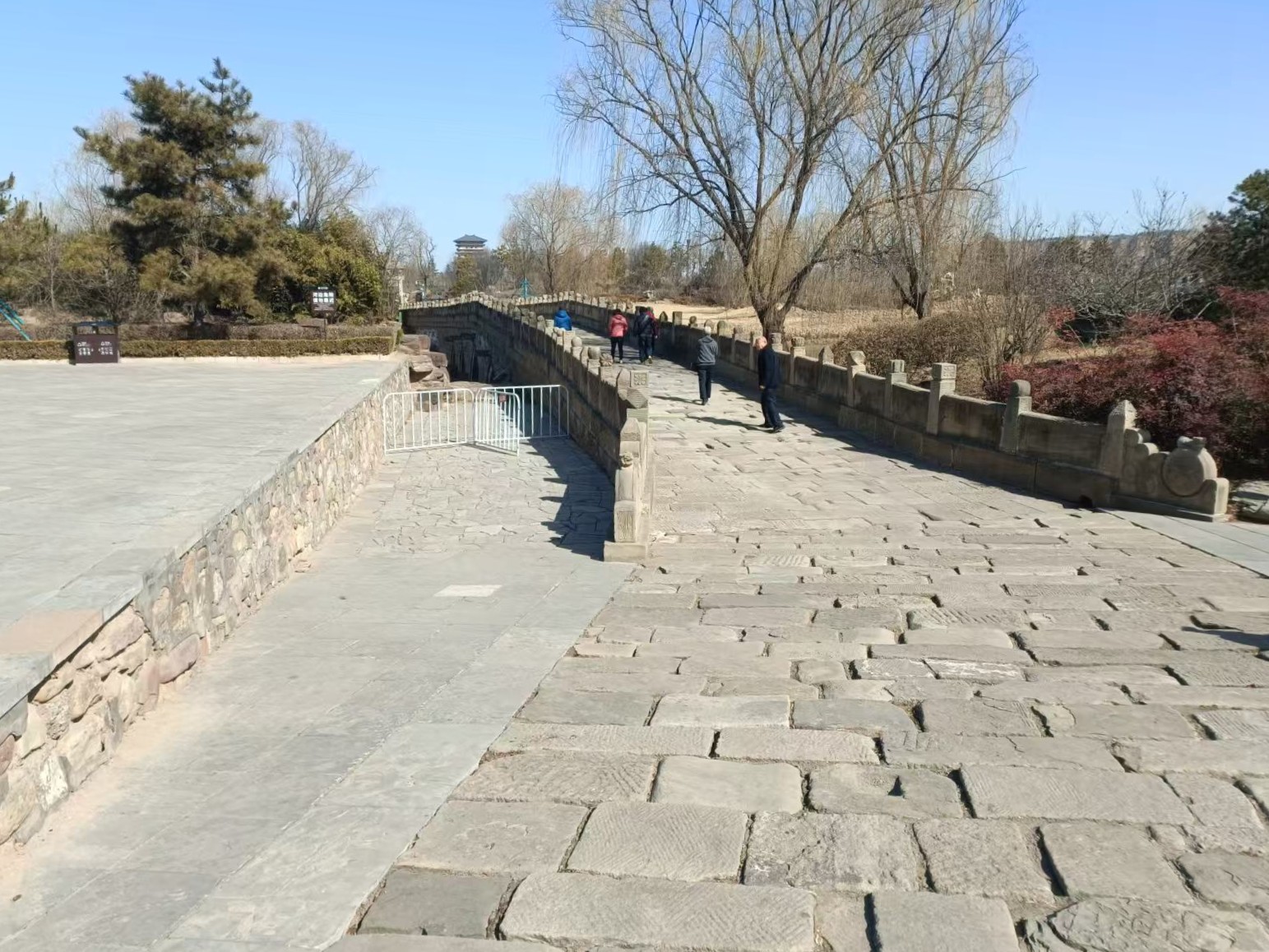
It is always fascinating to see how places change over time, and in this case Hong was kind enough to include some photos in his email. A couple of them show the old road the missionaries took to get to the Yellow River. Look at these rough stones where they walked and travelled with horse, mule or ox, often with a bumpy carriage behind, containing luggage and food. Hong says it was the only way to the Yellow River ferry from the city and that this road was built over 2000 years ago.
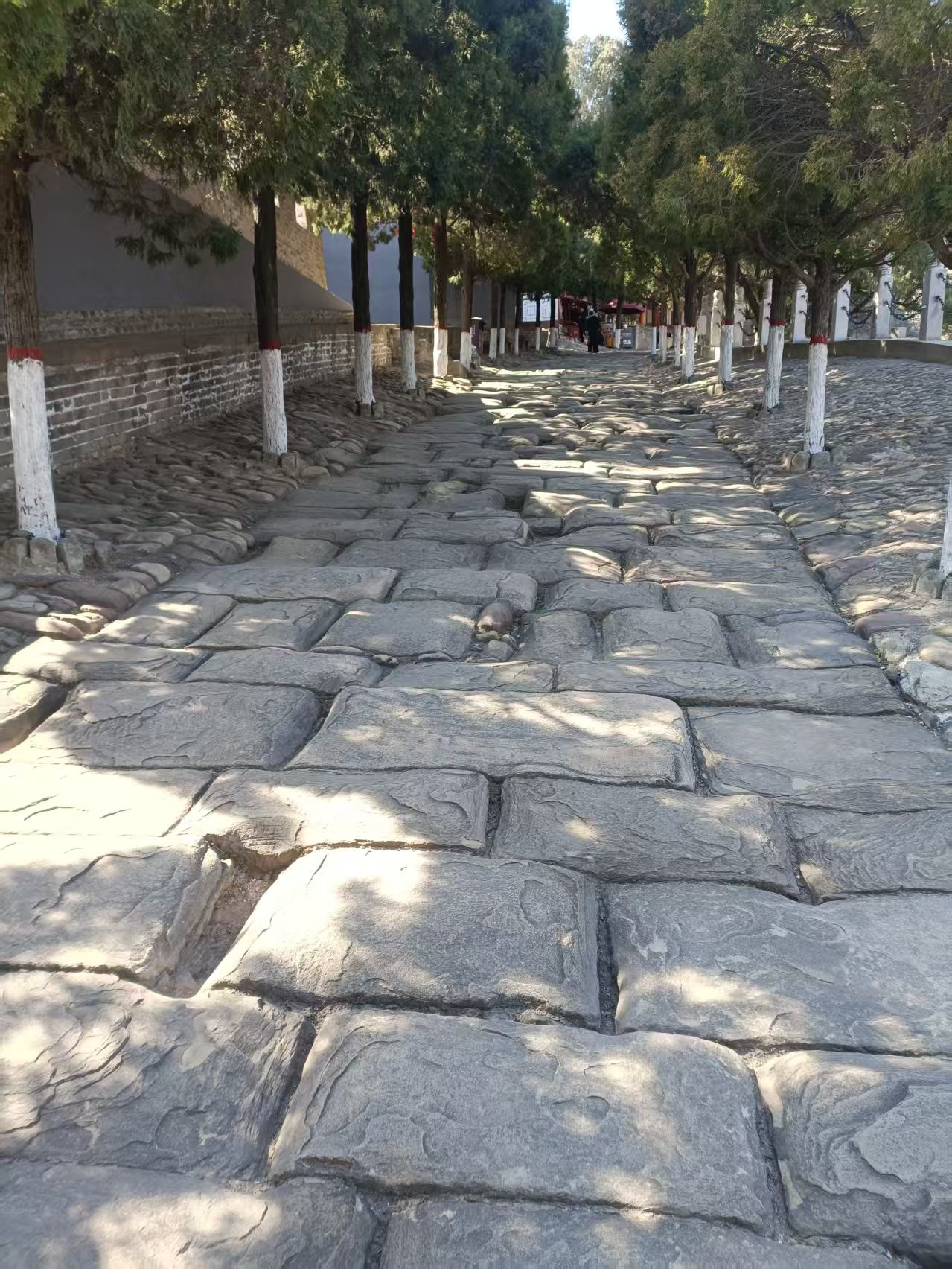
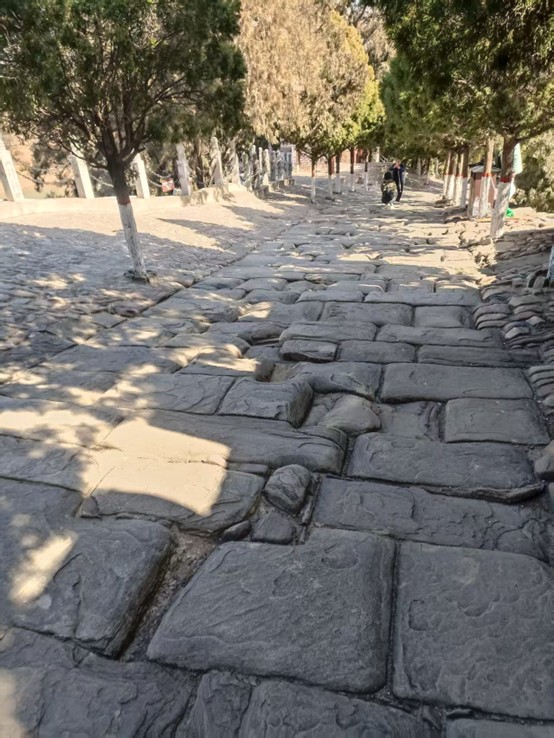
I can almost feel how their backs must have hurt after travelling along these roads 🙂 They often had to take the trip over the Yellow River – it was the quickest way to get to other missionary stations – such as the one in Yuncheng or Ishi. Often, the missionaries had to travel to help each other out – to man up a mission station or assist with medical care for instance.
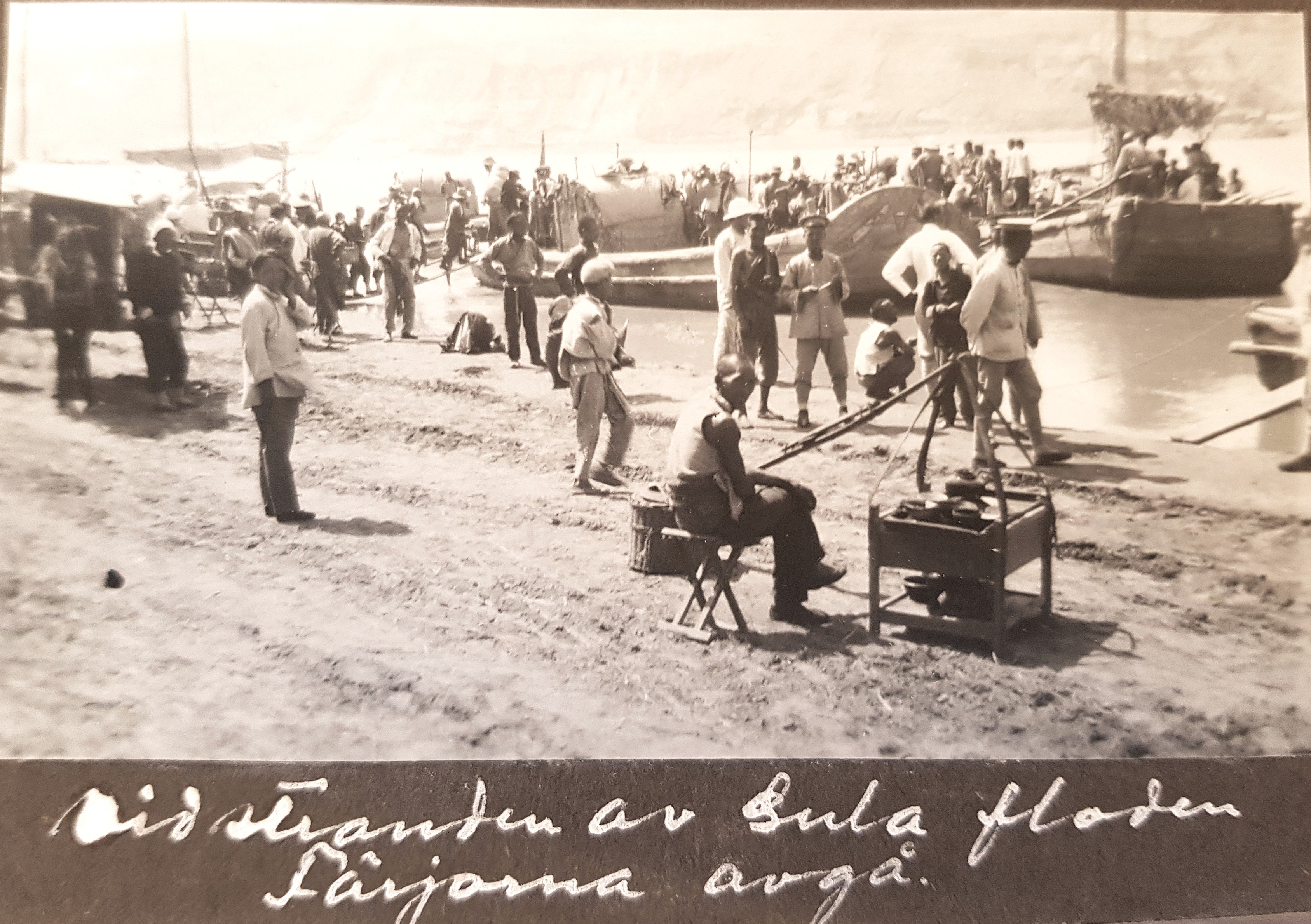
The missionaries traveled with carriages like this one. Notice the wheels reinforced with metal – they must have made quite a noise on the stone roads of Hancheng. Here, the carriage is being loaded onto a ferry on the Yellow River.
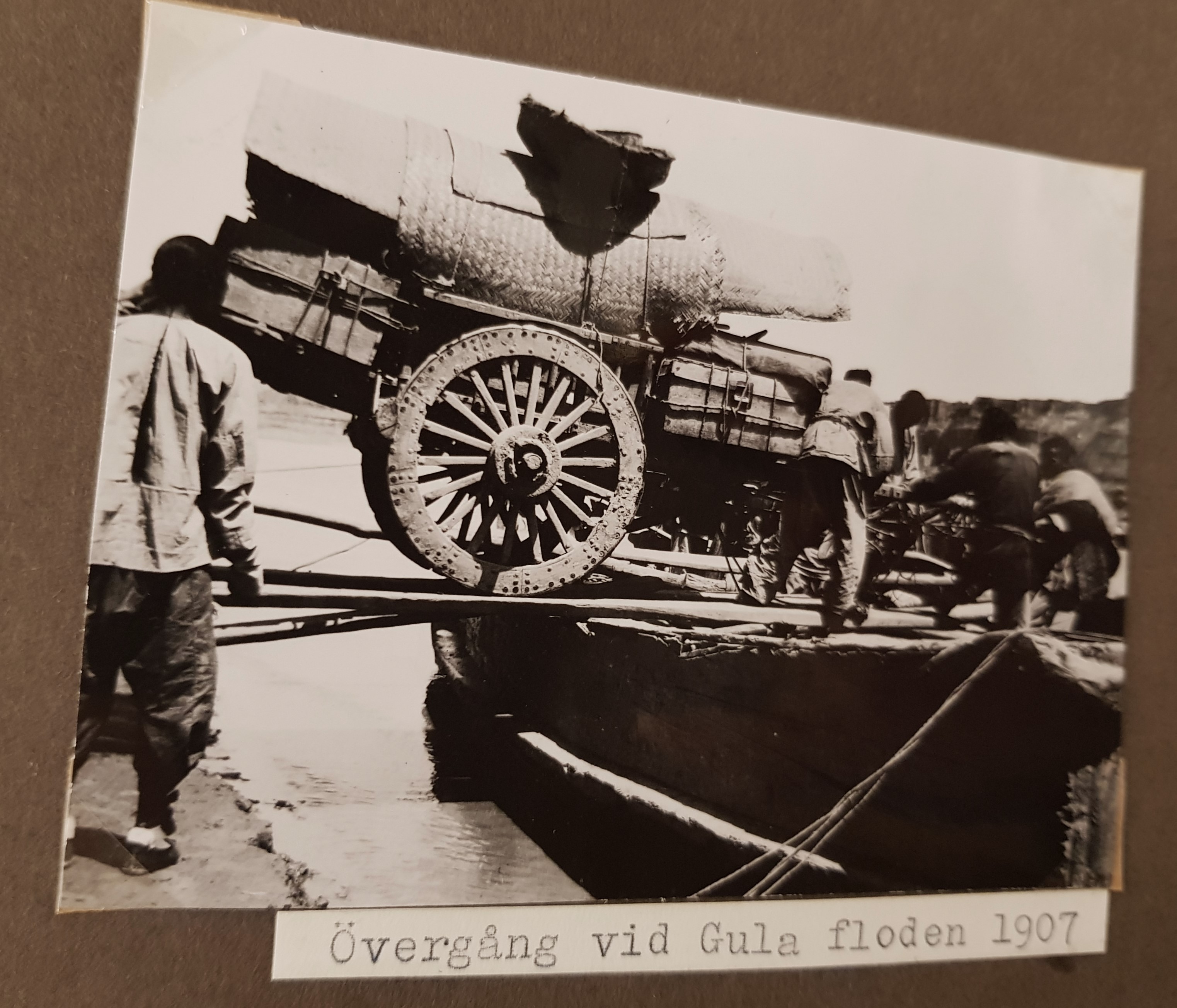
As you may know if you read previous articles on this blog, Robert and Dagny had several children, many of whom also became missionaries. Hancheng remained an important station for them as well. Here, their son Martin and daughter Dagny-Edla are on their way to Hancheng. They had to cross this passage on foot, holding hands to keep their balance and avoid falling into the water. You can see their carriage behind them.
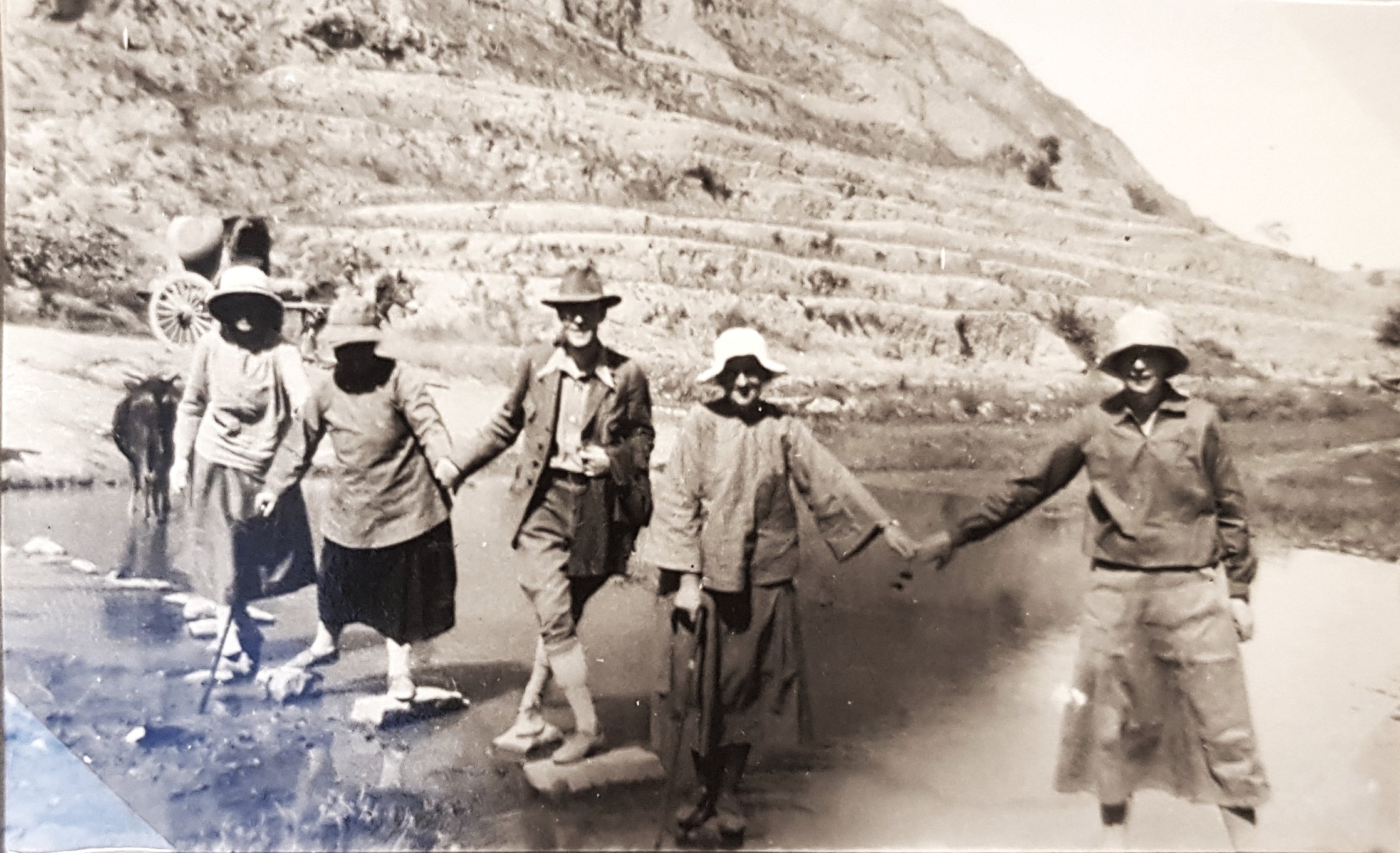
The old missionary chapel in Hancheng is still there, Hong wrote, but a new church has been built next to it. In this photo we can see the new church (to the right, a cross on the front). The chapel is hidden behind the trees:
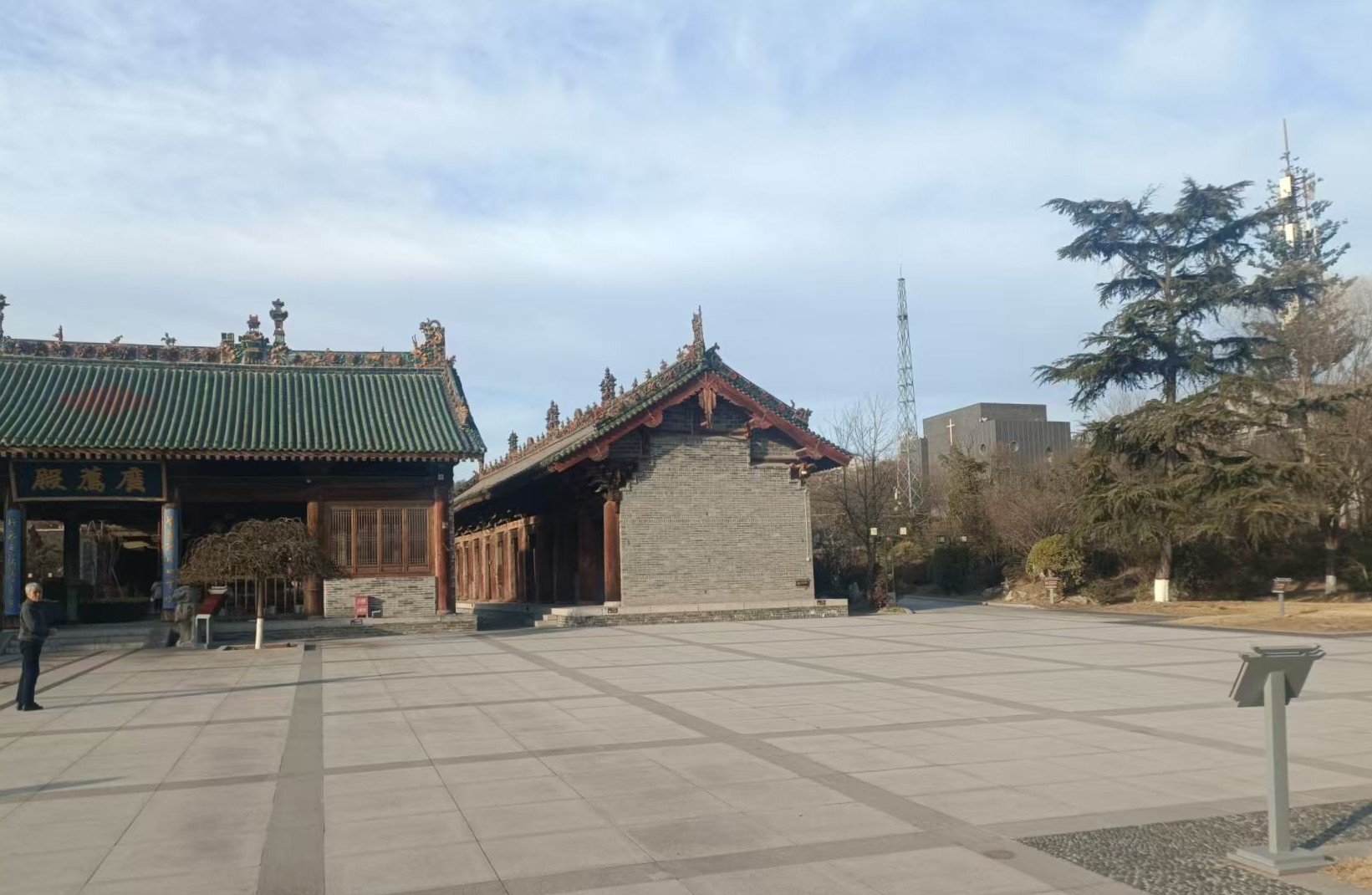
Here is a photo from the chapel, when it was in its prime in 1905:
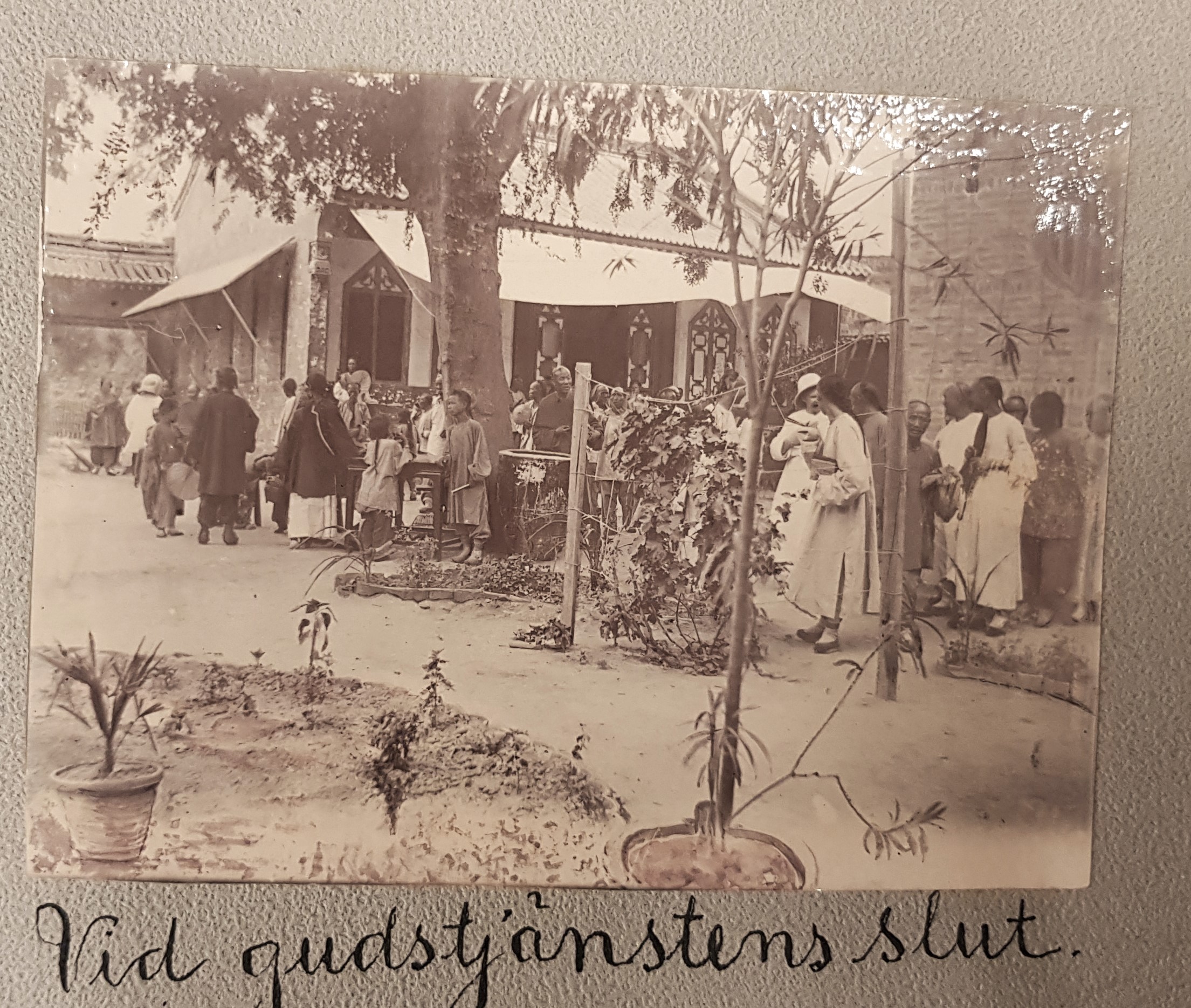
A temple that Hong says is located quite near the old chapel:
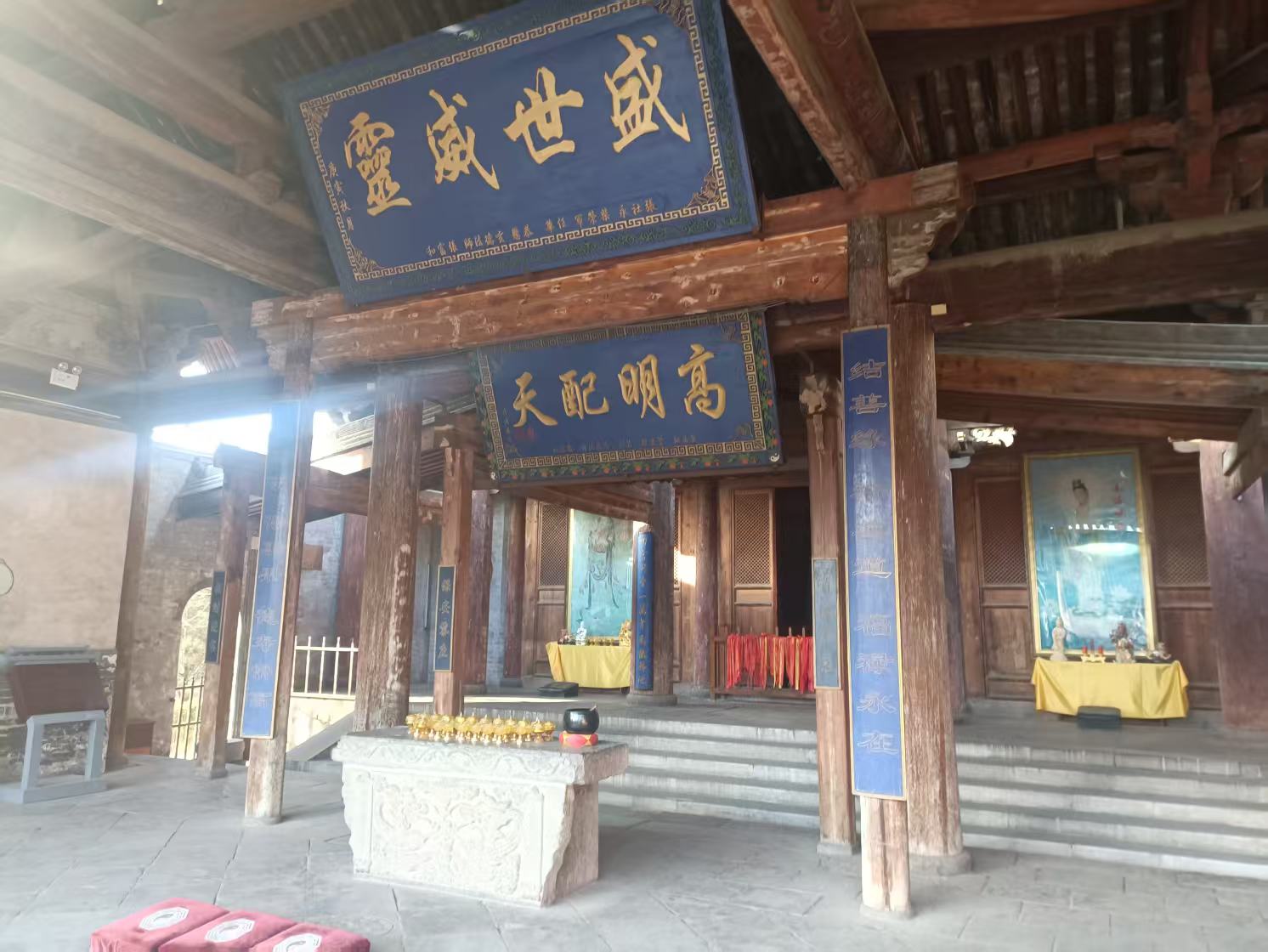
And here is a photo Hong took of the Yuxiu/Yiuliu bridge. I am sure my great grandfathers passed over this bridge regurarly, as it crosses the Jushui river that flows through a big part of the city. The bridge is 323 years old, according to Hong.
Finally I want to let Robert tell us his thoughts about Hancheng in 1904. He writes an article in Sinims Land about the need of a street chapel and a library in the city.
What Hancheng Needs
“And they signaled to their companions in the other boat to come and help them.
And they came and filled…”
With these words from the evangelist Luke about the miraculous catch of fish on the Sea of Galilee, Brother Rob. Bergling introduces one of his letters regarding the need for a street chapel in Hancheng.
“For several years,” he says, “I have wished to open a street chapel here because Hancheng is a very populous place, and on the city’s main street, there is a constant flow of people, most of whom, especially in the autumn, have little or nothing to do. Therefore, there would certainly never be a shortage of listeners at a well-located street chapel.”
In connection with such a chapel, there should also be a good library and a reading room, as there are hundreds of students in this city who, in Western terms, might be called unemployed philosophers – either without a school or without a profession, perhaps both. The house was in good condition, needing only some painting to be ready for use. But alas, the cost was 180 kronor.
There are about 600 of these young men in Hancheng, and the number of students is probably no smaller. Very few of them can find employment as teachers, and they consider any other work beneath their dignity – even if they lack both clothing and food. Among the younger and more ambitious, some strive to earn higher academic degrees, which would allow them to enter the ranks of government officials, where wealth and prestige would suddenly be within reach.
It is not surprising that they have such hopes, for 40 government posts across the country are held by men from Hancheng, and seven of them serve in ministries in Beijing. A teacher in Hancheng therefore proudly holds his head high, calling his humble city “Siao Peking” – Little Beijing.
Hancheng has produced vice-kings and governors, whose accumulated wealth has greatly benefited their hometown, resulting in the construction of temples, city walls, bridges, and other buildings. According to local legend, a man from Hancheng named Uang held the highest office ever occupied by a Chinese – besides the emperor himself – some 90 to 100 years ago. He was not only Prime Minister but also President of the Academy of Sciences and a teacher and close friend of two emperors. It is said that he began life as a poor farm boy but, through hard work and determination, achieved this brilliant success.
A stately temple, nestled in a beautiful, well-kept cypress grove outside the city, marks the place where his remains rest and where his spirit is believed to dwell. The memory of his achievements and the honor he brought to his hometown is so vivid in Hancheng that teachers here still rebuke lazy students by exclaiming:
“What! Do you not remember Uang-Chuang-tien, and how, through his diligence and the favor of heaven, he became Prime Minister and the Emperor’s trusted advisor?”
That Hancheng has more schools than any other city I know in China, and that its students are so numerous, can largely be explained by these historical circumstances. In such a place, what a blessing a good library could be for the knowledge-hungry youth, who nowadays, unlike in the past, have little guidance!
We had to search for another house to rent, but the only other available one had already been taken. When I returned home, I said to myself: Shall we really let this winter pass without a street chapel – just because of the cost? Now that we have several evangelists, church members, and workers who can help with preaching, and two male missionaries stationed here? No, I will rent the house for six months and see if the Lord sends us the help we need to keep it beyond that.
I also want to add that I already have some Christian literature in Chinese for the library, but it is far from sufficient. I estimate that we need about 300 kronor for books and furniture, plus 100 kronor annually for the chapel’s operations.
Let us bring these needs to Him who can provide more than we can ask or imagine. And let us not tire of doing good while we still have the possibility.
Hancheng, November 9, 1904
R. Bergling
Once again, I sincerely thank Mr. Liu Hong for providing additional information about Hancheng and for sharing the photos.


Fantastiskt att få läsa allt detta, Thèrese! Och att Hong besökt dessa platser och fotograferat det så att man ser hur det ser ut idag. Jag är så tacksam för allt arbete du lägger ner på att beskriva missionsarbetet. Missionärerna hade det inte lätt på den tiden…..
Hjärtliga hälsningar från ett varmt Holland….. det var 20 grader idag.
Birgitta
LikeLiked by 1 person
Ja, visst är det fantastiskt! Jag är mycket tacksam över att ha fått kontakt med Hong, och att han är så generös med att dela med sig och så intresserad av missipnärshistoria i Kina – och av vår släkt!
Så härligt med varmt i Holland – vi hade 12 grader idag och fick ordentligt med vårkänsla! 🌞😊
Tack för din fina och uppmuntrande kommentar! Varma hälsningar
LikeLike
How wonderful that Mr. Lui Hong provided you with more information about Hancheng and photos!
LikeLike
Hi Liz! Yes, it’s such a treat! I am indeed very thankful that he is so generous to share this. I can almost imagine being there, walking on those old, old roads 😊
LikeLiked by 1 person
The stone road reminded me of cobblestoned streets in Boston. Very hard to walk on!
LikeLiked by 1 person
Cobbled streets are truly difficult!
LikeLike
Next time I go to Xi’an, I’ll visit Hancheng.
LikeLiked by 1 person
That is a good idea! Hancheng looks quite lovely in the photos Hong took! I love the mix between new and very, very old!
LikeLike