
Whenever I travel somewhere, I make it a habit to see if there is some place along the way, or close to my destination, that is connected to family history. This summer, we headed towards southern Sweden and I as I know my great grandfather Nils is from the Småland region, I thought it would be a good idea to take a closer look at his birthplace – Romarehylte/Göteryd. This is where Nils grew up, where he decided to become a carpenter like his father, and this is from where he emigrated to America in 1905. Of course I had to see it! A not unimportant factor is that Nils is the great grandfather I know least about – he has not written a book about his life and there are less articles by him published in the mission paper Sinims Land.
Älmhult – the hub of the region
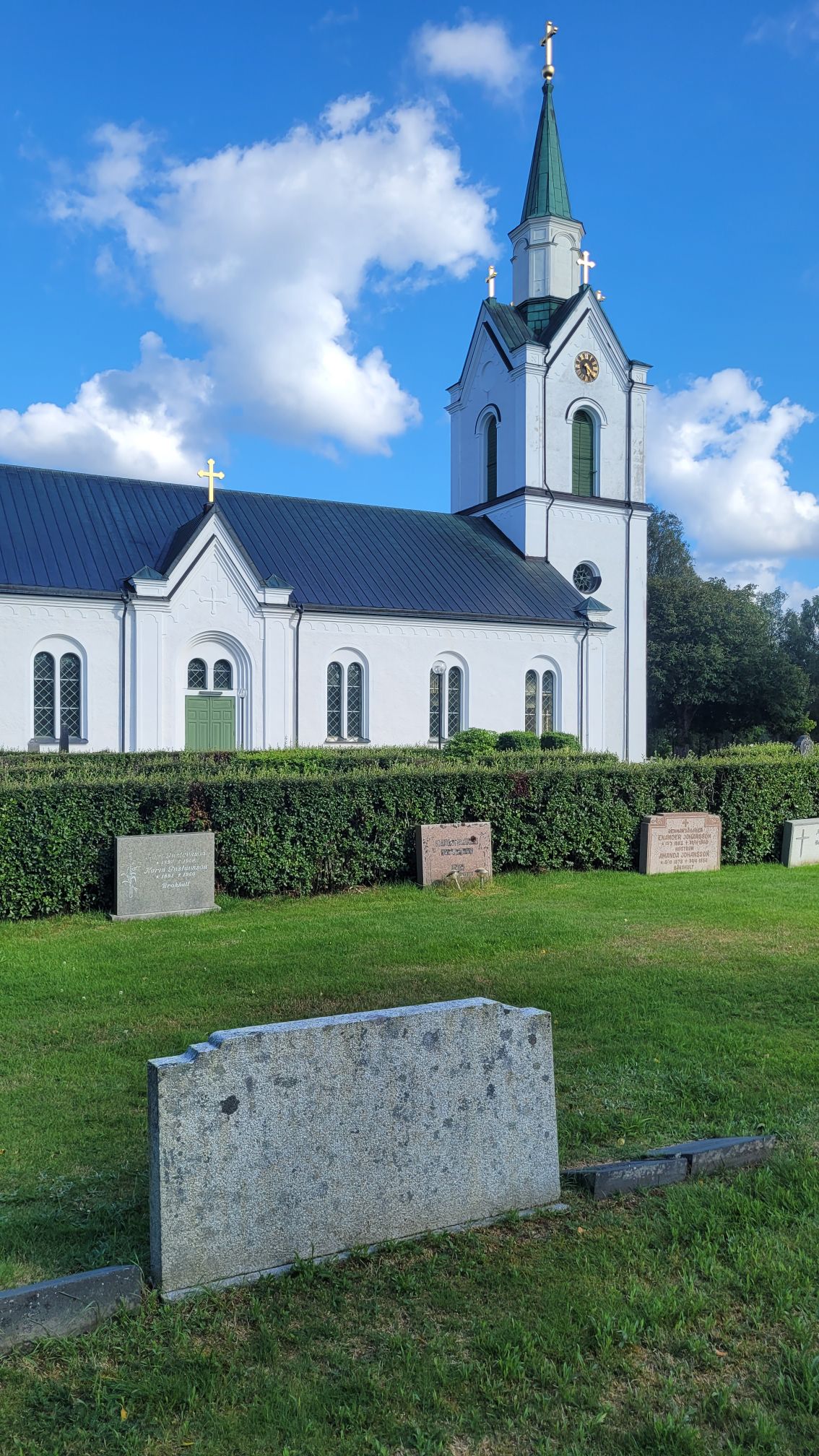
Before reaching Göteryd, we stopped at the small town of Älmhult, today known for being the birthplace of the IKEA founder Ingvar Kamprad and of world-renowned botanist Carl von Linné (Carl Linneaus 1757-1778). Today, as well as back in the late 1800s and early 1900s, Älmhult was the main town in the area. For families living in the smaller surrounding villages, this was the place to go for markets, supplies, and important errands. It was also a social and cultural center, with its church and local events bringing people together. Visiting Älmhult today, it’s easy to imagine how my great-grandfather Nils and his family would have traveled here regularly, connecting with the wider world beyond their own village. I also believe Nils would have visited the beautiful mission church of Älmhult at least once. This church was built in 1894 and it caught my eye immediately upon drivning into Älmhult.
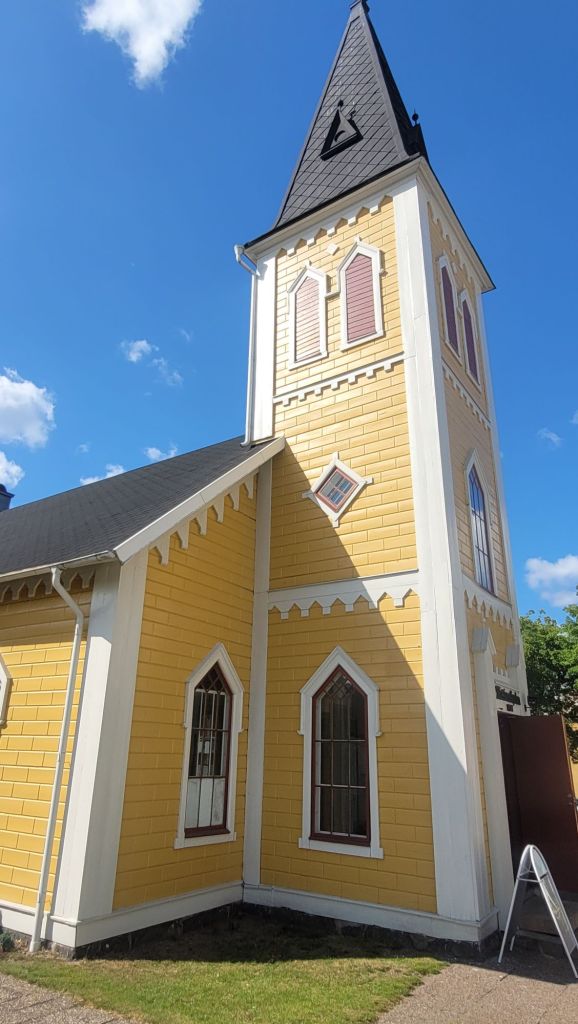
The wooden church has recently been repainted in its original color, with original linseed oil paint. It is a spectacular church, built in american style.
Brokhult – a family connection
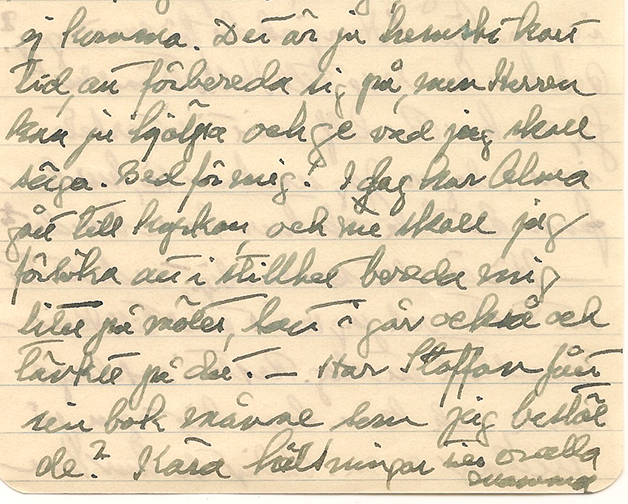
Only 8 minutes by car away from Älmhult, there is the small village of Brokhult. Brokhult is interesting to me as I found a letter that Nils’ wife (my great grandmother Olga) wrote from there to her daughter Edna (my grandmother). It was in the midst of summer and Olga was visiting with one of Nils’ sisters, who lived in Brokhult/Romarehyte. Olga writes:
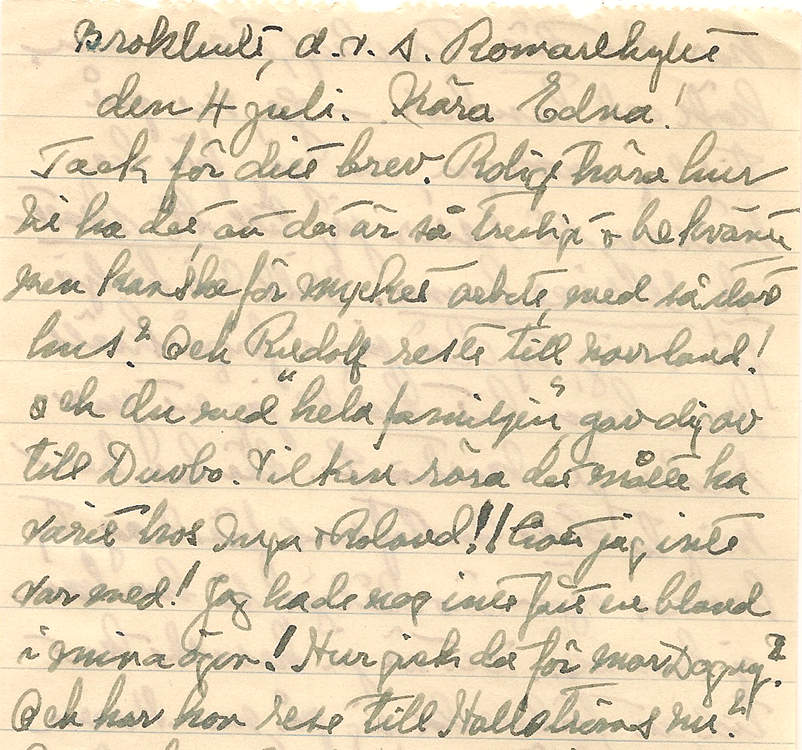
Brokhult (i.e., Romarehylte), July 4th
Dear Edna,
Thank you for your letter. It was lovely to hear how things are going for you – that it’s so nice and comfortable where you are. But perhaps a bit too much work, with a house like that?
And Rudolf went to Norrland! And you, with “the whole family,” headed off to Duvbo. What chaos it must have been at Inga and Roland’s!! Good thing I wasn’t there! I probably wouldn’t have gotten a wink of sleep! How did things go with Mother Dagny? Has she now gone to visit the Hallströms? Well, Rudolf has now been back at work for four days. I’m so curious how he found everything and how he’s doing?
Everything is as usual here, except that aunt and I went down to Kristianstad for a little while. We left Wednesday morning and came back here again Friday afternoon. It was nice to see how she’s settled in there – two rooms, a kitchen, and an entry hall. Quite pleasant.
Now, this coming Tuesday morning – if I’m in good health – I’ll be traveling to Stora Skottek, Ulricehamn. Will you pray for me? The night before last, when I got home here, I found a short note from Martin L. asking if I could take Lisa Gustafsson’s speaking engagement, since her eyes are in poor condition and she’s unable to come. It’s dreadfully short notice to prepare, but the Lord can help and give me the words I need to say. Please pray for me!
Today Alma went to church, and now I’ll try to quietly prepare myself a bit for the meeting – I was even lying in bed yesterday thinking about it. Has Staffan received his book yet? I wonder – I decided to send it to him.
Warm greetings to all of you,
Mother”
Explanation: The letter is not dated but Olga writes about a house that Edna must have talked about. This could be a summer house that my grandparents got in 1948. Rudolf is my grandfather, and Roland is his brother. She is also inquiring about Dagny, who had moved in with Edna and Rudolf at that time. The aunt Olga writes about is Alma, Nils’s sister, who was married to a man also named Nils. Alma passed away in 1949, why Olga must have visited her between coming back from China (1946) and Alma’s passing. The living arrangement for Alma also seems to be quite small – which suggests she was living on her own – that is, her husband must have passed (he died in 1946). Seeing that Olga writes “little family” and worries about a “house”, I would say dating the letter to 1948 is probable. That is the year my grandparents bought a summer house, that Olga would have been curious about. By then, they had my father Staffan (born 1942), his little brother Gunnar (born 1944) and little sister Cecilia, born in1947 and certainly constituted a “little family”. She also mentions Martin L. (Lindén), one of the fellow missionaries to China, as well as Lisa Gustafsson, who was also a missionary in China, together with Nils and Olga.
Beautiful countryside
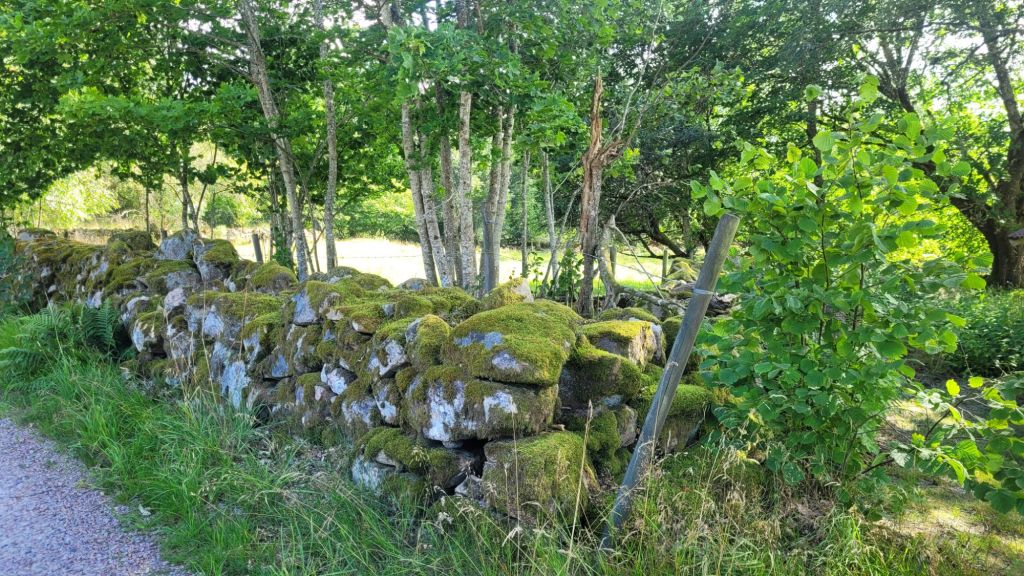
The Göteryd landscape is interwoven with small lakes and rivers, framed by deep forests. The larger fields, once painstakingly cleared of heavy stones by past generations, are now bordered by stone walls (made from those very cleared stones), covered by centuries of moss. It was lovely to see this place, where Olga and Alma spent some time together in 1948. I can imagine them walking arm in arm, enjoying the greenery.
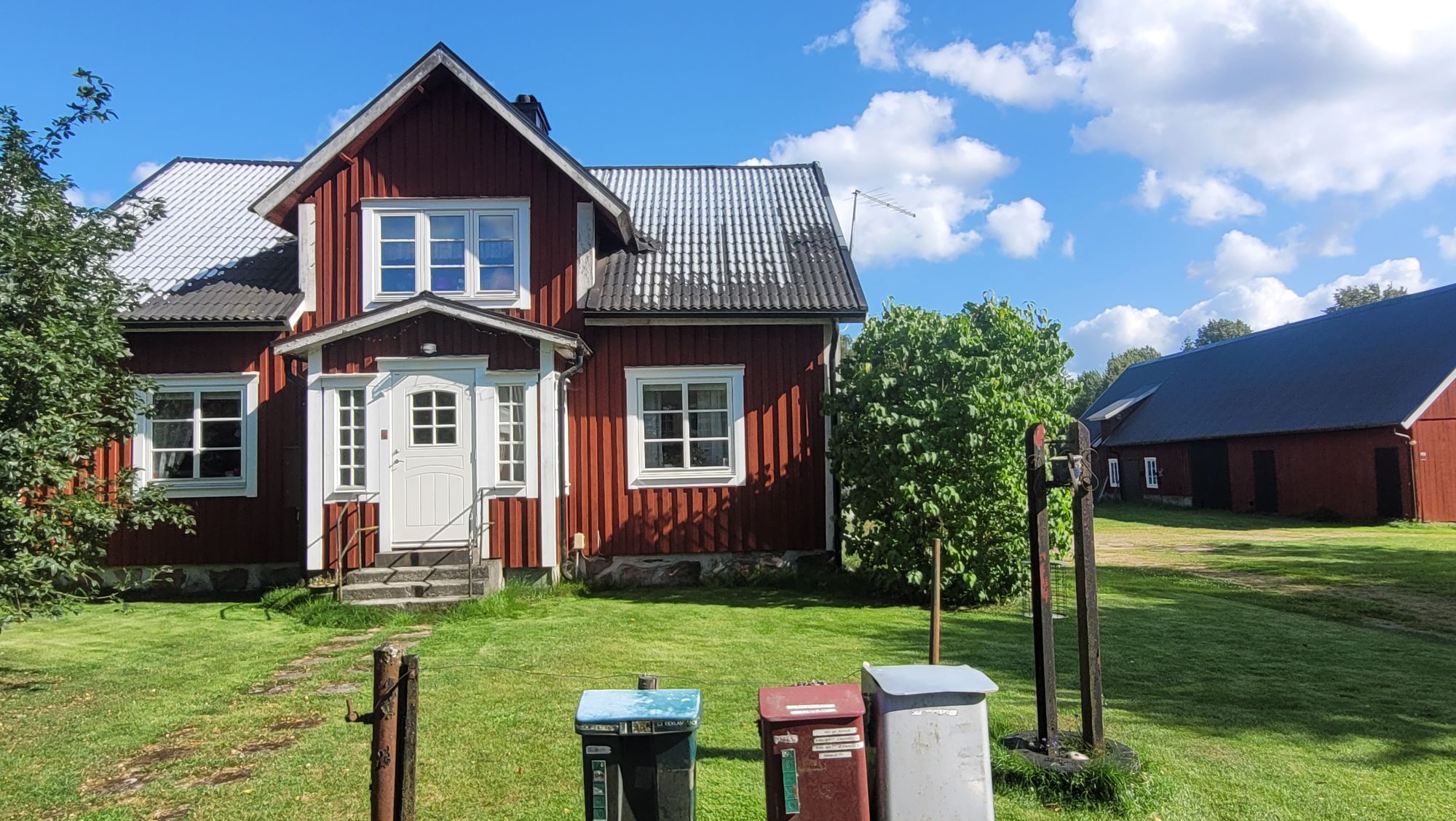
Brokhult/Romarehylte are two very idyllic villages, with the typical Swedish red and white cottages. I don’t know where my relatives lived, but some of the houses from back then still stand today. Brokhult and Romarehylte are almost intertwined, lying next to eachother and are almost interchangeable as place names in the area. The letter from Olga indicates that the house she visited was just on the border between the two small villages (or rather collection of houses).
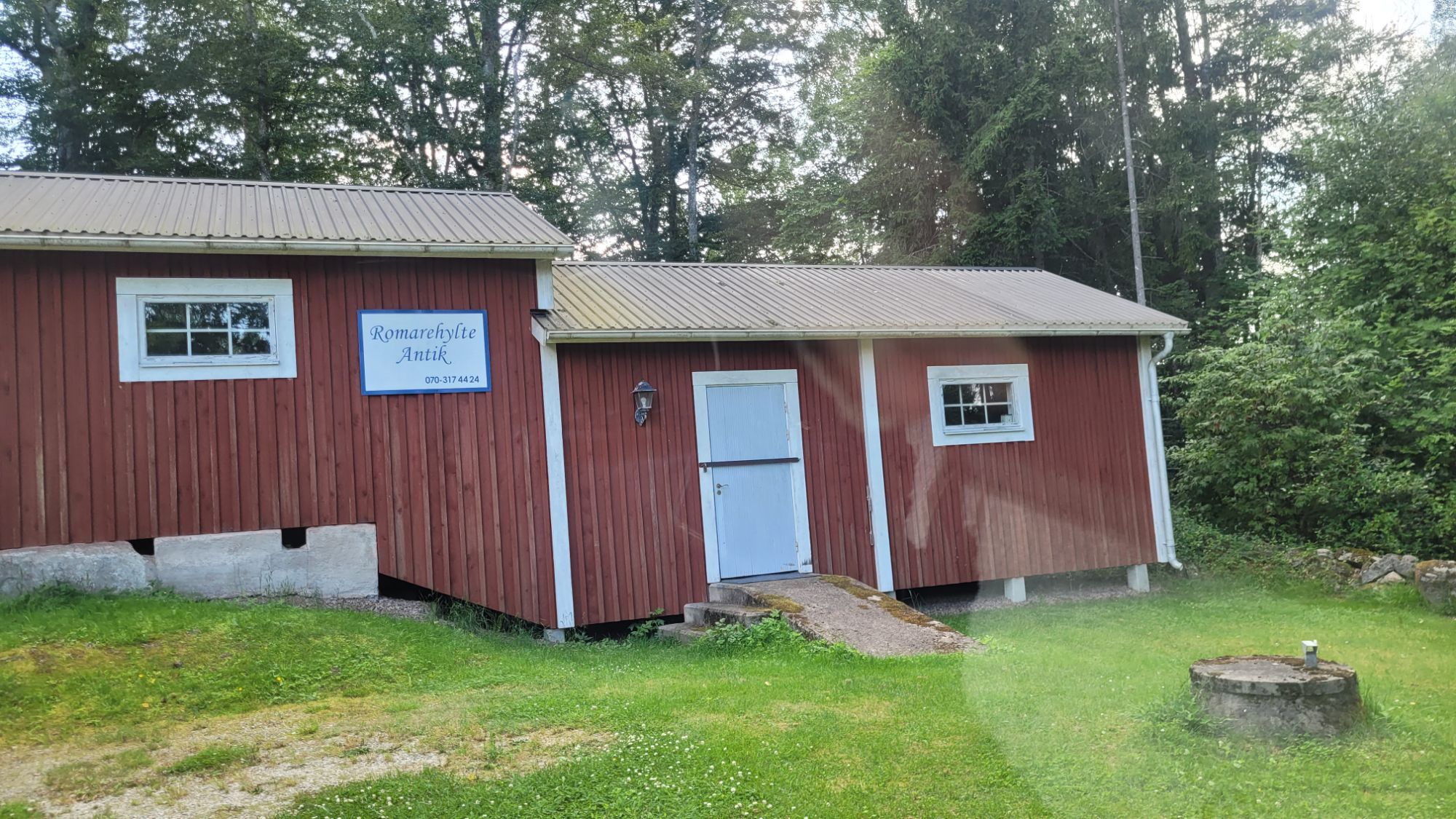
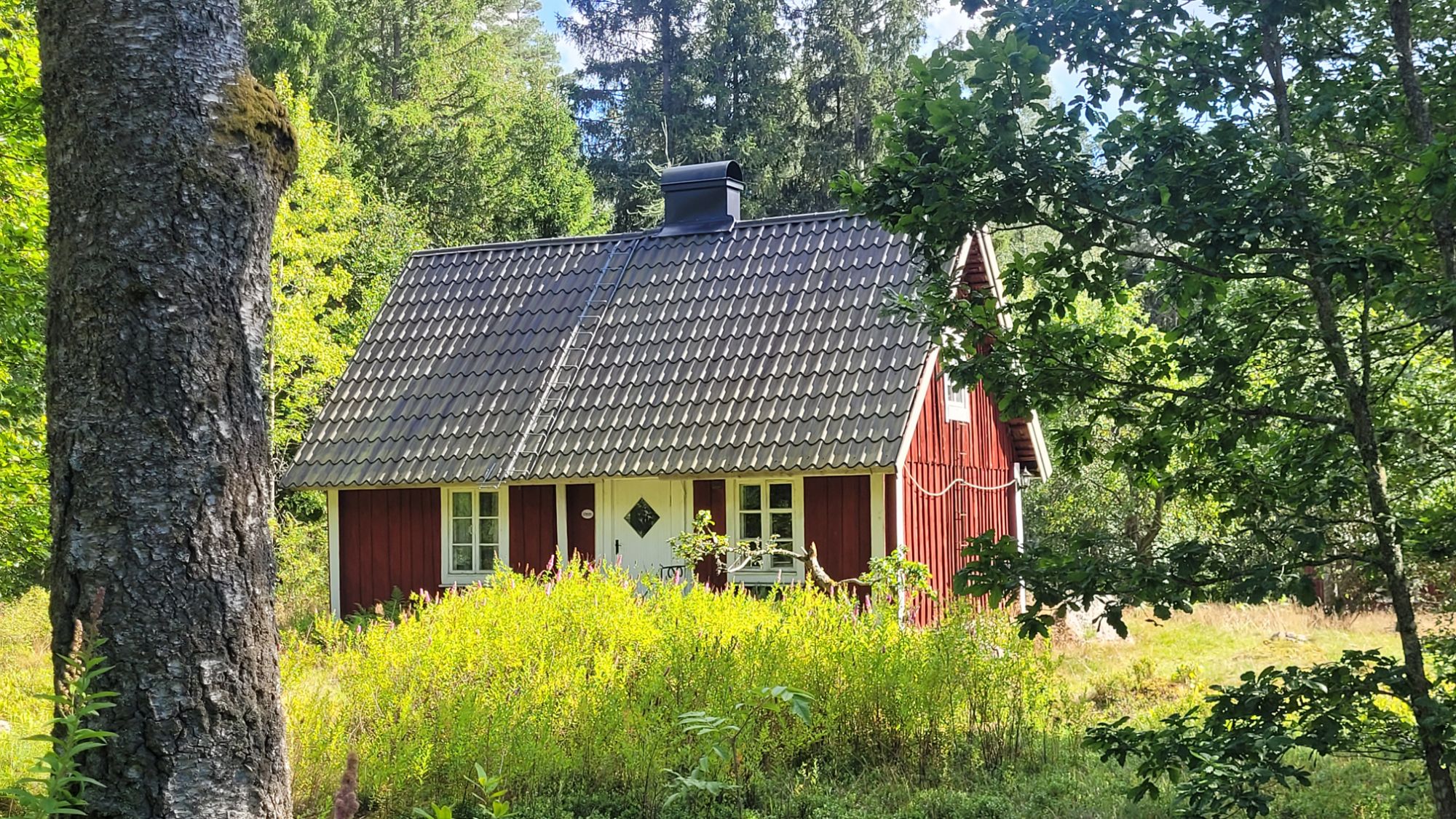
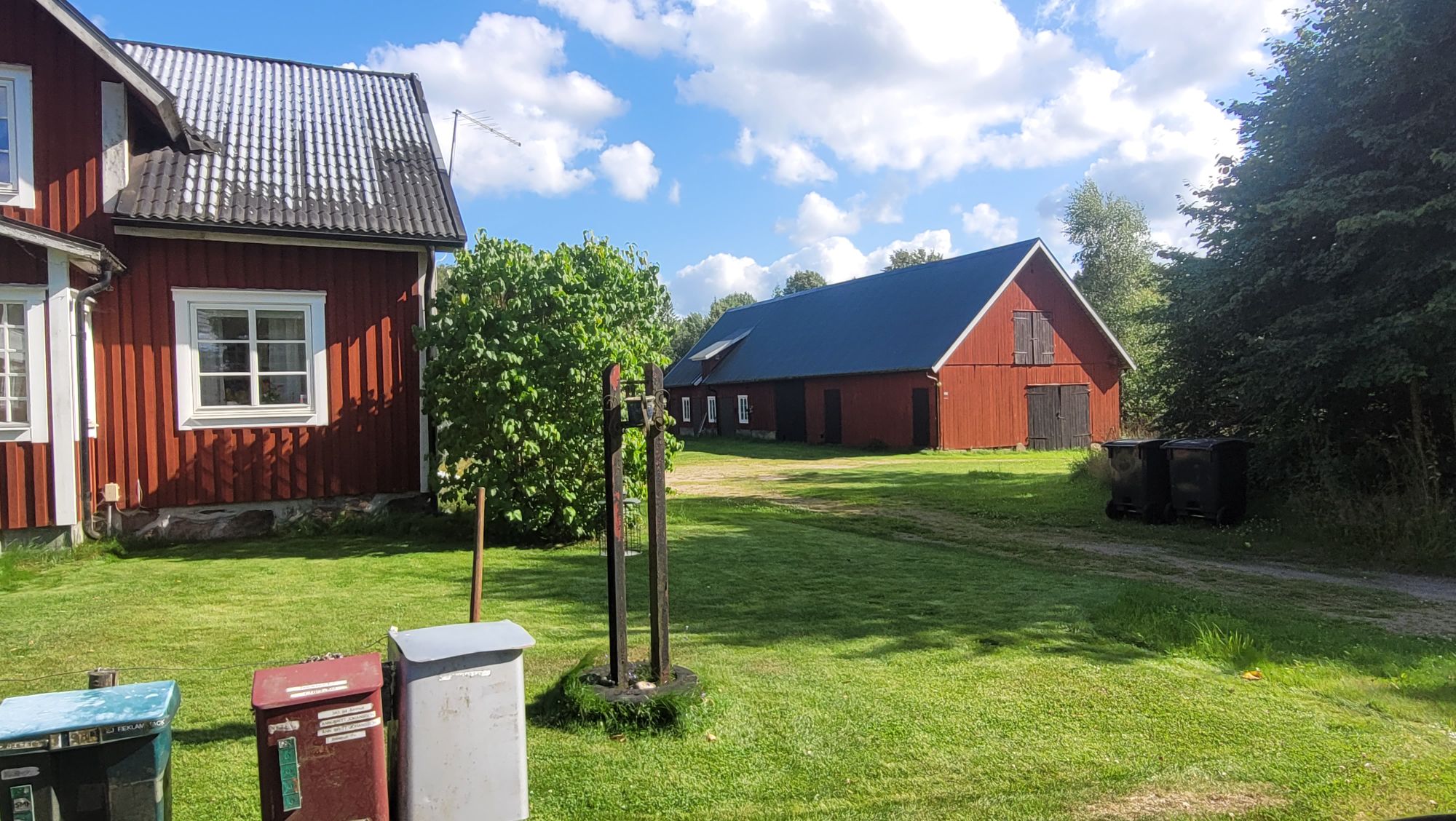
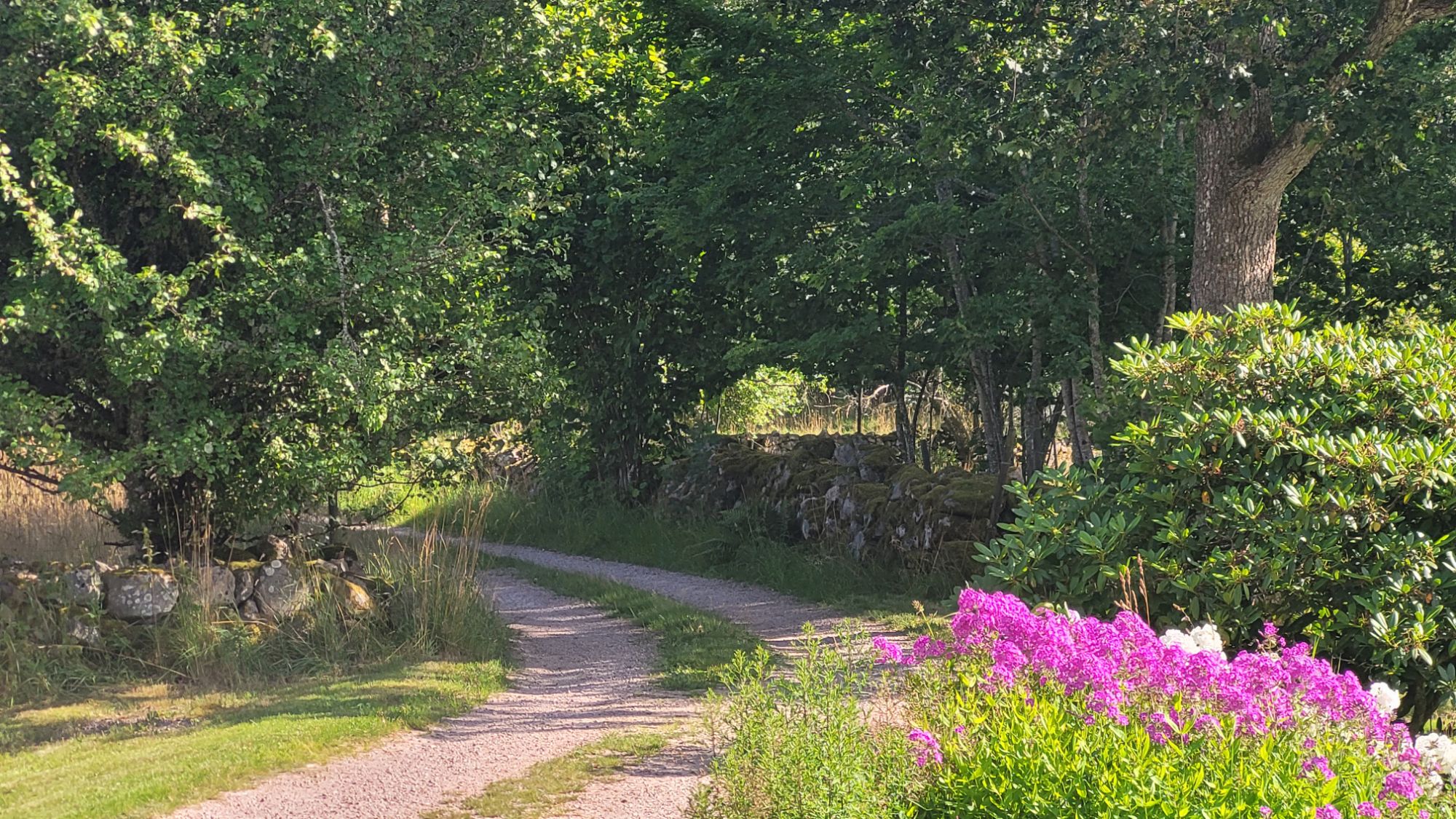
Nils’ family had lived in communities around this area since the 1600s. Walking through Brokhult today, it’s easy to picture the simple cottages that would have been homes to my relatives. Even today, this is just a small area, with houses and fields. No community services, shops or such can be found here – for that one has to go to Älmhult.
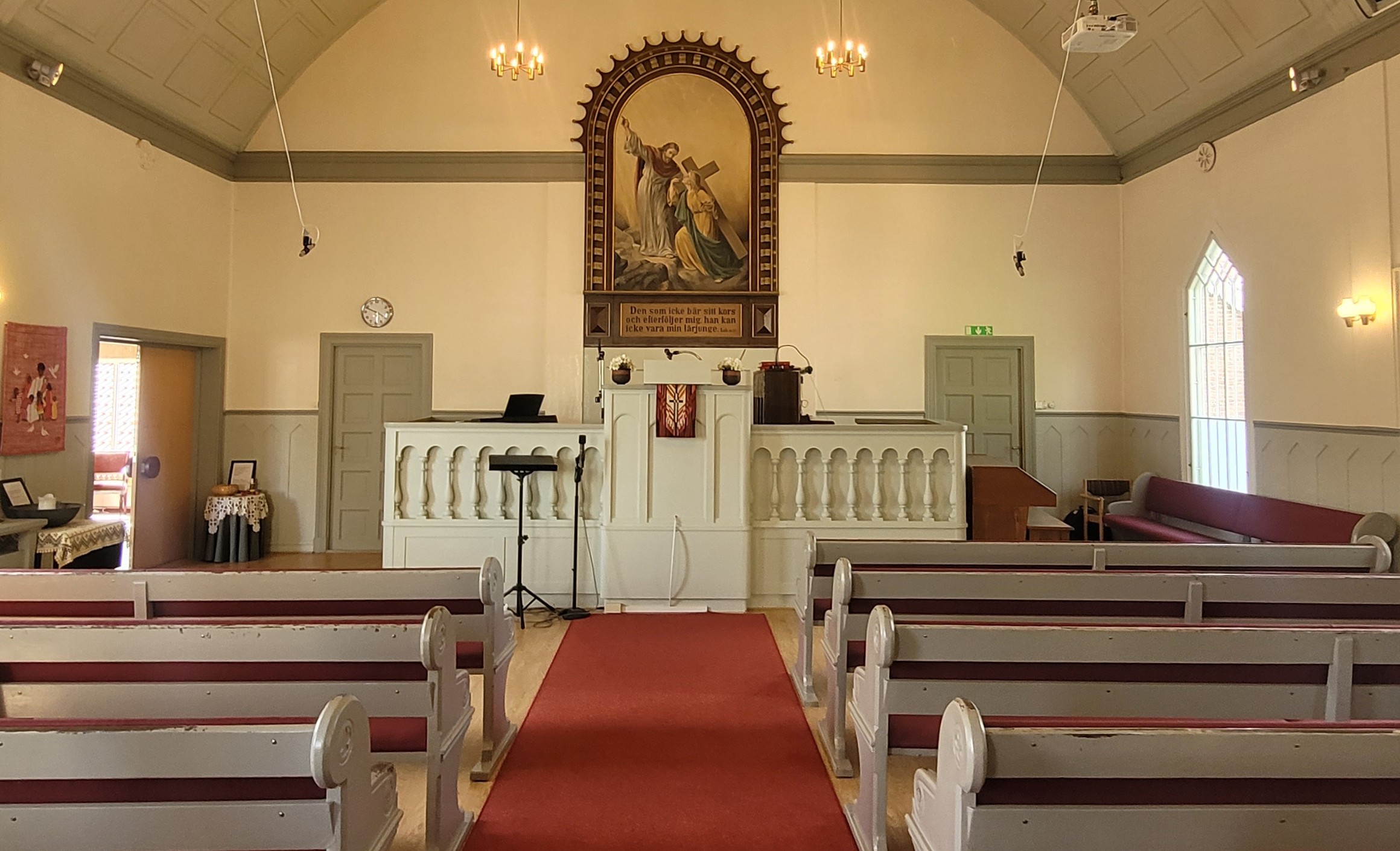
As both Nils’ parents – Bengt and Maria – came from the area, I also wanted to see the Göteryd church. Located 11 minutes by car from Brokhult, it would have been the main church to visit for Nils and his family. I can imagine it took half an hour or forty minutes using by horse and carriage to get there (two hours by foot). I very much liked their church. But it did not quite look like this on the inside when my relatives from the 1800’s visited the church. The altarpiece mural was painted in the 1950’s, thus we have to imagine them looking at something else (I have unfortunately not found any information about what decoration they had prior to 1950.)
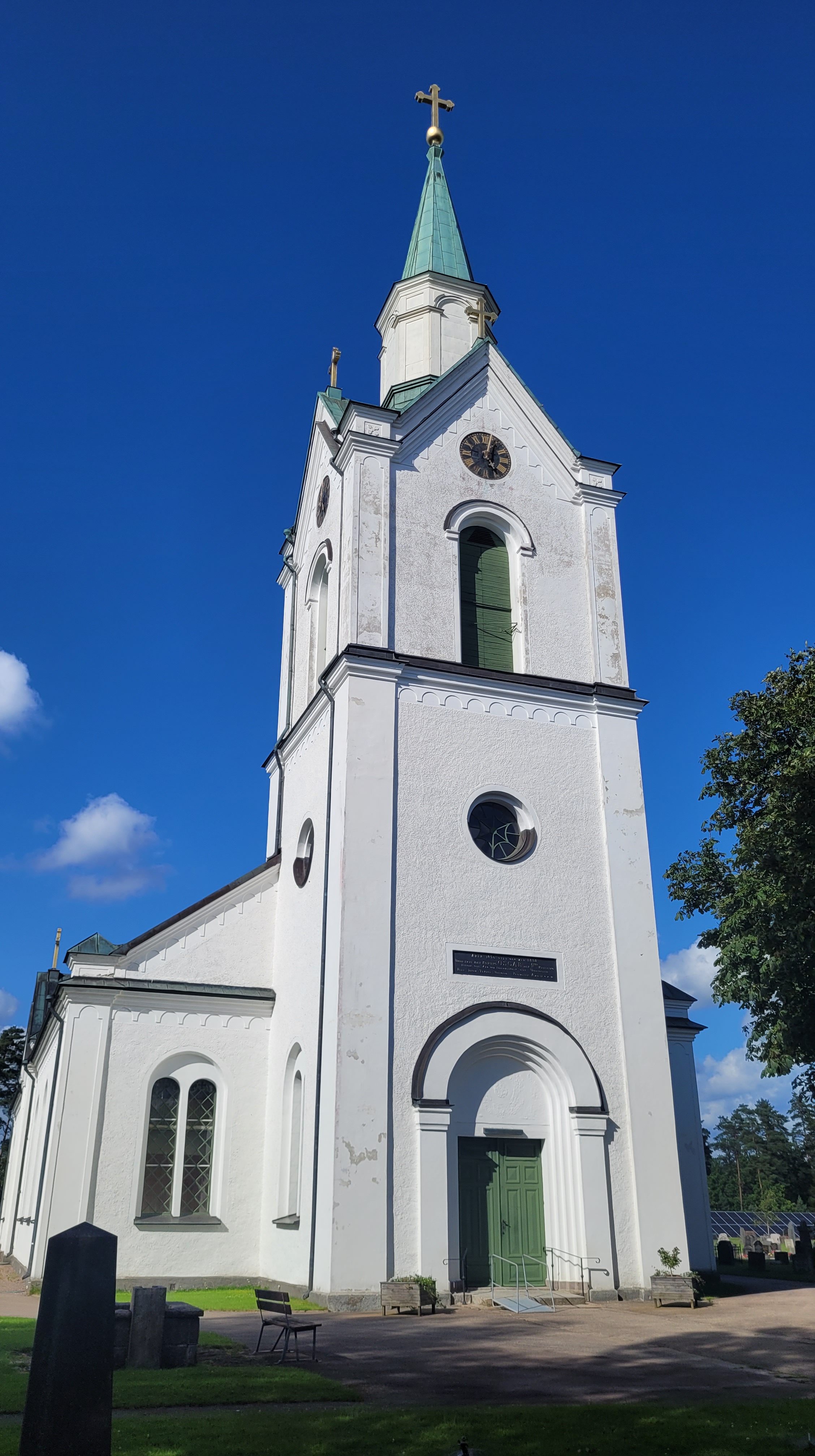
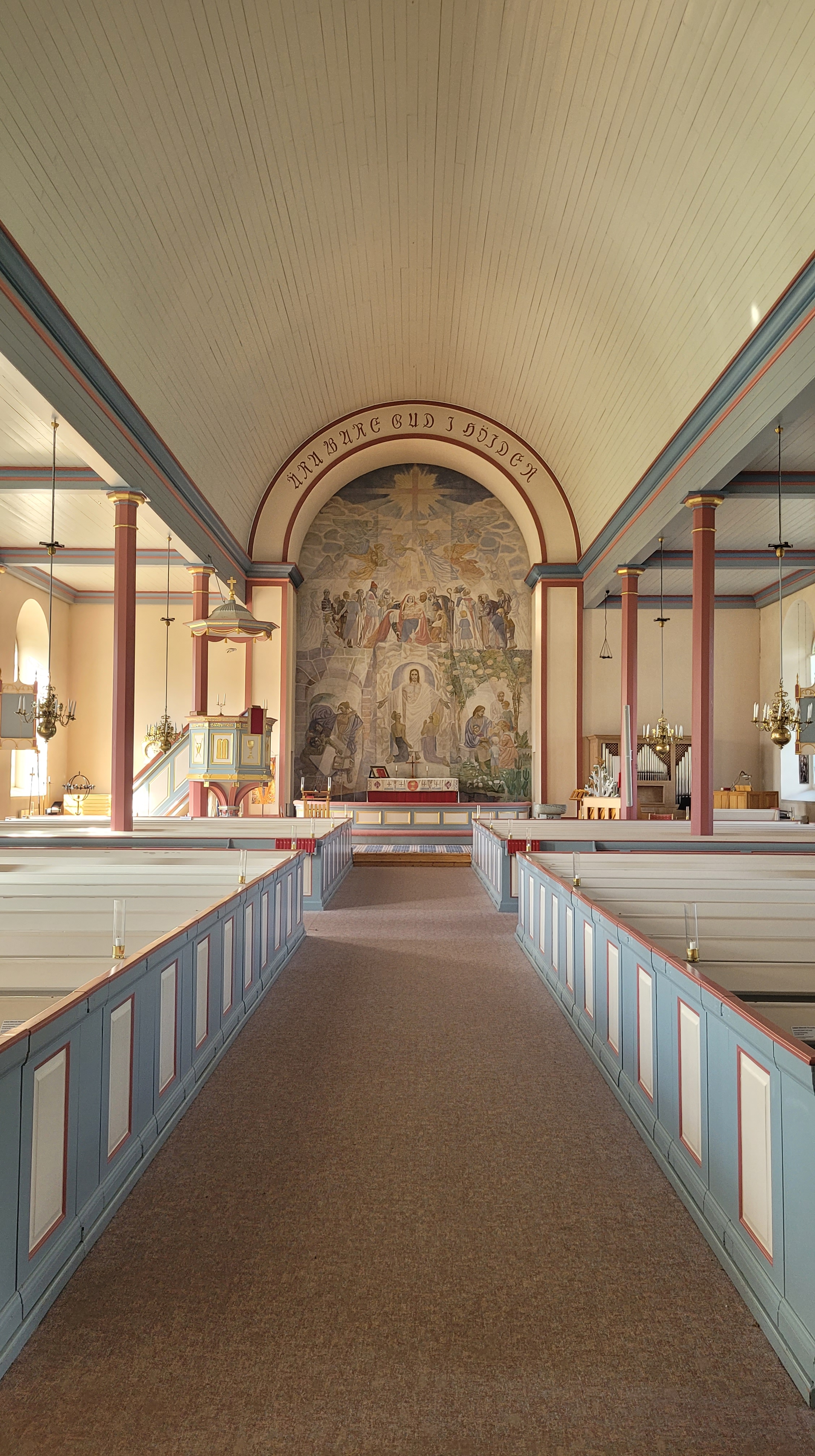
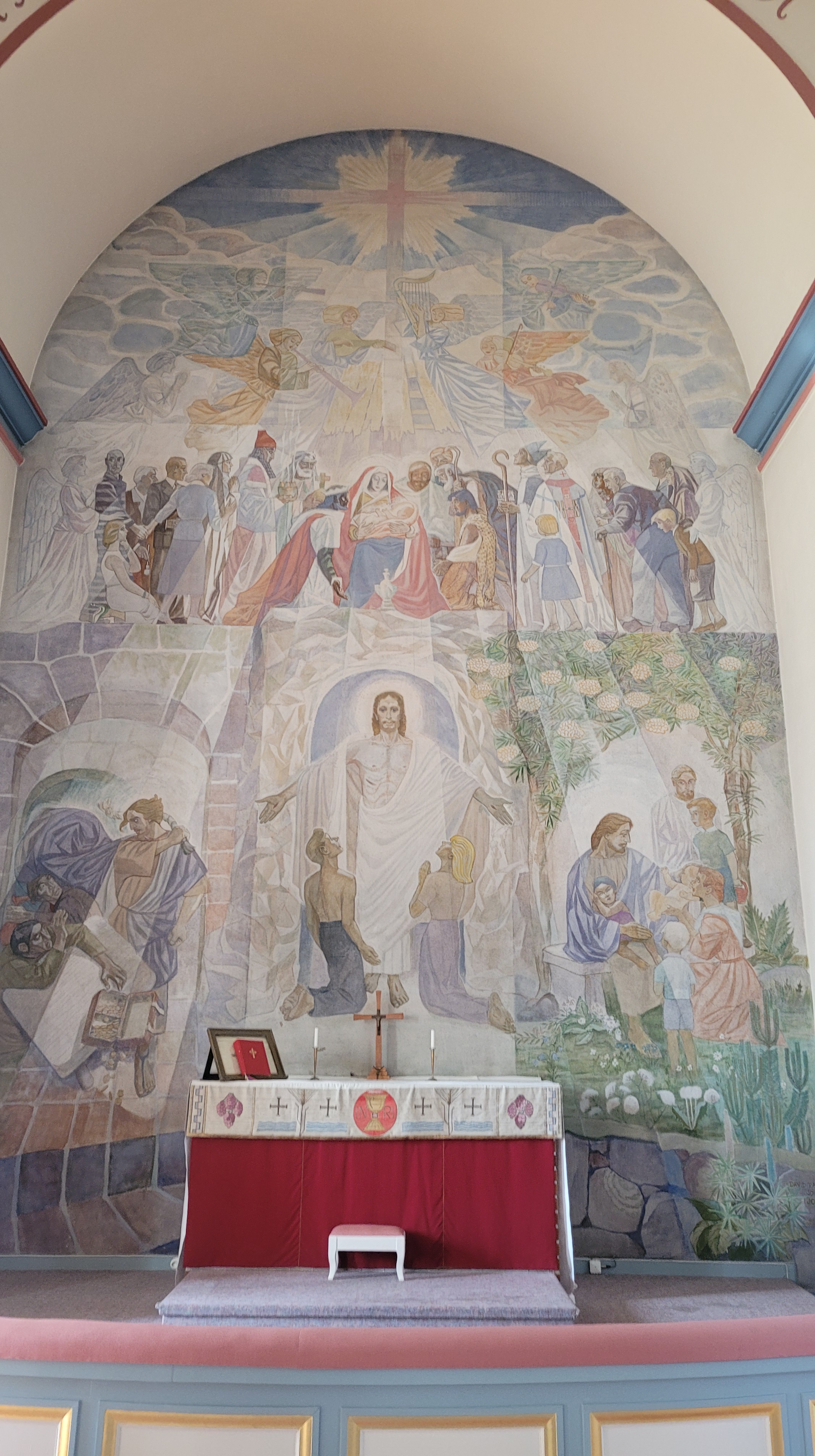
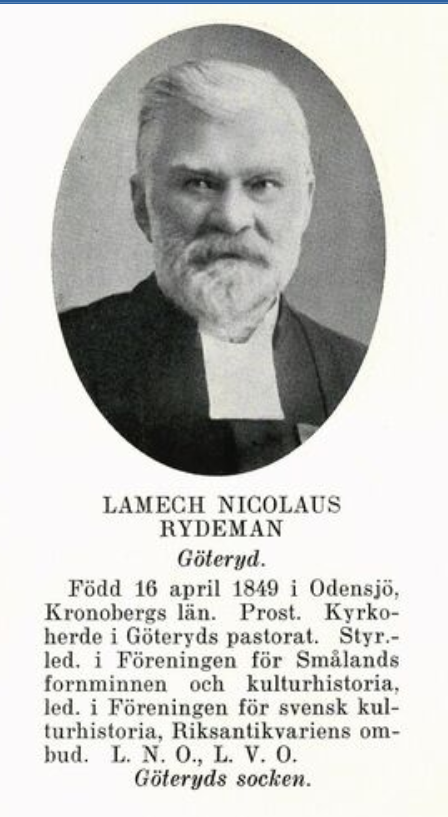
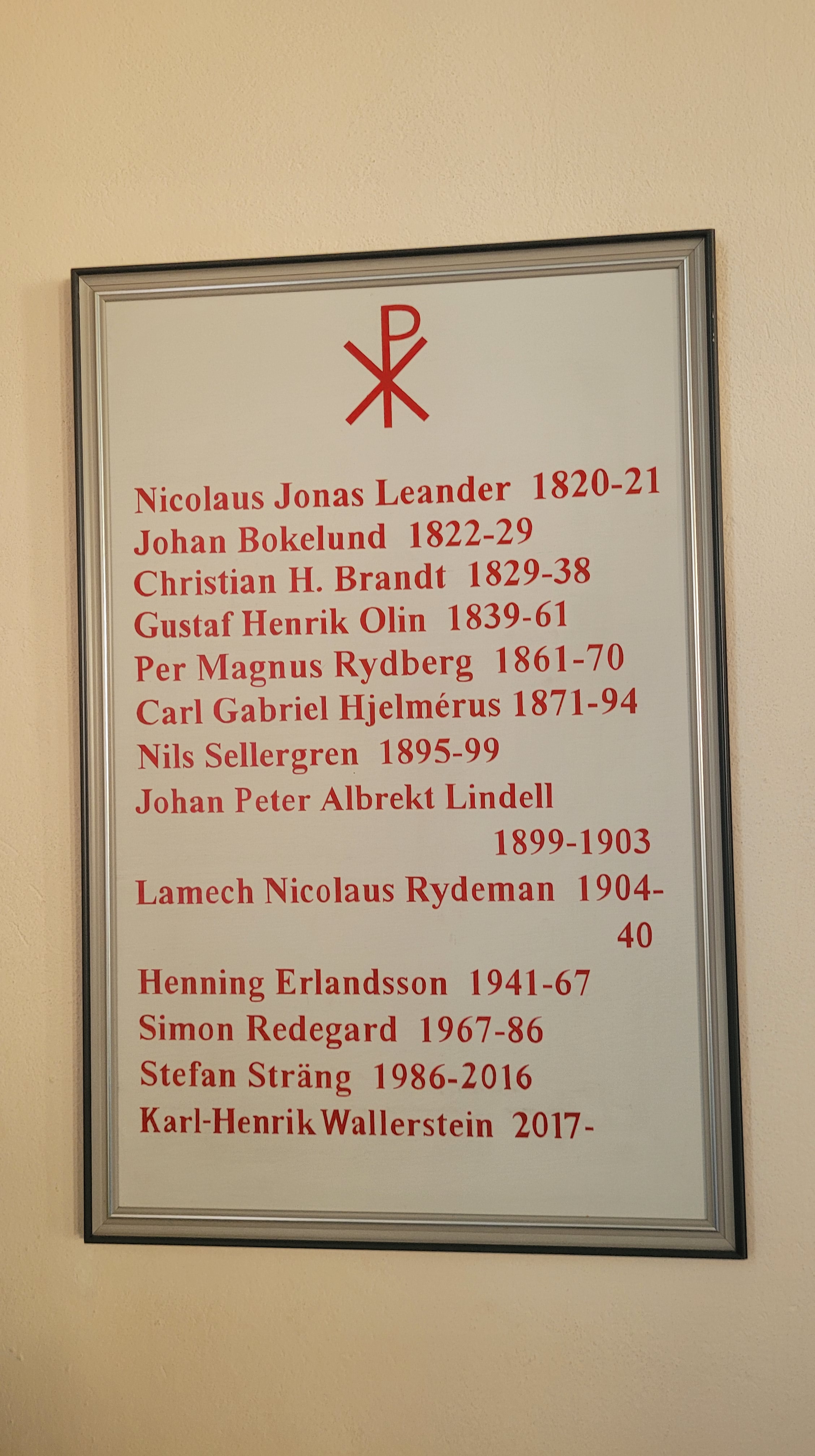
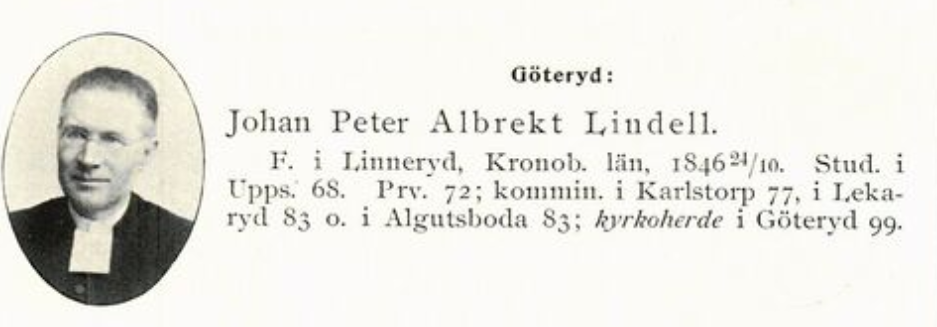
There has been a church on this spot since the Middle Ages, the current church was built between 1856 and 1858. Inside, there was a list of the priests that had been responsible for the congregation since then. My great grandfather Nils, born in 1881, would have heard at least three of these priests speak from the church pulpit. Perhaps Johan Peter Albrekt Lindell and most certainly Göteryd’s longest serving priest – Lamech Nicolaus Rydeman – were priests who he would have spoken a bit extra with, before emigrating to America.
Finding the gravestones
Walking around the church, I took in the churchyard. There were many gravestones and it seemed some were quite old. I noted that the stones not only revealed the names of the buried, but also the area from where they came – very helpful when looking for names old relatives.
I did not have much time to spend there, and had almoat given up when a few stones in a row caught my eye. There they were! Nils’ father and mother, his sister, his brother-in-laws and even a couple of names I did not recognize on the spot. Sometimes I feel nore lucky than I deserve, considering how little time I allocated to this small adventure.
It was lovely to recognize the names of Sven (Nils’ father) and Elisabeth – his sister. On the large stone in the middle, there were two names I had not seen before, and I had to do some research to find out how they were connected. Likewise with the stone on the right side of the large stone – Johan M. Nilsson was not someone I had come across earlier.
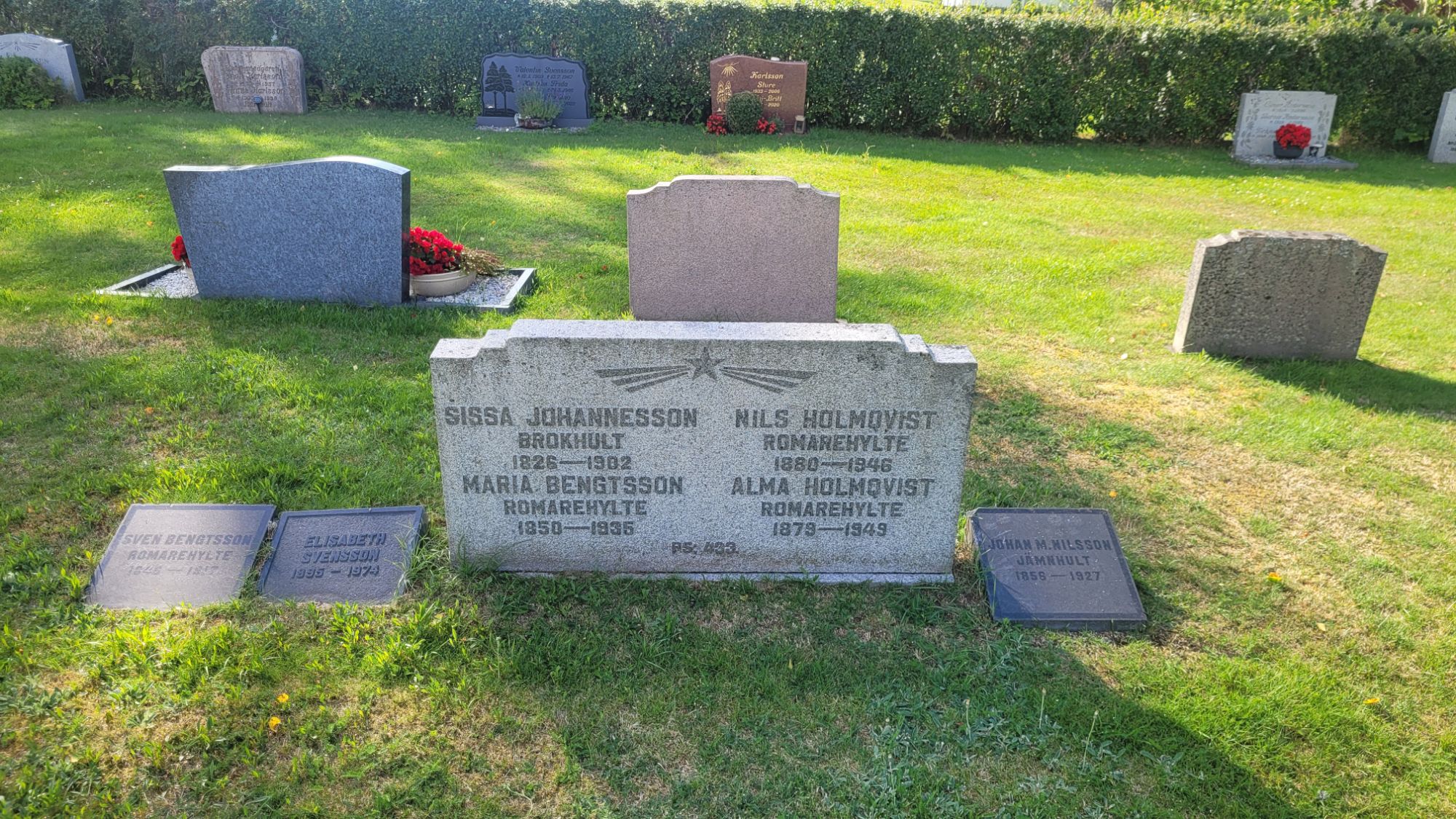
After some digging (pun intended) I finally found out how the names were all connected to me. Sven Bengtsson and Elisabeth Svensson are the father and sister of my great-grandfather,Nils Styrelius (born Svenson). Nils Holmqvist and Alma Holmqvist, whose names are on the large stone, were married; Alma is the aunt my great-grandmother Olga visited in Brokhult (mentioned above) — in other words, Nils’ sister.
Sissa Johannesson was a mystery for a while, but I eventually found her on MyHeritage. She turned out to be my great-great-great-grandmother, Nils’ maternal grandmother. Maria Bengtsson was Nils’ mother, and Johan M. Nilsson, I finally discovered, was Maria’s brother — making him Nils’ uncle.
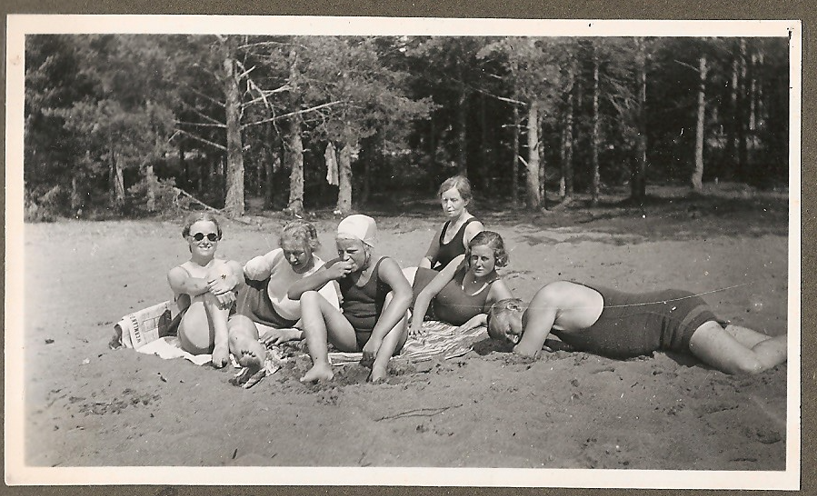
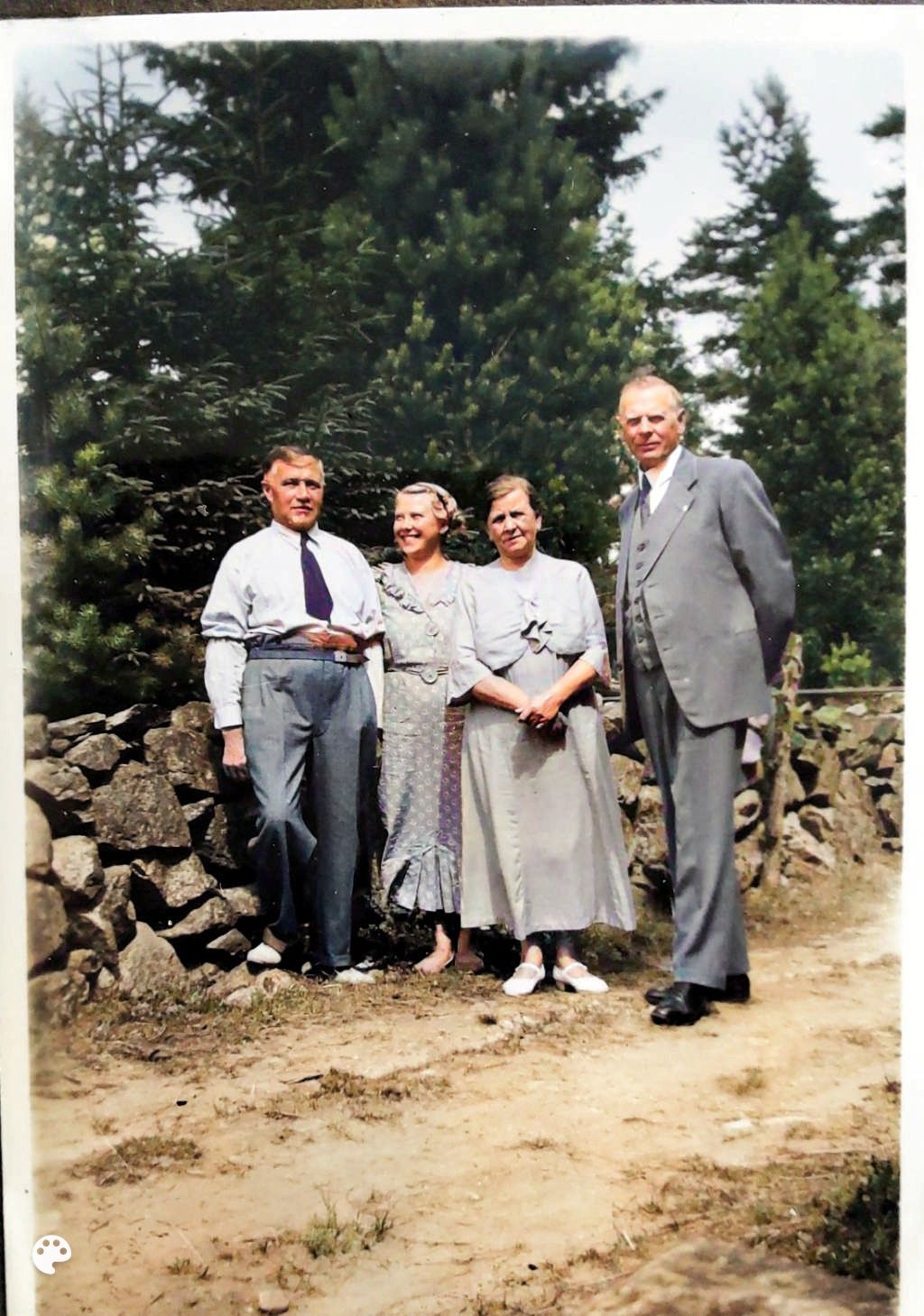
I also found a photograph featuring Nils and Alma Holmqvist, together with my great grandparents Olga and Nils.
There may be more graves belonging to other family members elsewhere in the churchyard, but unfortunately my time ran out and I could not stay to find out.
Trying to straighten out questionmarks
Something that intrigued me afterwards, was the fact that the black stones surrounding the grey middle stone, looked quite new. What had happened, and who had seen to it that these stones were replaced, if that was the case? I have written to the church to try to find out, and I am still waiting for a reply (will update this article with any new information I come across).
Another thing whas the number engraved on the bottom of the grey stone – Ps. 433. It indicates a psalm with this number. As there are several psalm books, the number could either refer to the 1819 psalm book (Sissa Johannesson was buried in 1902), or the 1937 psalmbook – as the latest burial in the grave was 1949. Luckily I found out the psalm 433 had not changed between the two psalm books and I could look it up in my 1937 edition.
Ps. 433 “When all around me rests” by F.M. Franzén (1814, 1818)
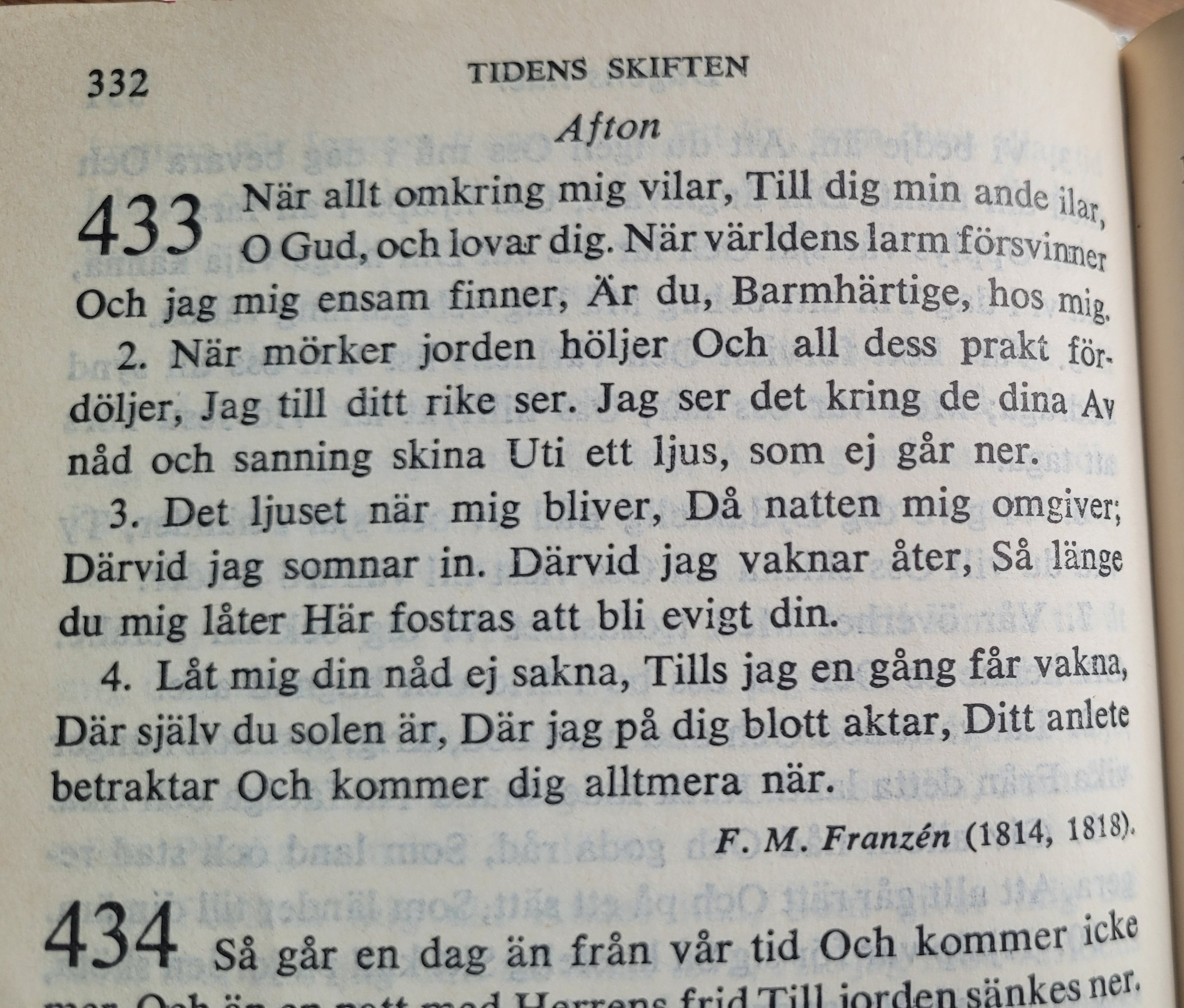
1. When all around me rests,
my spirit hastens to You,
O God, and praises You.
When the world’s clamor fades,
and I find myself alone,
You, merciful One, are with me.
2.
When darkness cloaks the earth,
and hides all its splendor,
I look toward Your kingdom.
I see it shining around Your own,
with grace and truth,
in a light that never fades.
It would be interesting to know who selected this psalm for the gravestone. Perhaps I will find out in the future… That’s the beauty of this research project – unexpected discoveries can come my way just like that!


I love this (kind of) write up(s), Thérèse, digging (lol) into history. Looking for clues, asking questions, searching in archives, books, letter, the internet, and then the plot thickens, so to speak. Another chapter added to the family saga. It must be sweet travelling thogh the landscape and the places your relatives lived their lives. The pictures speak for themsleves. Wooden churches like in your country we don’t have (much) in mine, but the interiors are not very different from those on my birth island, the benches, the rounded wooden ceilings. Although I’m not religious myself, I find the first two lines of psalm 433 wonderful: When darkness cloaks the earth, and hides all its splendor… How beautifully written!
LikeLiked by 1 person
Dear Peter, thank you! Yes it was such a nice day seeing these places, that have in fact not changed so much over the last 100 years. I love finding out more about those little details and the psalm was truly fitting for a gravestone!
LikeLiked by 1 person
Love this! It’s so fun to find out new information! The letter makes me wonder what happened at Inga and Roland’s for it to be so chaotic. 🤔The yellow church is so pretty. And I love the thought of the stone wall and its centuries of moss.
LikeLiked by 1 person
I too, wonder what happened at Inga and Roland’s… So much chaos, that Olga was happy not to have been there! It’s another mystery… Perhaps, someday I will find out 🙂 I liked the yellow church as well – I was a bit surprised that it was yellow, in fact. We don’t have many churches like that, most are white… Thank you so much for commenting, Debra!
LikeLiked by 1 person
Life in that part of Sweden must be quite peaceful and pleasant today, and certainly much easier than when Nils was growing up there. Could you imagine yourself ever living in that kind of community, or would you always want to live in a more urban environment?
LikeLiked by 1 person
It is peaceful, and very beautiful… I think Nils liked this area, he did come back and visit with family when he wasn’t in China. Perhaps he too, would have liked to be buried in the family grave in Göteryd… but as he died in China it was not possible.
As for me, I think a summer house in that region would be great, but living there would require a very different lifestyle, and another job. I think I am more of an urban person, I would miss city life a bit too much to make a shift like that. But one shall never be too sure 😉 What about you – what do you prefer?
LikeLiked by 1 person
I’ve always preferred country life. The area where I live now is rural but not isolated. I live on a busy road, with neighbors on three sides and a corn field in the back. Each house has a large yard, so there’s plenty of space. Sometimes I miss city life, though, I must admit!
LikeLiked by 1 person
It sounds like you found your perfect spot! The corn field must be a great view. Enyoing where one lives is a true privilege!
LikeLiked by 1 person