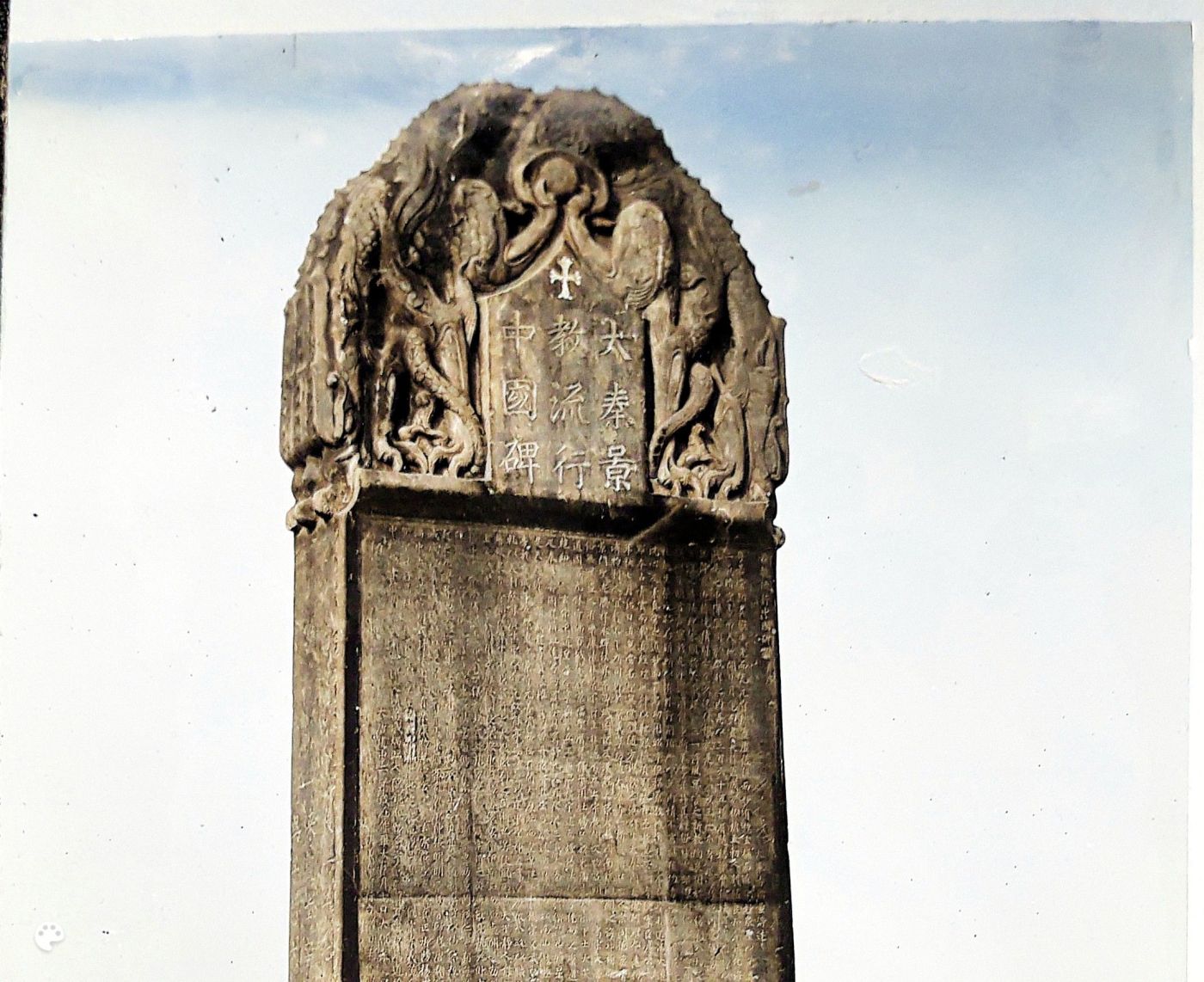
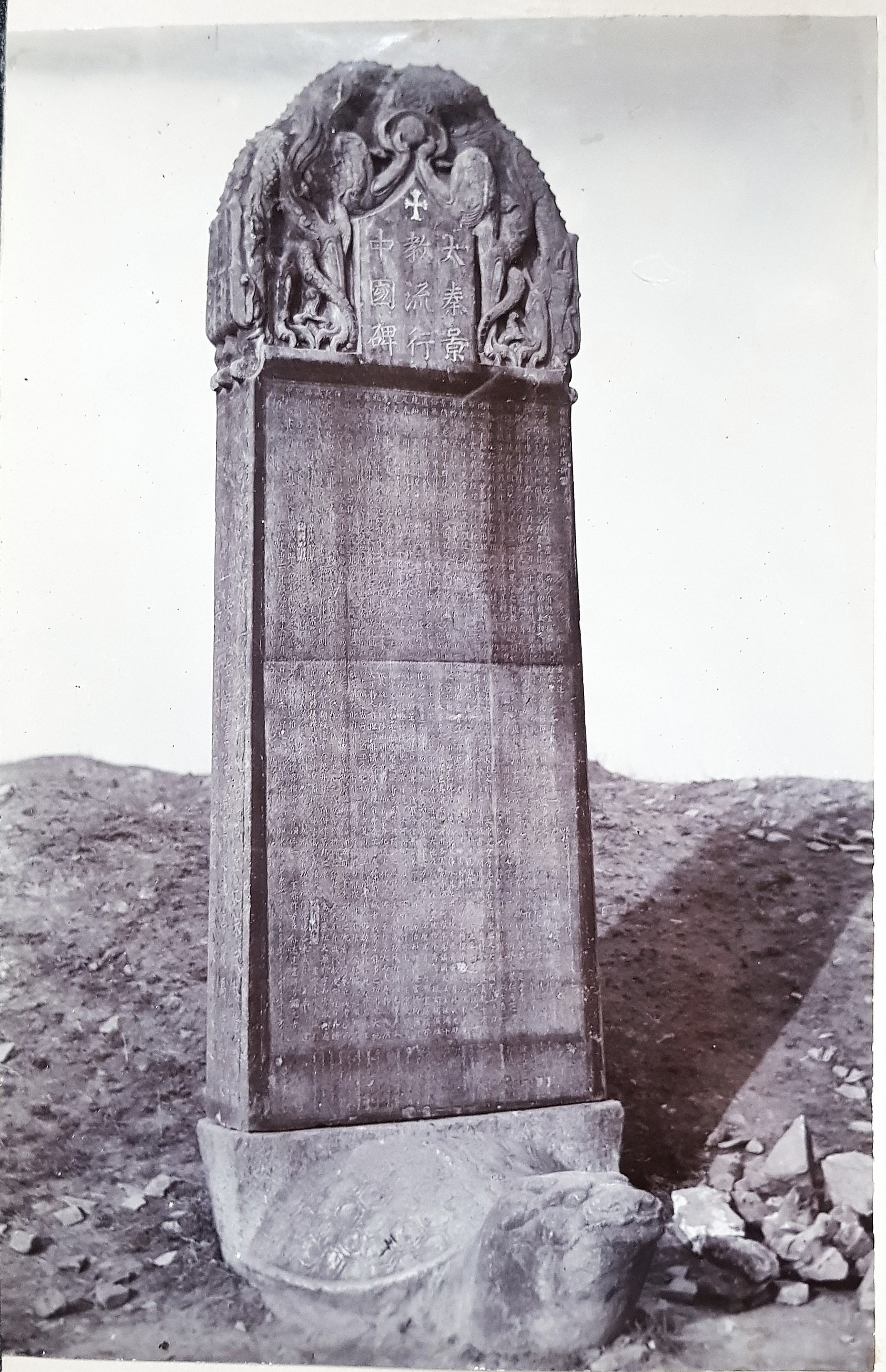
When Protestant and Catholic missionaries returned to China during the 19th century, they did not arrive in a spiritual vacuum. For many of them, one discovery was very important. The Nestorian Stele in Xi’an was a nearly three-meter-high stone monument erected in 781 during the Tang dynasty. Today the stele is displayed at the Beilin Museum in Xi’an, but for generations of missionaries it was something far greater than an archaeological object. It was proof that Christianity had once taken root in China centuries before the arrival of Europeans. And it was something they could go and visit on the site where it was once erected.
The stele tells the story of an Assyrian Christian mission that reached the Tang court in the 600s. Its inscriptions describe churches and monasteries across the empire and tell about how early Christians translated their faith into concepts familiar to Chinese readers, borrowing language from Confucianism, Daoism, and Buddhism. For missionaries in the 1800s and early 1900s, this was encouraging. The stone linked their own work to an ancient Christian history already present in Chinese civilization. Perhaps that is why Dagny and Robert kept a photograph of the Nestorian Stele in their family photo album.
From the 16th century onward, Catholic missionaries translated parts of the Bible into Chinese. During the 19th century, Protestant missionaries completed full Chinese translations of the Bible and spread them through schools, printing presses, and medical missions. One milestone was the publication of Robert Morrison’s Chinese New Testament in 1813, followed by complete Chinese Bibles that became widely used throughout the Qing dynasty.
Translation was very important to the missionaries and their work. The Bible had to be expressed in language and concepts Chinese readers could understand. In this sense, the Nestorian Stele served almost as an inspiration and precedent. The missionaries could see that Christians in Tang China had engaged with the same questions over a thousand years earlier. How should God be described in Chinese? Which words could convey the essence of God? How could Christianity be understood without appearing so foreign?
This also shaped how many Chinese encountered Christianity. The faith was often introduced not only by missionaries but through Chinese helpers, teachers, and especially “Bible women” (read a bit about a Bible woman here) — local Christian women who travelled, taught, read scripture aloud, and explained biblical stories to other women. Through them, Christianity became more rooted in everyday Chinese life.
I think the Nestorian Stele was important to my great-grandparents as it linked their beliefs to a part of the history of China that they were there to revive.
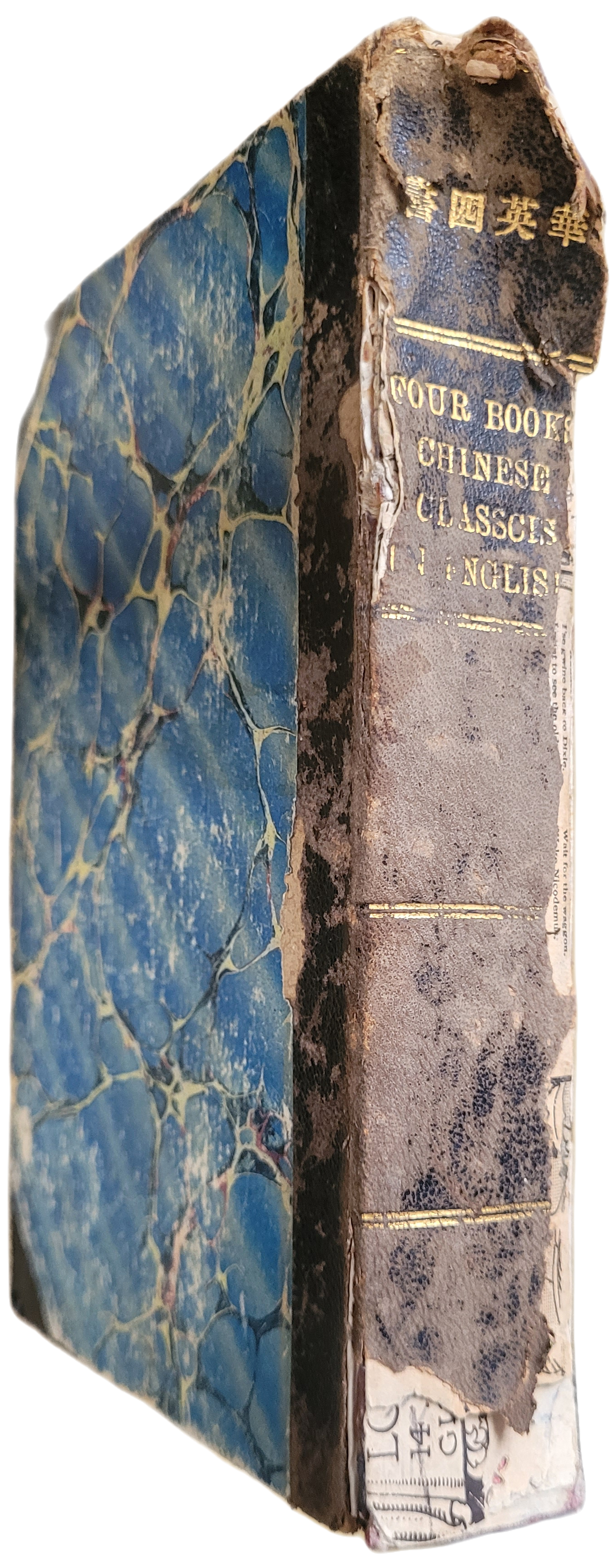
But it was not only the Chinese who learned from the missionaries. In order to understand their audience, the missionaries also needed to understand where the Chinese came from. And that was Confucianism. I found a Chinese-English book in Karin Stålhammar’s collection that exemplifies this. It was the “Four books Chinese classics in English.
Searching on the internet I found out that this was a traditional Confucian curriculum. For almost a millennium, the Four Books were the foundation of a classical education in East Asia, teaching everything from thorough reading, to ethics, reasoning and human relations. It was also an introduction to Confucian thought. The four books were “Great learning”, “The discourses”, “The book of Mengzi” and “The doctrine of the mean”. Mina Stålhammar’s book also has “The Confucian Analects” in addition to the other books. The way it is layed out in the book, I will probably not read all of it, but it is interesting to think about how the missionaries took in this information and what it meant for them and their mission to convert the Chinese to Christian faith.
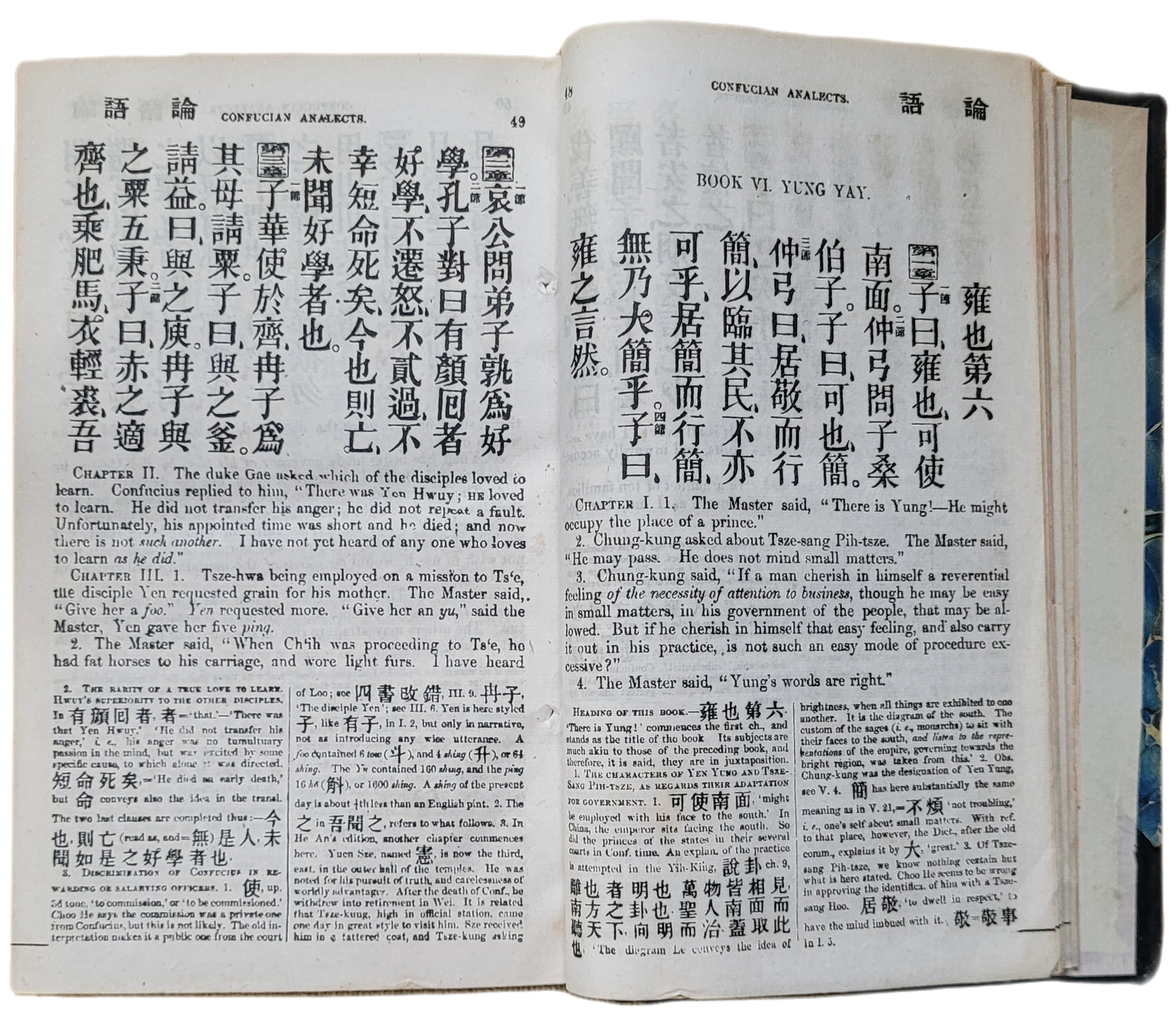
Passage from the “Confucian Analects” in the Four Books:
“Chapter V: Tsze-hea said, “He who from day to day recognizes what he has not yet, and from month to month does not forget what he has attained to, may be said indeed to love to learn.”
I think that passage fits well as the missionaries indeed loved to learn – they had to in order to persevere in their new environment and become accepted as part of the Chinese society.
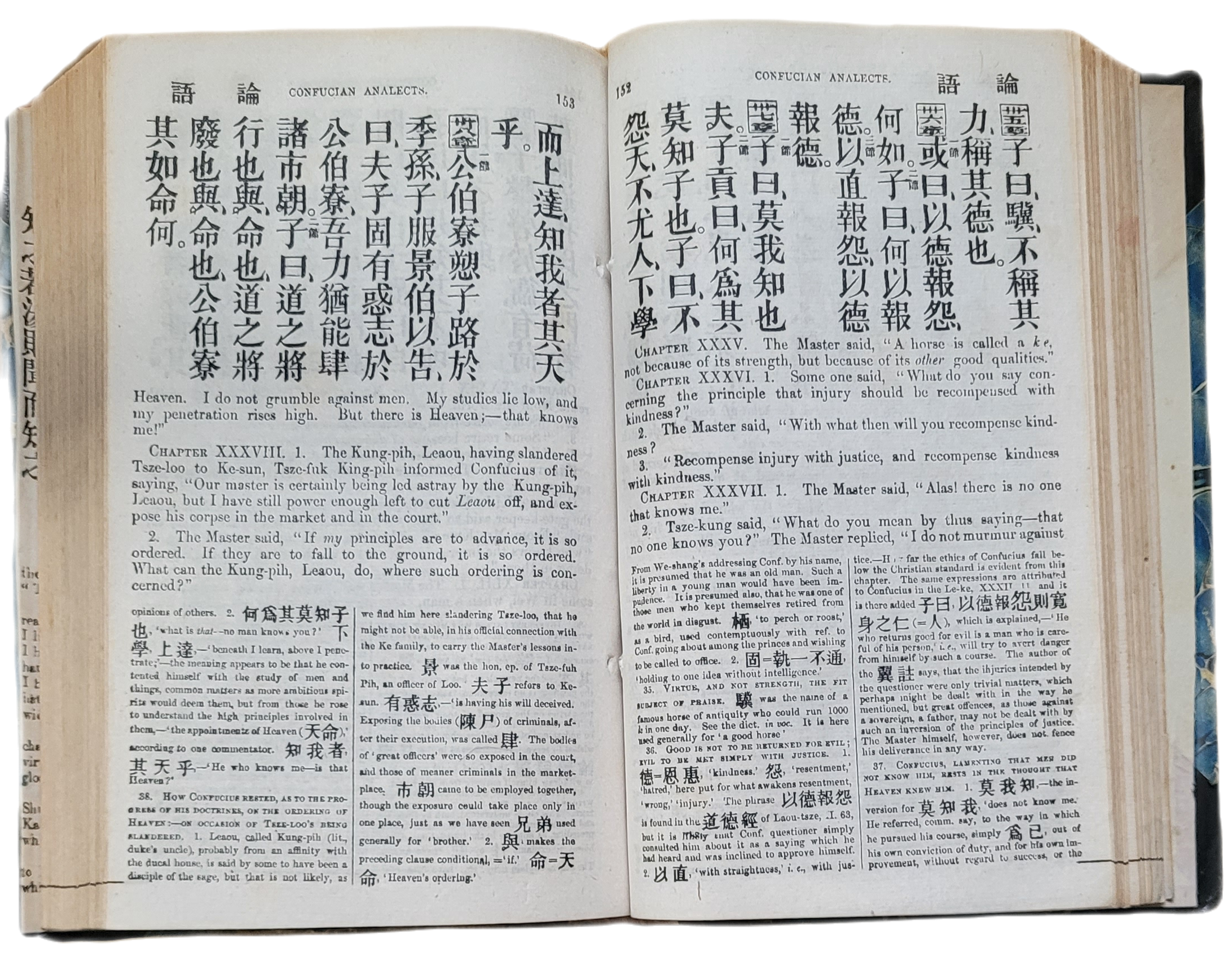
The Four Books Chinese Classics in English owned by Mina Stålhammar, grandmother of Karin Stålhammar. According to Mina Stålhammar’s inscription, she obtained it in Shanghai in 1904. (assuming I’ve deciphered the inscription correctly).
 Thérèse Amnéus
This I find so interesting Thérèse. The Nestorian Stele as a handhold for the missionaries. Something real, made of stone, touchable. And a tool for learning at the same time. Because, yes, the Christian believe had to be translated into notions a people from a totally different culture and spiritual ideas could and would want to grasp. That must have been quite a task. I love the pictures of Mina Stålhammars book. The characters translated into English on the same page. A cultural exchange.
LikeLiked by 3 people
Hi Peter! Yes, I agree – exchange is truly at the core of how we learn and also how we inspire an interest in learning from one another. I find that learning has so much to do with understanding where the other person is mentally and emotionally before introducing new ideas. Genuine curiosity about their perspective is what helps us find a common thread to begin with. Without that curiosity, the missionaries would have had a difficult time to know where to start or how to make their religion meaningful in China, I think.
LikeLiked by 2 people
Thank you for this fascinating information! I really enjoyed learning about the Nestorian Stele.
LikeLiked by 2 people
I must say it was news to me that this Nestorian Stele was so important before I kept seeing photos of it in material about the missionaries – and when I also saw it in Dagny’s photo album, I had to find out more about it 🙂 I am happy you also found it interesting!
LikeLiked by 2 people
I was surprised by the history behind it!
LikeLiked by 1 person
Hej kära Therese!
Så roligt höra från dig. Med stort intresse läser jag om the Nestorian Stele and Chinas Christian Past. Jag kommer ihåg att Gustav Adolf i brev nämt om stenen för sin pappa som ju från början var mycket skeptisk till sonens missionsföretag. GA ville, precis som du funnit i texten, visa att detta med missionerandet härrörde från långt tillbaka. Interessant att du har kunnat gå på djupet. Jag är så glad att jag skickat materialet till dig. Tänk, ibland, ja rätt ofta faktiskt, blir man bönhörd på de mest oväntade sätt.
Vi, min man och jag, mår rätt bra. Men som det är i vår ålder många gånger får dagsformen styra dagen. På sistone har det pendlat mellan begravningar och åttiofemårsfirande. Och det har blivit mindre skrivande, tyvärr. Läser med intresse vad du skriver men får tyvärr inte till det med kommentarer. Vädret styr också dagen. Jobbar mycket i vår lilla trädgård. Det ger verklig glädje och tillfredställelse.
Hur lever livet med dig och din familj? Är du kvar på Unesco? Jag har ett svagt minne om att du när vi sågs på Bokmässan eventuellt hade andra planer. Det var så roligt träffa dig på Bokmässan. Hoppas du och din familj får en fin och vilsam sommar.
Kram Karin
LikeLiked by 1 person
Kära Karin!
Det glädjer mig så mycket att du tyckte inlägget var intressant! Jag har fortfarande så mycket att utforska i din låda med böcker och är så tacksam över att du anförtrodde den till mig ❤️. Vad spännande att Gustaf Adolf också använde sig av denna sten för att övertyga sin far!
Jag mejlar dig i dagarna så kan jag berätta litet mer om ditt och datt 😀 Varmaste hälsningar Thérèse
LikeLike
hej igen Therese!
Skrev ett svar på engelska men osäker om det kom med./ Karin
LikeLiked by 1 person
Nej det gjorde det tyvärr inte, men försök gärna igen! 🙏
LikeLike
Wow that’s amazing! 😀
LikeLiked by 1 person