As a parent, it has often been tough to leave my children behind for work trips to other countries. Since I had a job that required frequent travel, there were plenty of times I missed my kids when they were little. What brought me comfort was knowing that they had a dad at home taking care of them and that they were always safe.
When I was a young adult, I went off on my own adventures — a couple of year-long stays abroad and then later several years living in Berlin. Looking back now, I realize that whilst I missed my family and friends back home, I didn’t really think much about how much they might have missed me. I was so caught up in living my life and exploring these new countries and cultures that the thought of being missed never really crossed my mind in a significant way.
Now, I find myself on the “other side” of this experience, as my daughter has gone off for a study abroad year in Spain. So, now I’m the one worrying about how she’s managing, how she’s feeling, and how she’s handling the language barrier amongst other things. And recently, when Spain was hit with devastating floods that took many lives, I felt both helpless and anxious.
Thankfully, everything turned out okay for my daughter, and her city wasn’t seriously affected. Still, I got a strong sense of how it feels to hear or read about disasters in the country where your loved one is living and not know how it’s impacted them. I am happy that we live in a day and age when we have so many ways to communicate and that I was able to reach my daughter fairly quickly to hear how things were in her area.
I can’t help but think about my missionary relatives and how hard it must have been to get news about each other in the late 1800s and early 1900s. They wrote letters, which could take months to arrive. At the same time, their friends and family in Sweden might have heard about civil wars, uprisings, bandit attacks, famines, and other catastrophes that could have affected the missionaries in China. The long periods of not knowing must have been incredibly tough. I especially think about my grandparents Rudolf and Edna, who came to Sweden as 14-year-olds, and how they had to live knowing their parents were in China, facing countless challenges and dangers. Edna and Rudolf simply couldn’t know if their parents were alive until they received a letter, or in emergencies, a telegram. As both of their fathers passed away in China, they couldn’t even travel there to attend the funerals. That must have been unimaginably hard.
I don’t have the letters they must have written to their mothers when those deaths occurred, but I can only imagine how lonely they must have felt in Sweden, and how they must subsequently have worried about their mothers, who had to see to all the funeral arrangements and then try to get back to Sweden on their own.
When disasters happened — like the flooding of the Yangtze River in the summer of 1931 — they couldn’t quickly find out if their families had been affected. Morris, the eldest son of Dagny and Robert, was in China at the time, and his third child, Rolf, had just been born in Beijing.
He writes: “A fertile agricultural area of 108,000 square kilometers was destroyed. Several million people were left homeless. Thousands of dead bodies floated in the polluted water, along with the carcasses of donkeys, dogs, and cats. Plagues spread. Nothing like it had happened since 1868. Missionaries, the government, and various organizations did incredible work to alleviate the suffering. But what could they really do? And in Europe, people never really woke up to the severity of the situation.”
Looking for photos, I came across a blog by Benjamin R. K. Sun. He has gathered some interesting photos from the 1931 flood here.
Various challenges causing worry
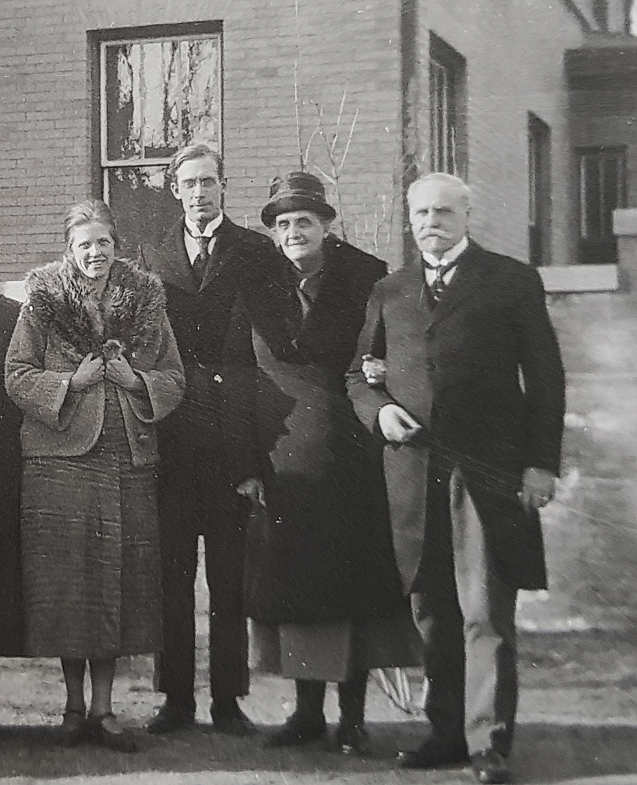
Other challenges in China included the extremely harsh winters. For instance, the winter of 1930 claimed many lives. In one of the letters I have in my collection, a missionary colleague and friend – Verner Wester – writes about this difficult time for the Chinese:
“You know how terrible this winter has been. Masses of people and livestock froze to death. A few days ago, three wagons passed by here, having unloaded their salt cargo. Two of the drivers were dead, lying stiff on the wagons. The third had to look after all three vehicles on his way back. He cried like a child, they said. Naturally, he knew he could face the same fate at any moment. They just aren’t equipped for this kind of cold. They often get frostbite on their feet, and then there’s no hope; once they sit on the wagons, they become frozen solid in no time, and disaster strikes. We hear gruesome stories about this every day. The poor beggars, as you know, are so unfortunate in this country where mercy is hard to come by. Of those who survive the winter, many end up crippled. Their feet will fall off. I took in a boy whose feet were frozen, swollen like ice lumps. He couldn’t feel them for days, and when he stomped his feet, it sounded like hitting a stone. We couldn’t warm them up too quickly, so they had to thaw gradually in a cold room. This was a couple of weeks ago. I’m now treating his feet with wraps. They’re blue-red, and the skin, which was frostbitten, is peeling off up to above the ankle, where he had his pants tied with a band, you know. It’s still uncertain whether his feet can be saved, but I’m hopeful there won’t be gangrene or anything that leads to rot. His father froze to death out on the street, right in front of the boy.”
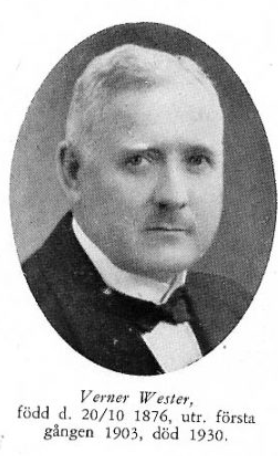
In January 1930, Verner Wester writes this letter. By April, he receives the news that my great-grandfather Robert has passed away. Verner immediately makes the journey to Hoyang, on the other side of the river, to lead the memorial service in a packed chapel. He then returns to Shansi, only to hear that another missionary in Hoyang has died. After yet another back-and-forth journey, including a dangerous crossing over the Yangtze River, he comes down with a bad cold. By early June, feeling weak, he tries to reach a doctor. He spends his final days in Yuncheng, cared for by Olga and a few other missionaries, before passing away from typhoid fever. In the end, Verner Wester became one of many victims of the war and famine devastating China, which spread diseases that claimed countless lives.
Travelling through war
Another stressful time was when Olga and Nils decided to head back to China in 1939, right as World War II was starting, after a stay in Sweden. My grandmother Edna didn’t want them to go, partly because she was afraid she might never see her parents again. Nils had some health problems, and the Sino-Japanese War was raging. But Olga and Nils went ahead — traveling via Vancouver — and after a rough sea voyage across the Pacific, they arrived in Shanghai in February 1940. Because of the ongoing war, it took them two and a half months to reach their field station. The whole country was on edge. They faced Japanese air raids both when they arrived in Luoyang and Dali but eventually made it to their post in Pucheng. I can only imagine the anxiety their daughters must have felt, unable to communicate with their parents during such a dangerous time. They made it through, but just two years later, Nils passed away in China after a failed surgery for a bowel obstruction.
No complaining
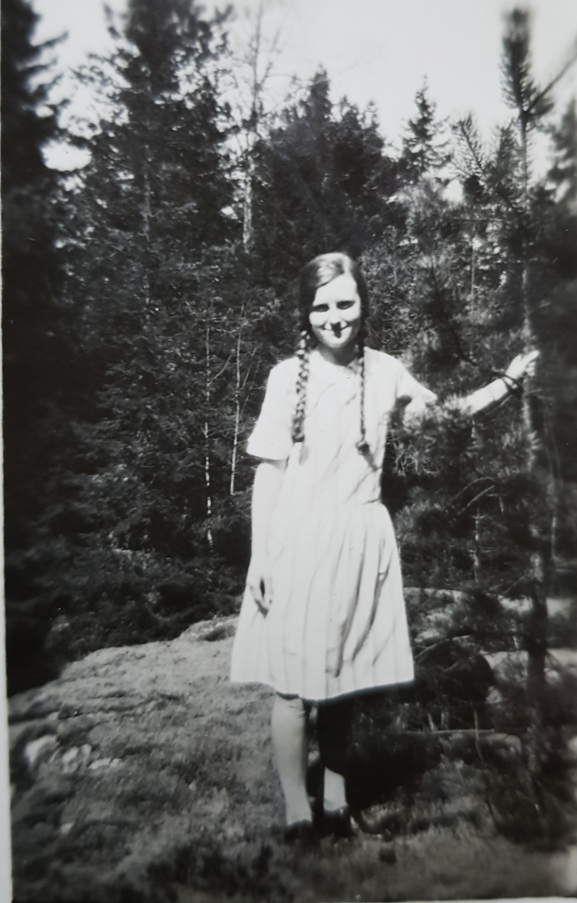
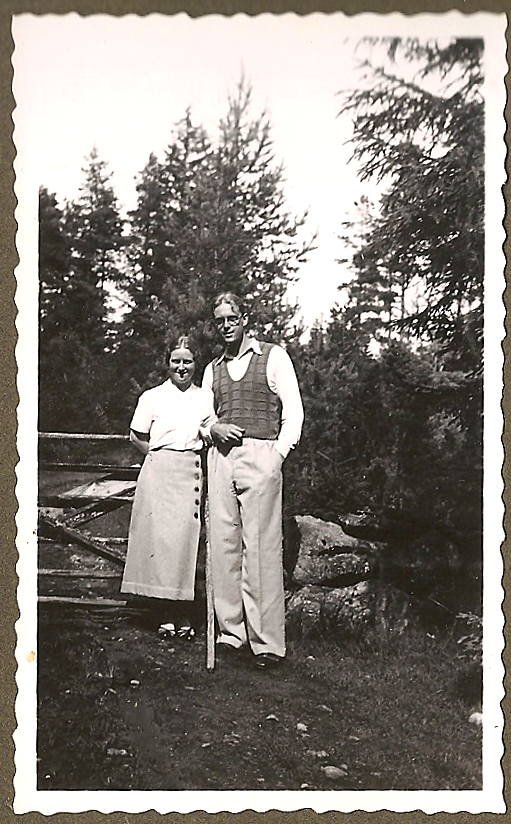
Edna and Rudolf were not supposed to miss their parents. They were supposed to support their parents work by being good teenagers at home, not complaining about being left without their parents. Olga, Edna’s mother, wrote letters home saying she didn’t know if they would ever see each other again, but that the most important thing was for Edna and her sister to keep being good Christians, so that the family could reunite in Heaven when the time came. Olga didn’t write that she missed her children, and I don’t think she thought so much about being missed by them either. Perhaps that was just sentimental nonsense and being apart was something one simply had to accept, having chosen this kind of life.
The dilemma
But missing family is hard. Being apart is hard. At the same time, every person must follow what they believe in to live their life. Many of us have friends and family in other countries that we miss. And what kind of world would we have if no one ever took risks, or moved, out of fear of never seeing their loved ones again?
In fact, all these risks exist even when you’re in the same country, city, or even house — it’s just that the worry isn’t as acute or present as it is when you’re far apart and can’t easily be there to help if needed. Having lived in other countries, I have also created strong bonds with those that became my “family” over there. After coming back home, they are the ones I’ve been missing. I suppose it’s just life – missing and being missed is part of it, and we should try to enjoy those moments we have together as they are happening, because we never know how life will unfold or what the future brings.
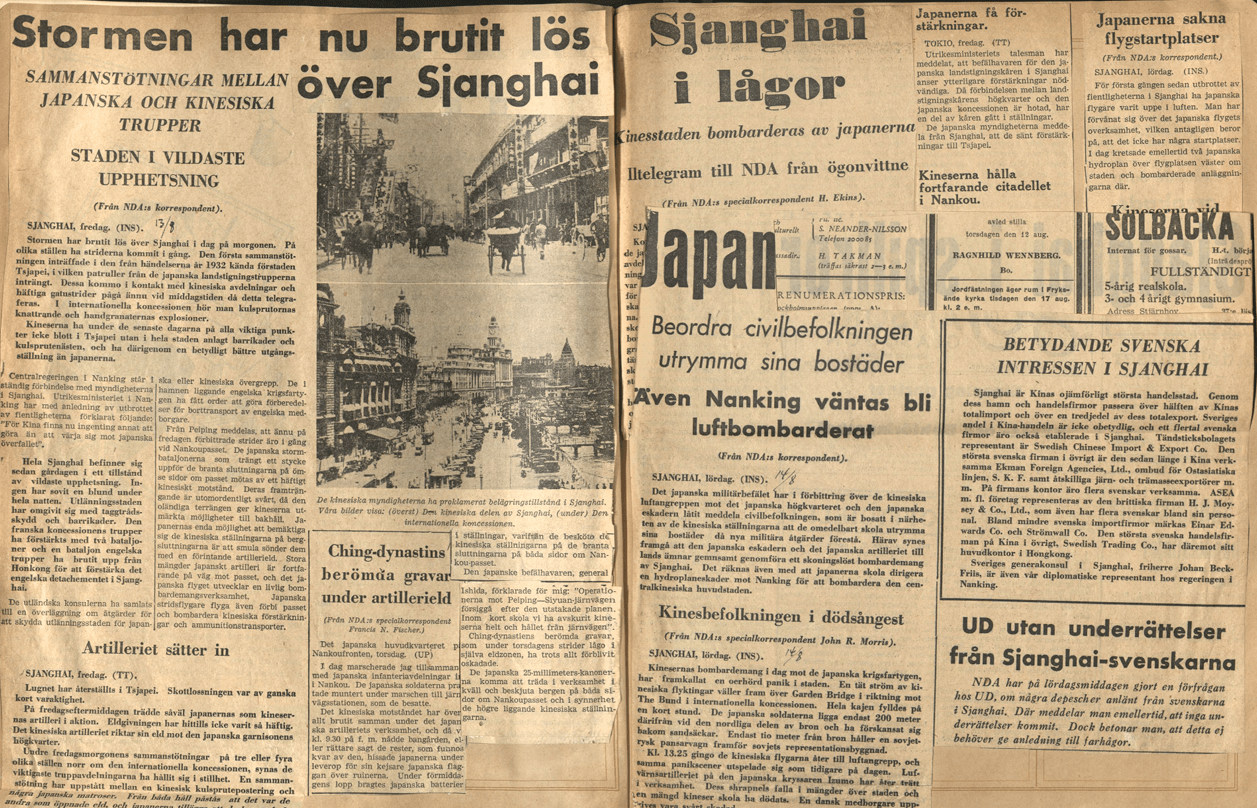
Photo at the top of the post: Newspaper clippings telling about the Sino-Japanese war.
 Thérèse Amnéus
Paul Simon sang: ‘I am a rock, I am an island, because a rock feels no pain, and an island never cries.’ But we are rocks nor islands. We move, resettle, find other places, physically or emotionally. And we do feel pain sometimes, and we are crying once in a while. I guess that is life. But I understand your worries and I’m glad your daughter is oké.
LikeLiked by 2 people
Thank you for your insightful comment, Peter ❤️ Yes, it is life, and life is certainly both wonderful and difficult. And being blessed with family and loved ones, one is all the more vulnerable… It is also true that we resettle in many different ways – and the level of resettlement can surely be very individual.
🙏
LikeLiked by 2 people
This is a very insightful and thought-provoking reflection. I didn’t realize how hard my leaving home at nineteen had been on my parents until many years later. My daughter and son-in-law live all the way across the country from us. Being able to keep in constant touch with them vis text message makes a world of diffrence.
LikeLiked by 1 person
Thank you, Liz! Parents are pretty good at hiding what is tough for them, with the best interest of their children in focus (if their parenthood is mature). I suppose that is why one does not realize their struggle until one is in a similar position oneself… You leaving at 19 must have felt quite early for your parents. When I look at my 18-yearold, it is so obvious that even though she is an adult in the sense of the law, she is also still a teenager with all that entails. 19 certainly is not much older, though I sometimes think that our generation did not have as much parental support as this generation does, so we had to become self-sufficient earlier, good or bad. Your daughter being so far away – it’s like her being in another country… what a blessing with modern technology!
LikeLiked by 1 person
You’re welcome, Therese. Looking back, I can say I was still a child at 19.
LikeLiked by 1 person
Haha! Yes, so was I, but I didn’t think so at the time 😄
LikeLiked by 1 person
Such a great post! In reading what you said about letters taking a long time to reach people, it dawned on me that they might hear of wars, disasters, etc, and get a letter from their relatives saying they were fine, but during the time it took the letter to arrive, they could have passed away. That truly is scary. I wonder what our ancestors would have thought to know that we would be texting people across the world, not to mention commenting on each others blogs, sometimes even in “real time”!
LikeLiked by 1 person
Thank you! It’s so amazing how technology has brought the world closer together and made it possible for us to stay in touch in real time over great distances. If they’d known this would happen, perhaps they would have postponed their journey 😅 Just how much easier would it not have been for them to work in China being connected like we are?! But that is what makes them so incredibly brave – they did this, on their own, taking great risks, knowing they might not survive… Sometimes I think we all got too comfortable – we can stay at home whilst discovering and interacting with the rest of the world – they really had to get out there…
LikeLike