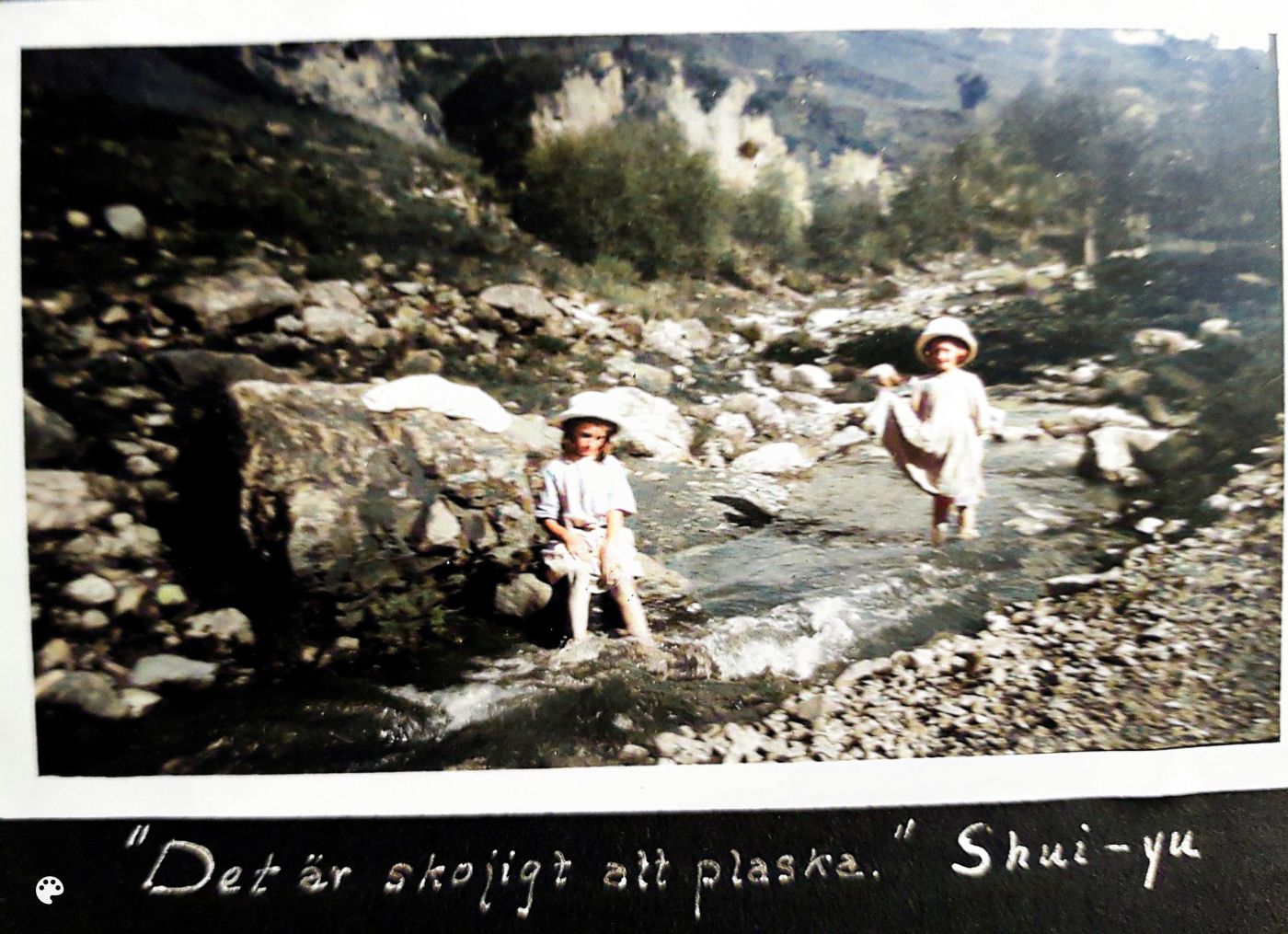
My grandmother Edna’s old photo albums from her and her parents’ (Olga and Nils) years in China offer many glimpses into their daily lives and what mattered most to them. Olga and Nils had two children who survived into old age – my grandmother and her sister. Their little brother died in China at the age of four. Because of this, any photo albums their parents kept would likely have been passed on either to the eldest daughter, my grandmother Edna, or divided between the two sisters, according to tradition.
My grandmother Edna later passed on two of these China albums to my father and his siblings. There may be more albums somewhere, but I cannot recall ever seeing any others, nor do I remember my grandmother mentioning them. Looking through the two existing albums, several photographs include notes indicating where they were taken.
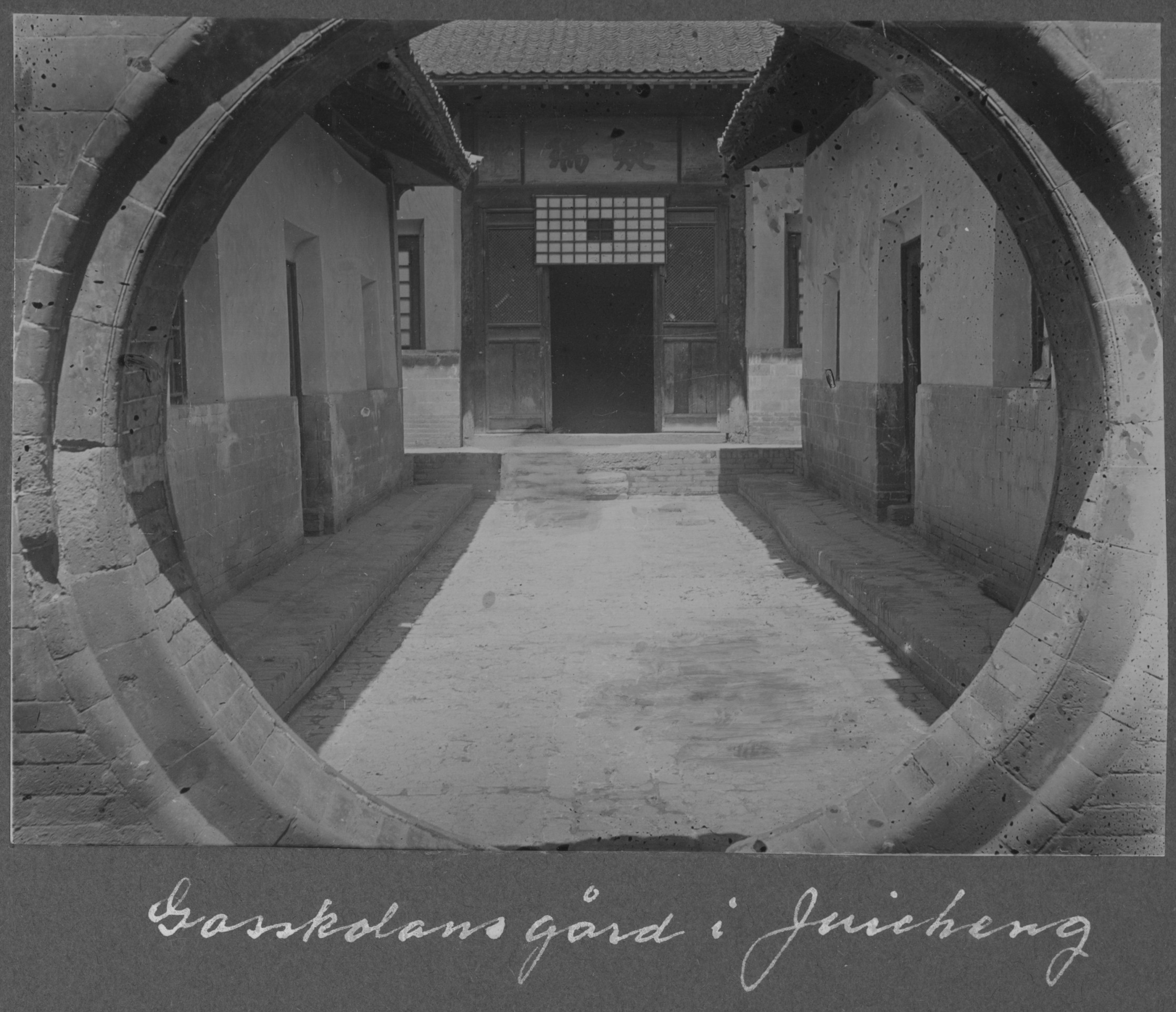
Some of the places mentioned are: Yu-Tao-Ho – today called Yudaohe (Shanxi), Pei Tai Ho, Hoyang, Kikungshan – today Jigong shan, The Swedish School in China, Tungkwan, Pucheng, Sien-tein, Tungchowfu – today’s Dali, The Yellow River, Peking / Beijing, Yuncheng, Haichow – today Jiezhou, Ho-tsin and Shui-yu – a village in the Ruicheng area.
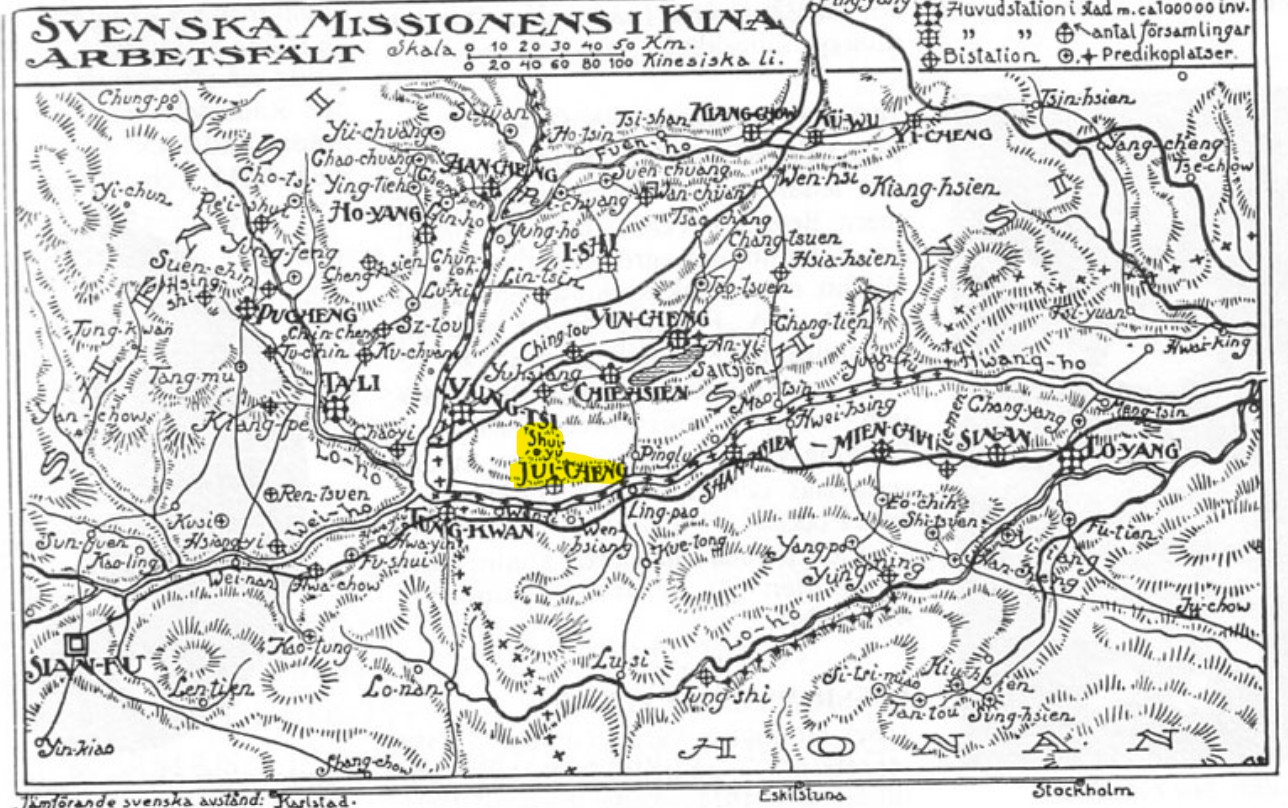
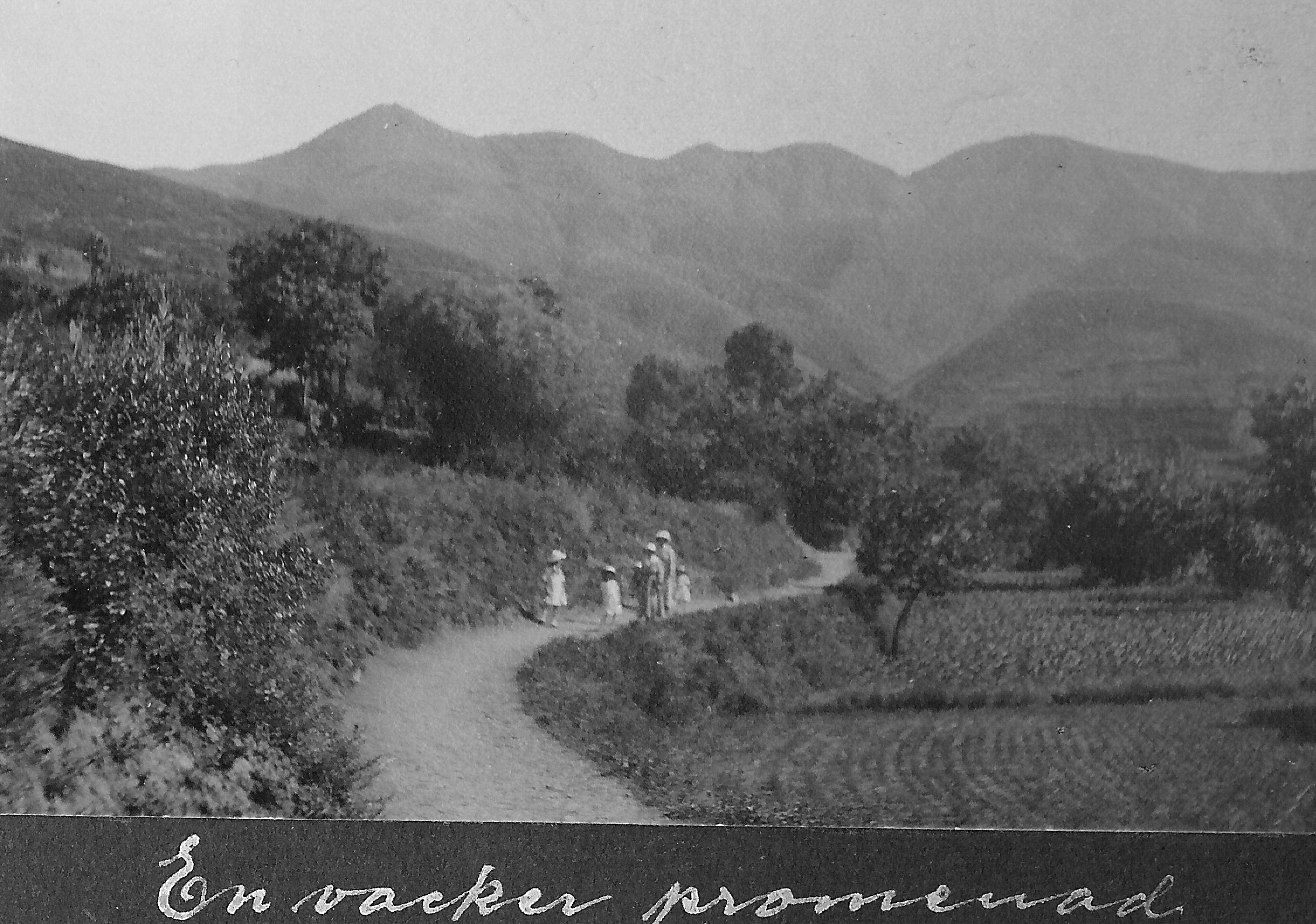
Shui-yu appears repeatedly throughout the photo albums. From what I understand, it was a place where the missionaries could rest during the summer months, which may explain why there are so many photographs of the entire family taken there. They also seem to be dressed for leisure, and in one pictures the missionaries are even shown playing with baby goats.
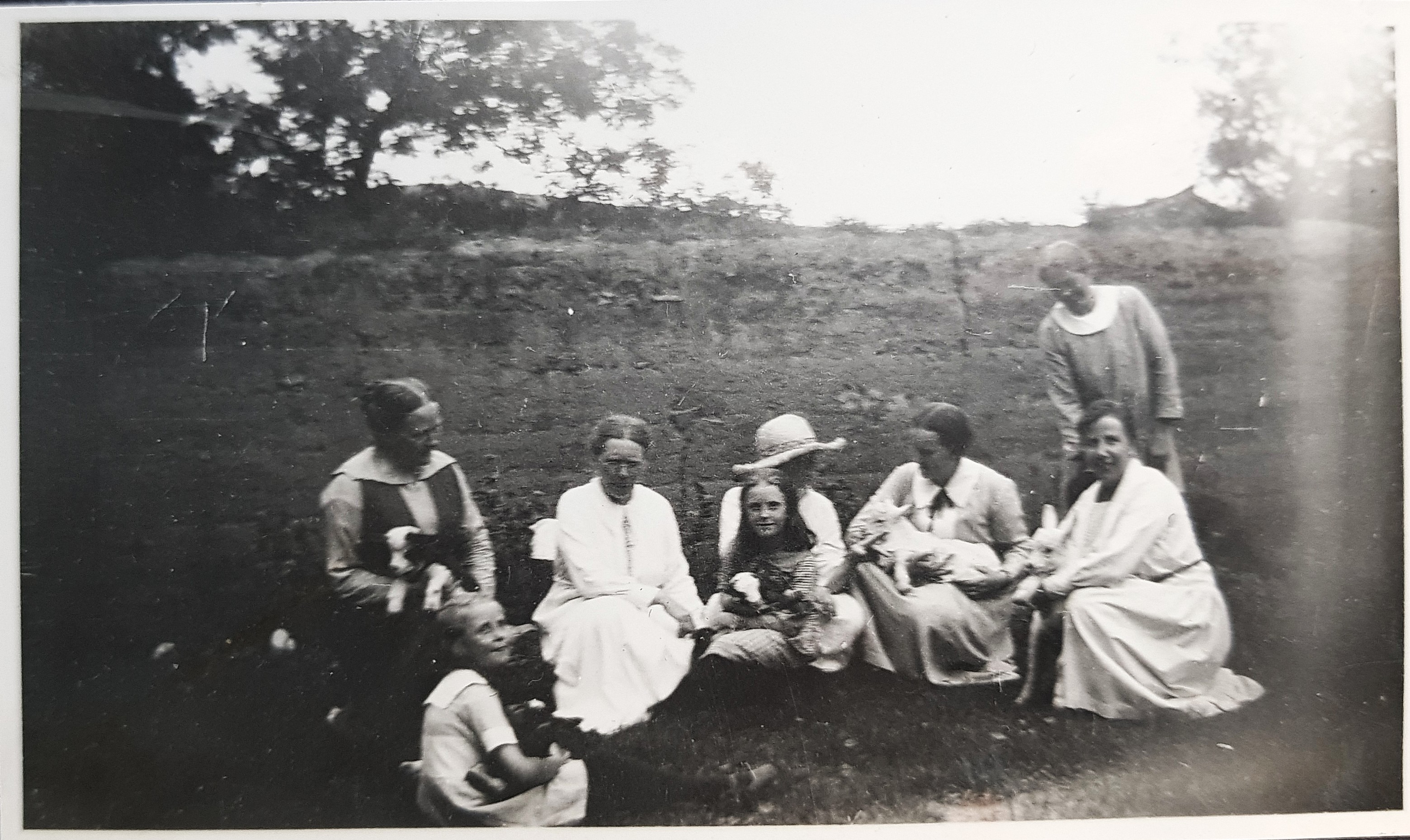
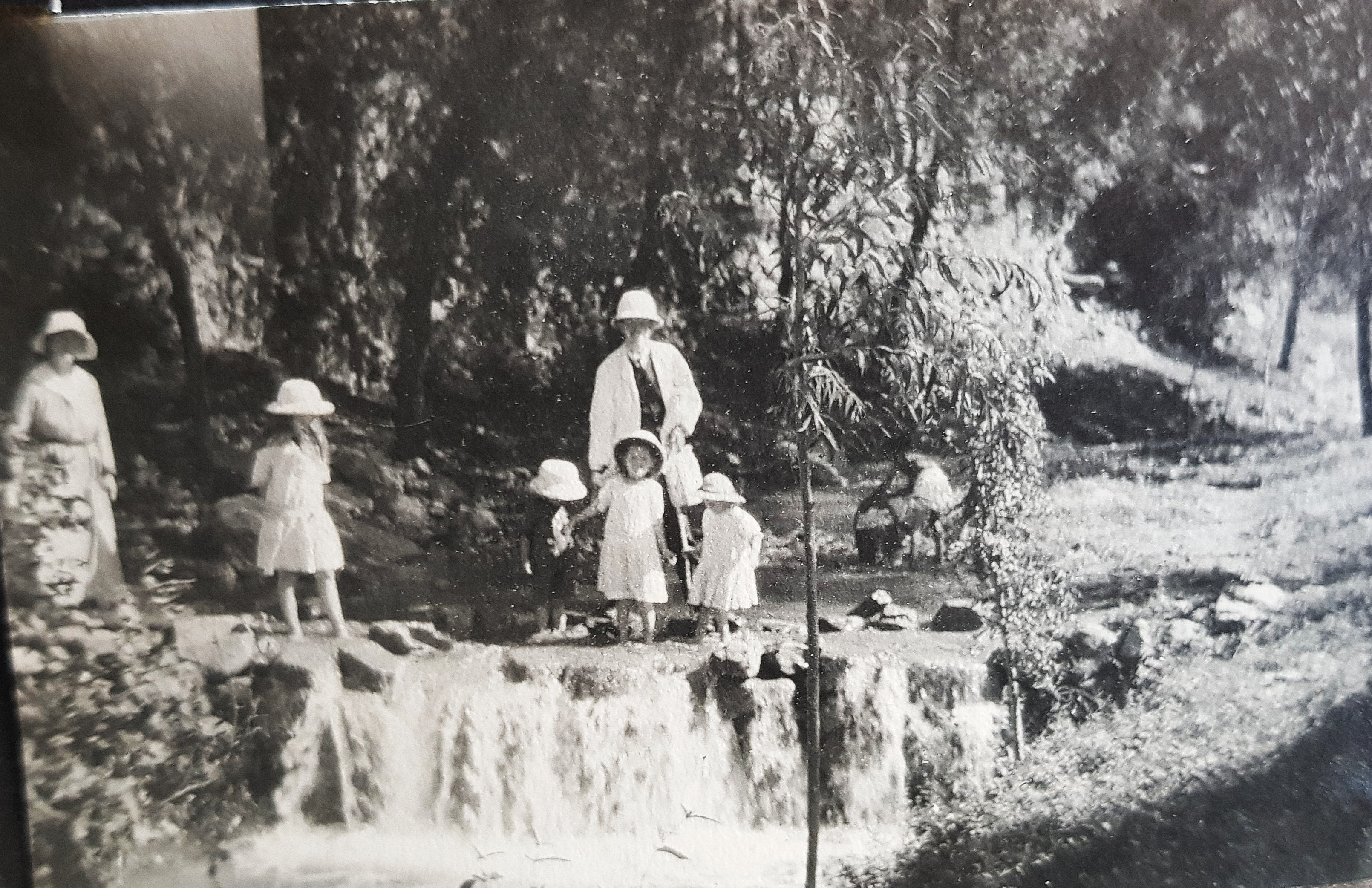
I asked my fellow researcher Mr. Hong, in China, about this place and he wrote back saying he has been there several times and that it did use to be a summer resort for the Swedish Mission in China. It was also a village where many meetings were held.
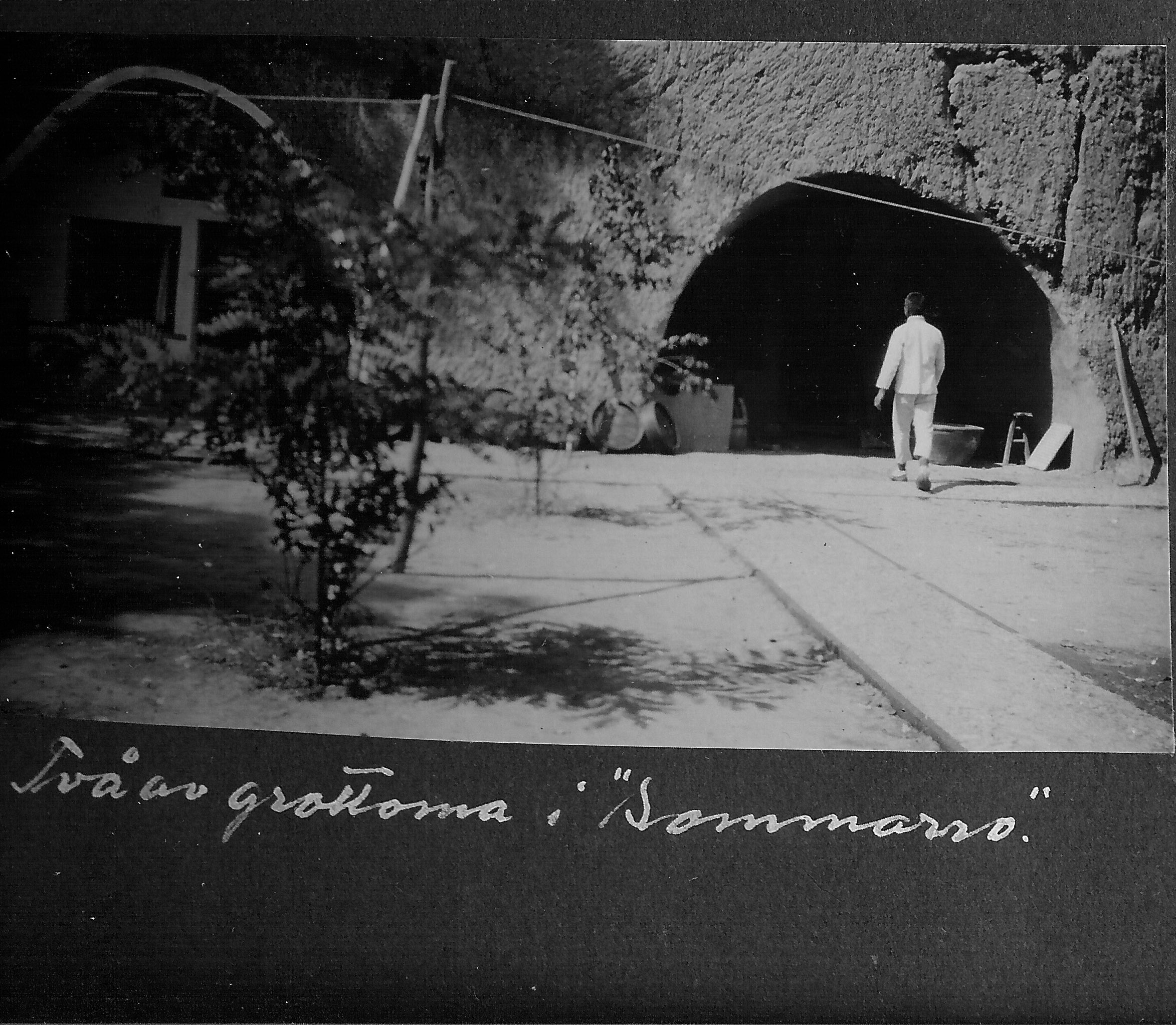
“By now all the houses do not exist, but some broken caves remain,” Hong wrote and included many photos from Shui-yu.
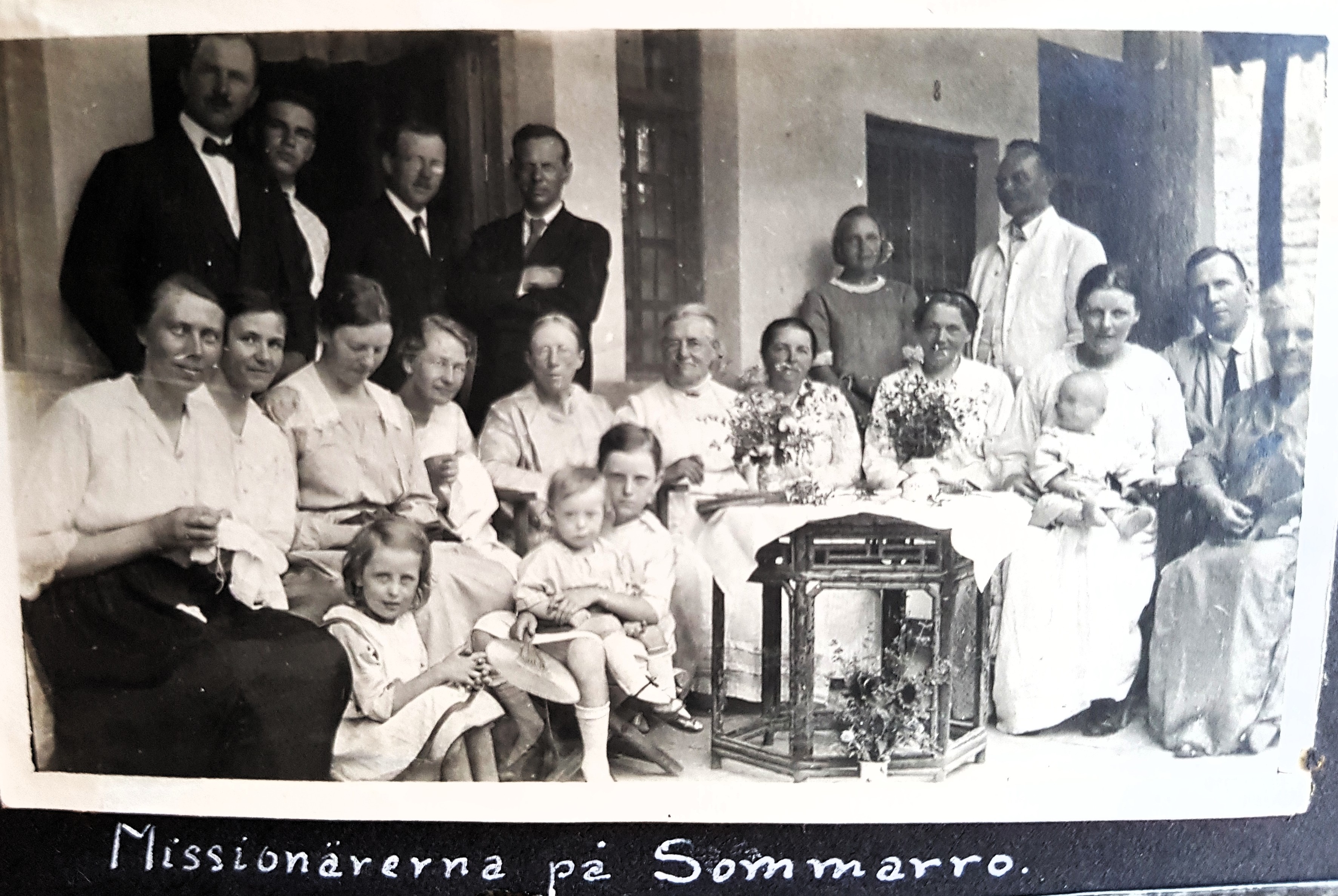
Photos from Shui-yu, courtesy of Mr. Hong (originally from the archives of the Swedish Mission in China).
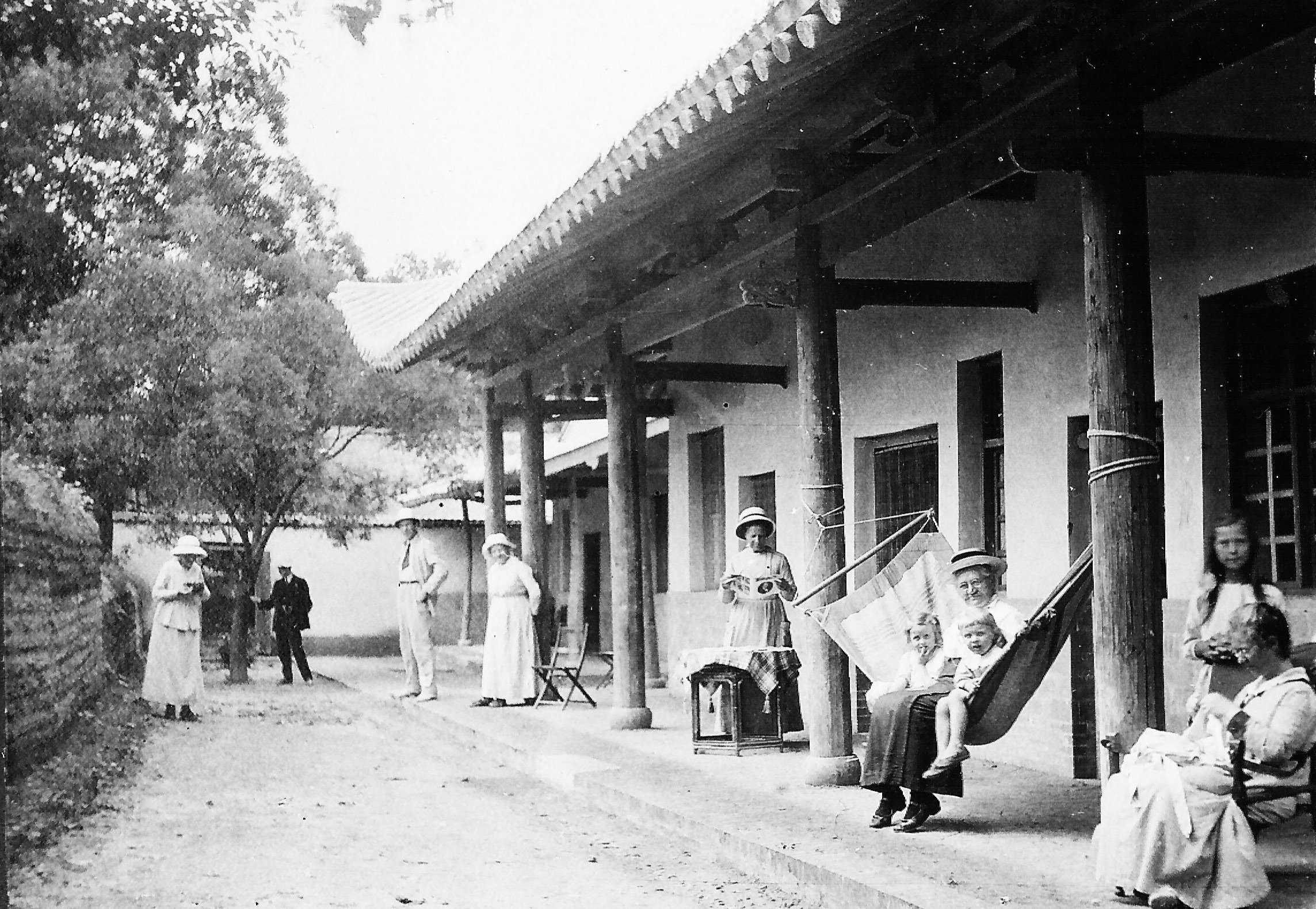
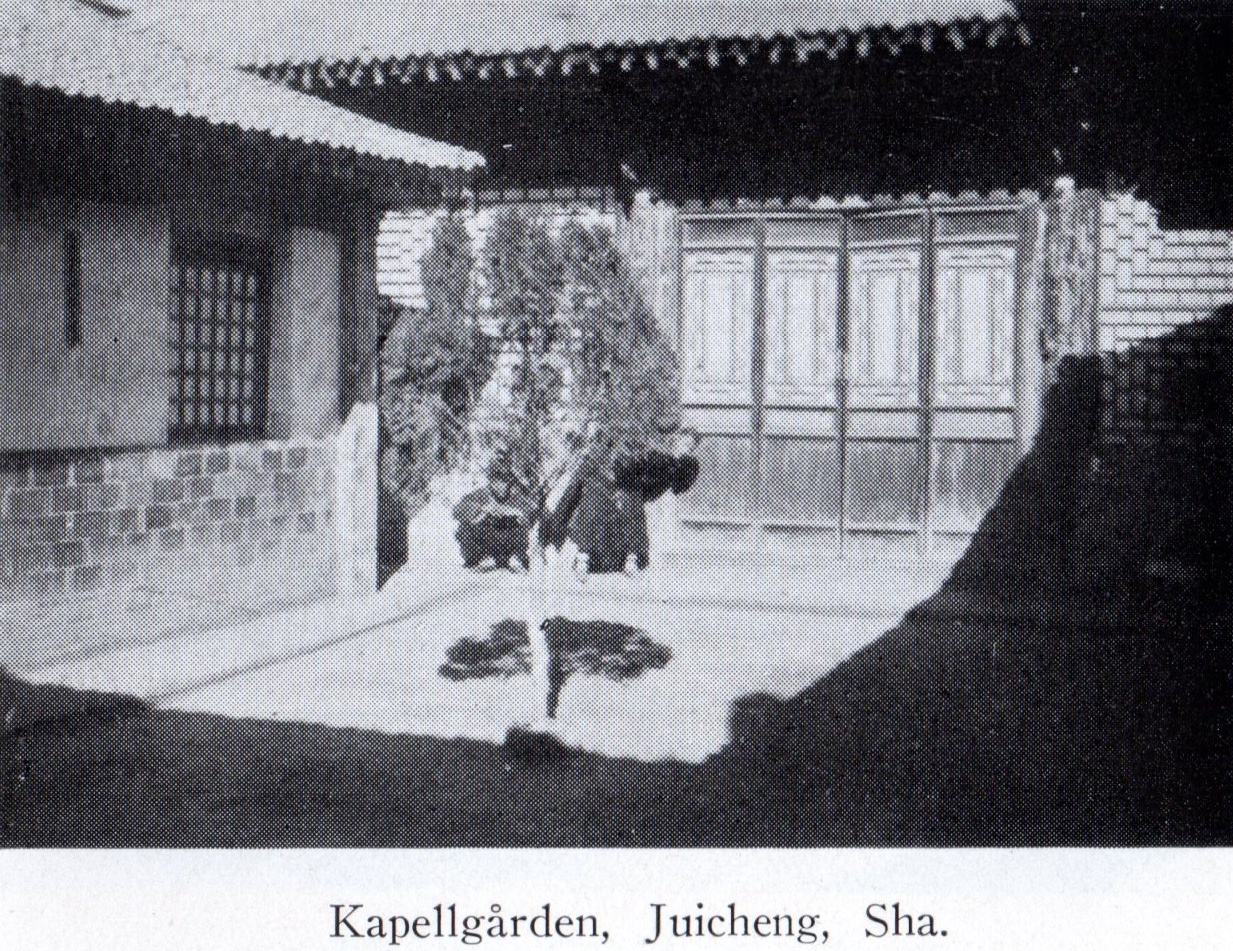
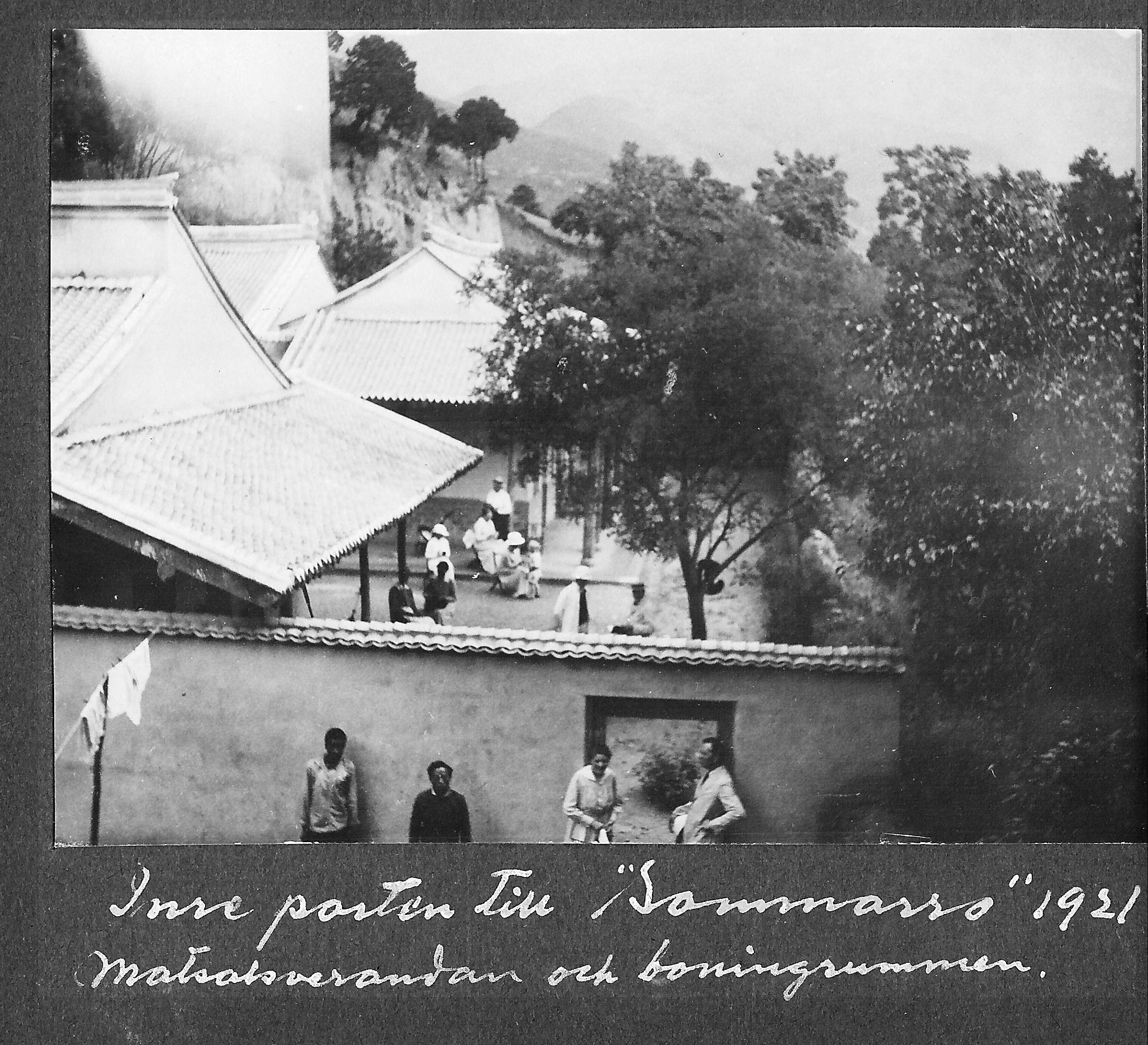
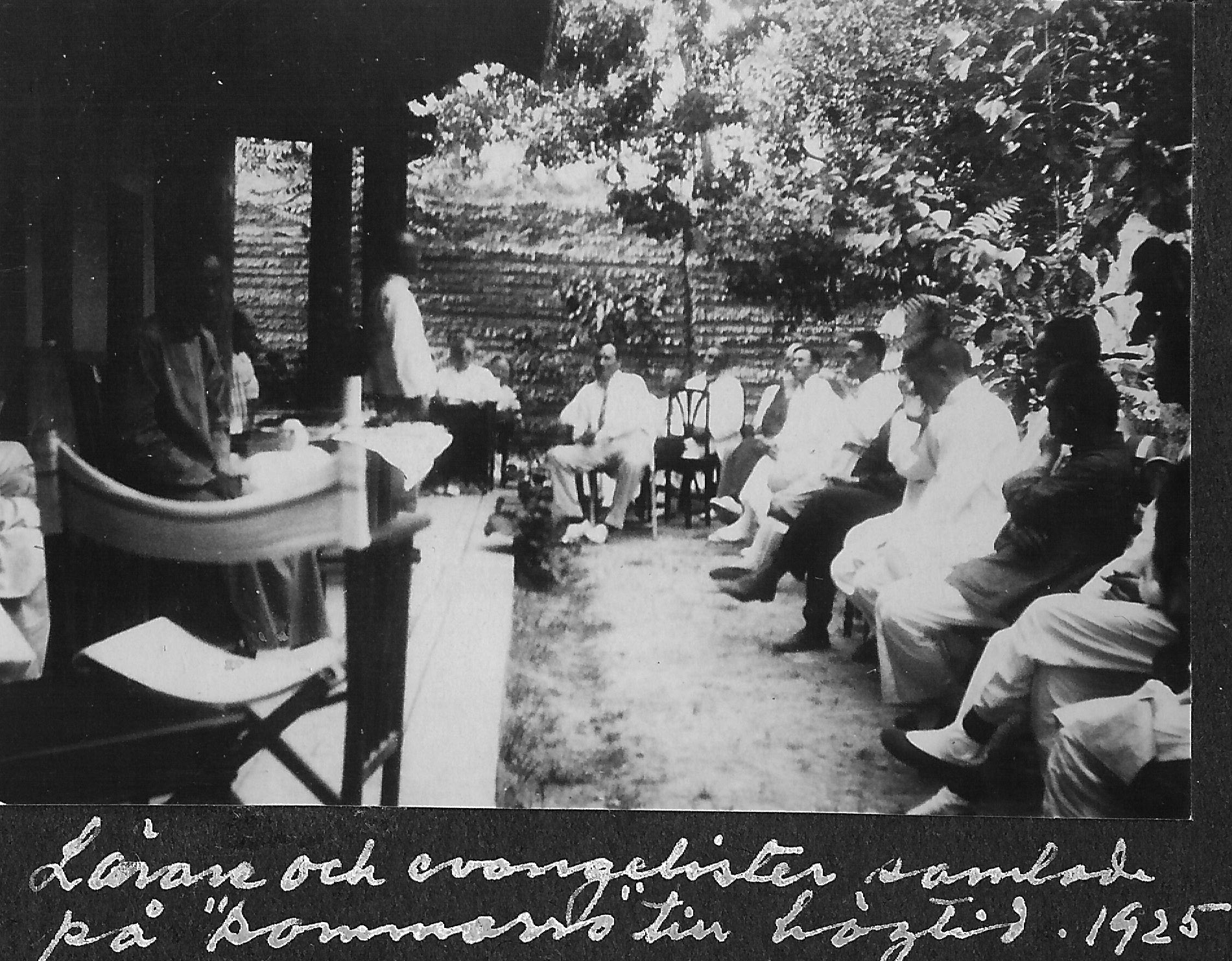
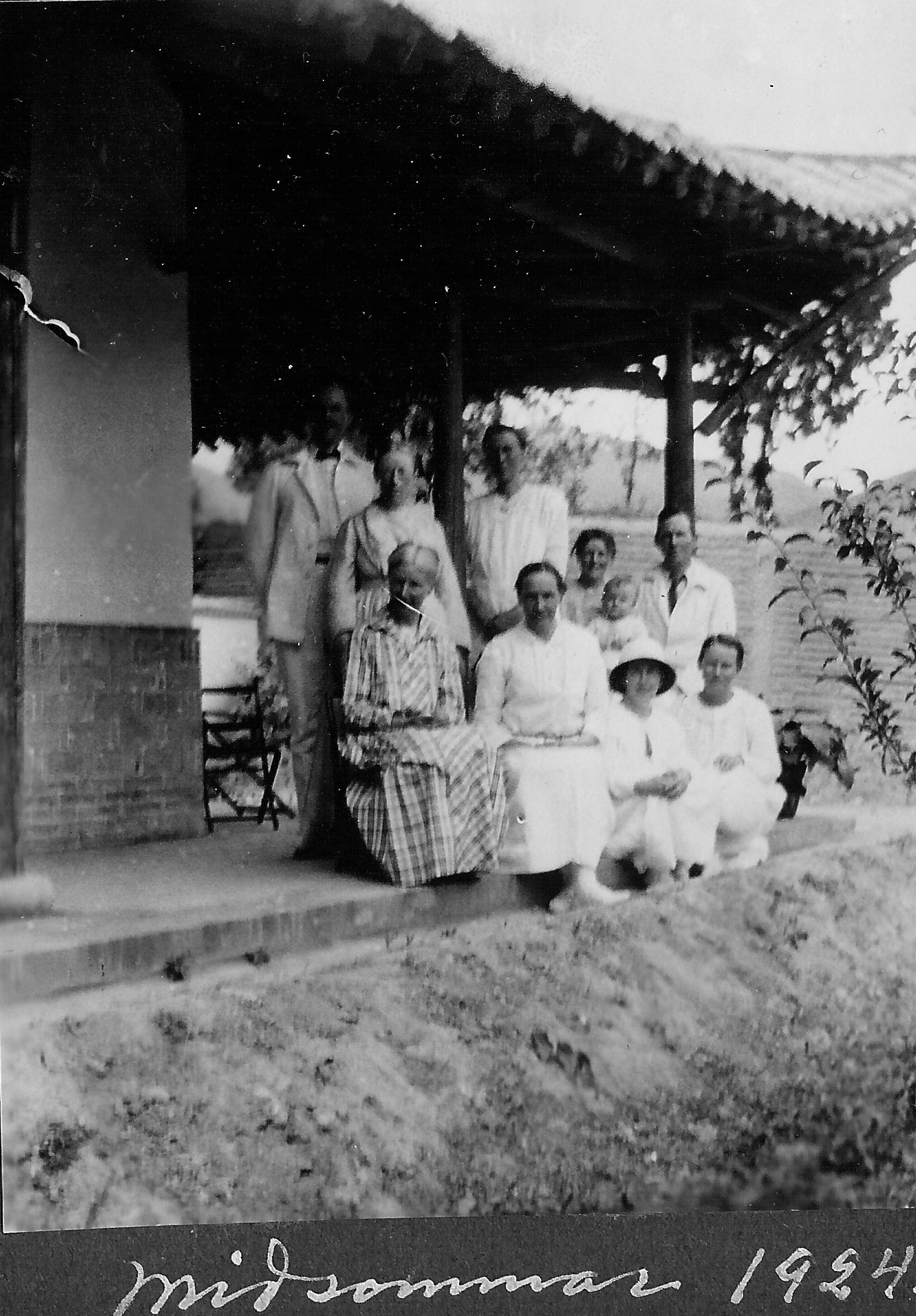
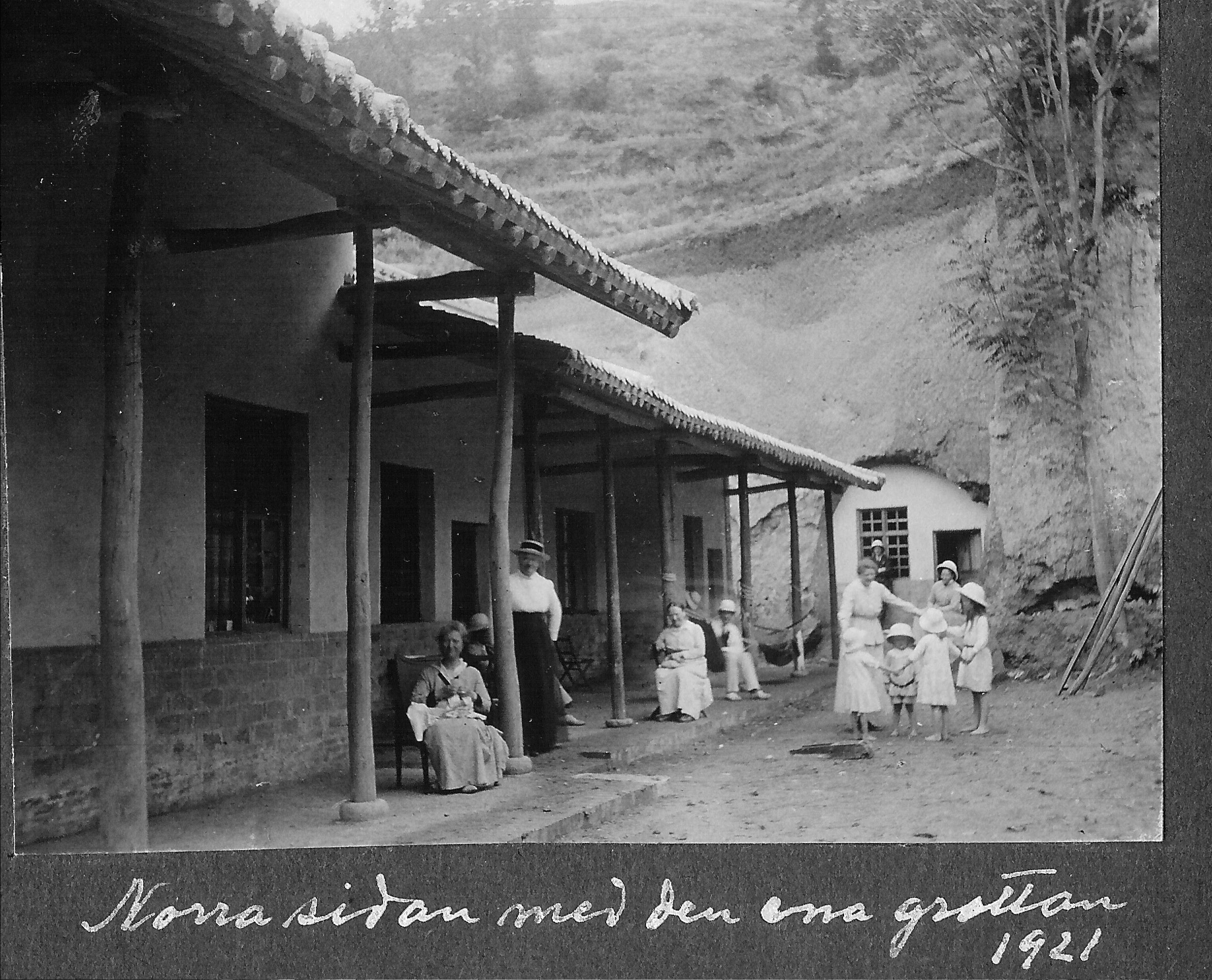
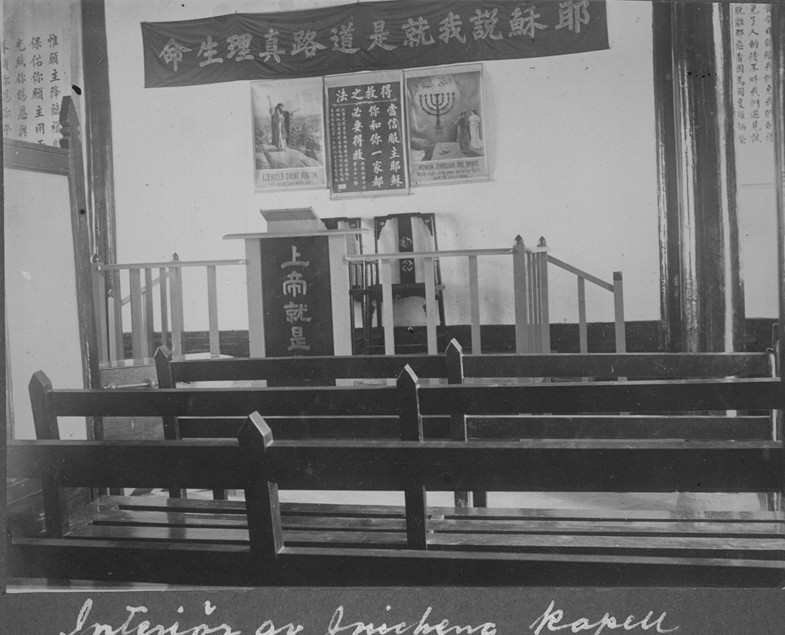
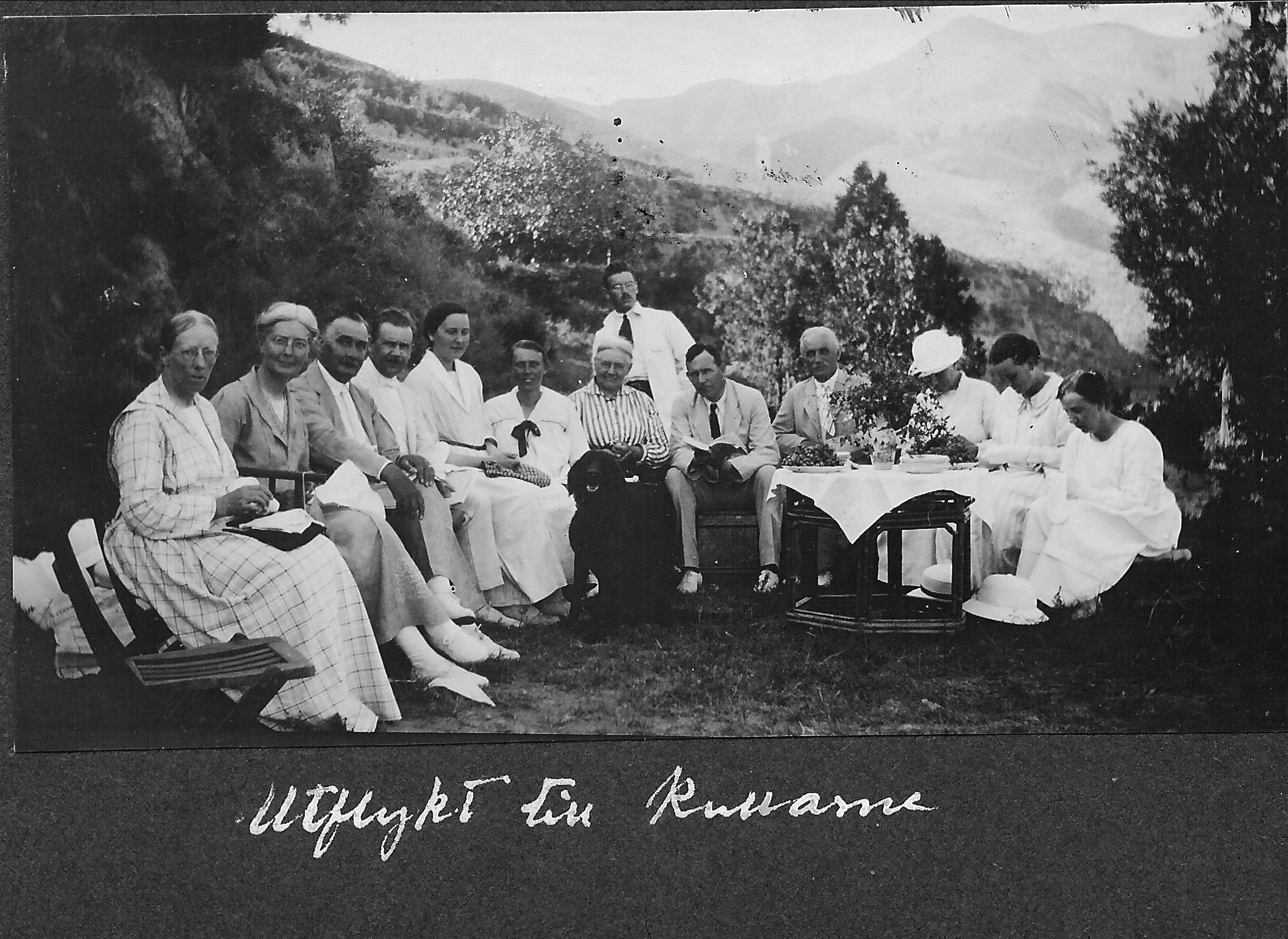
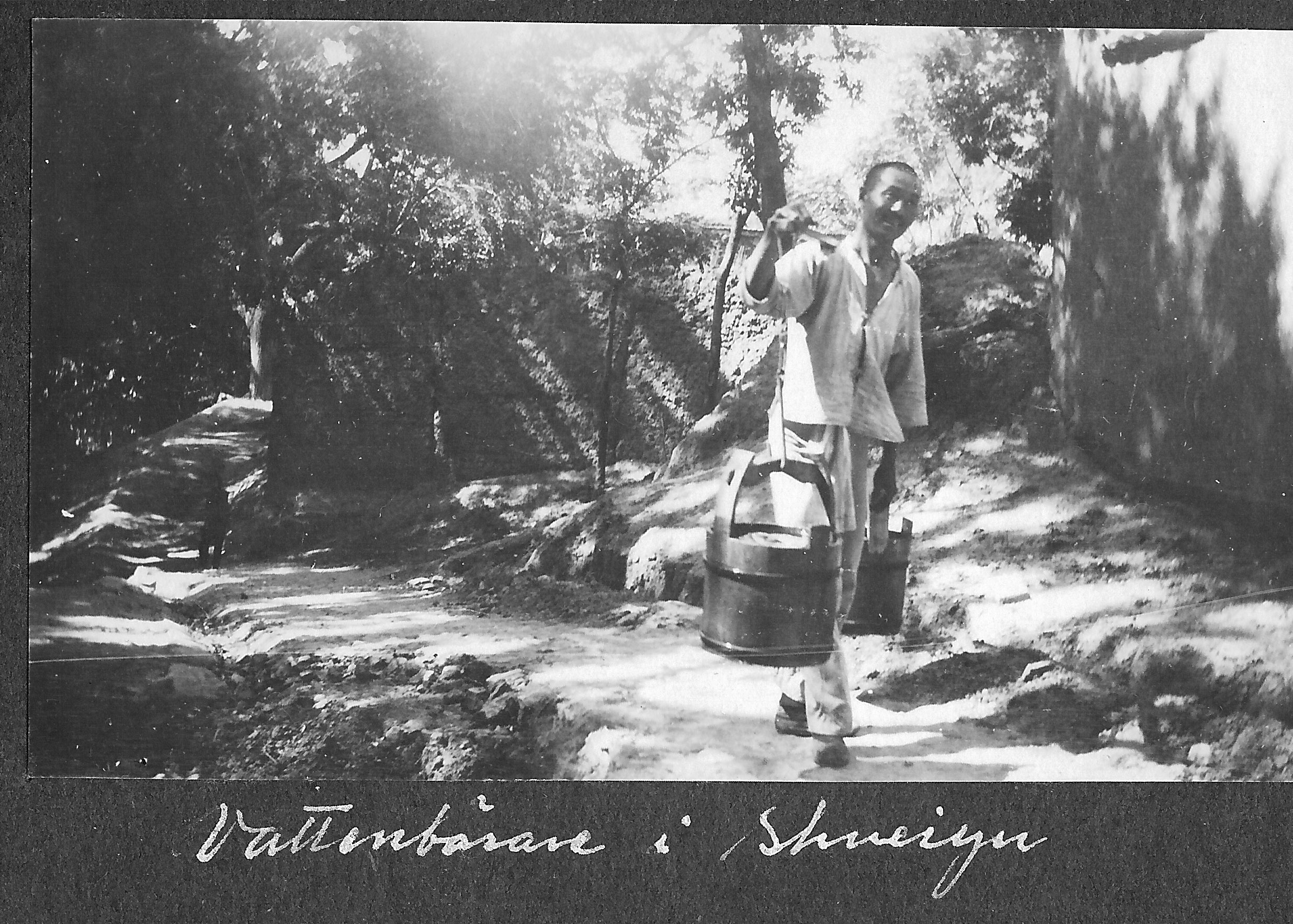
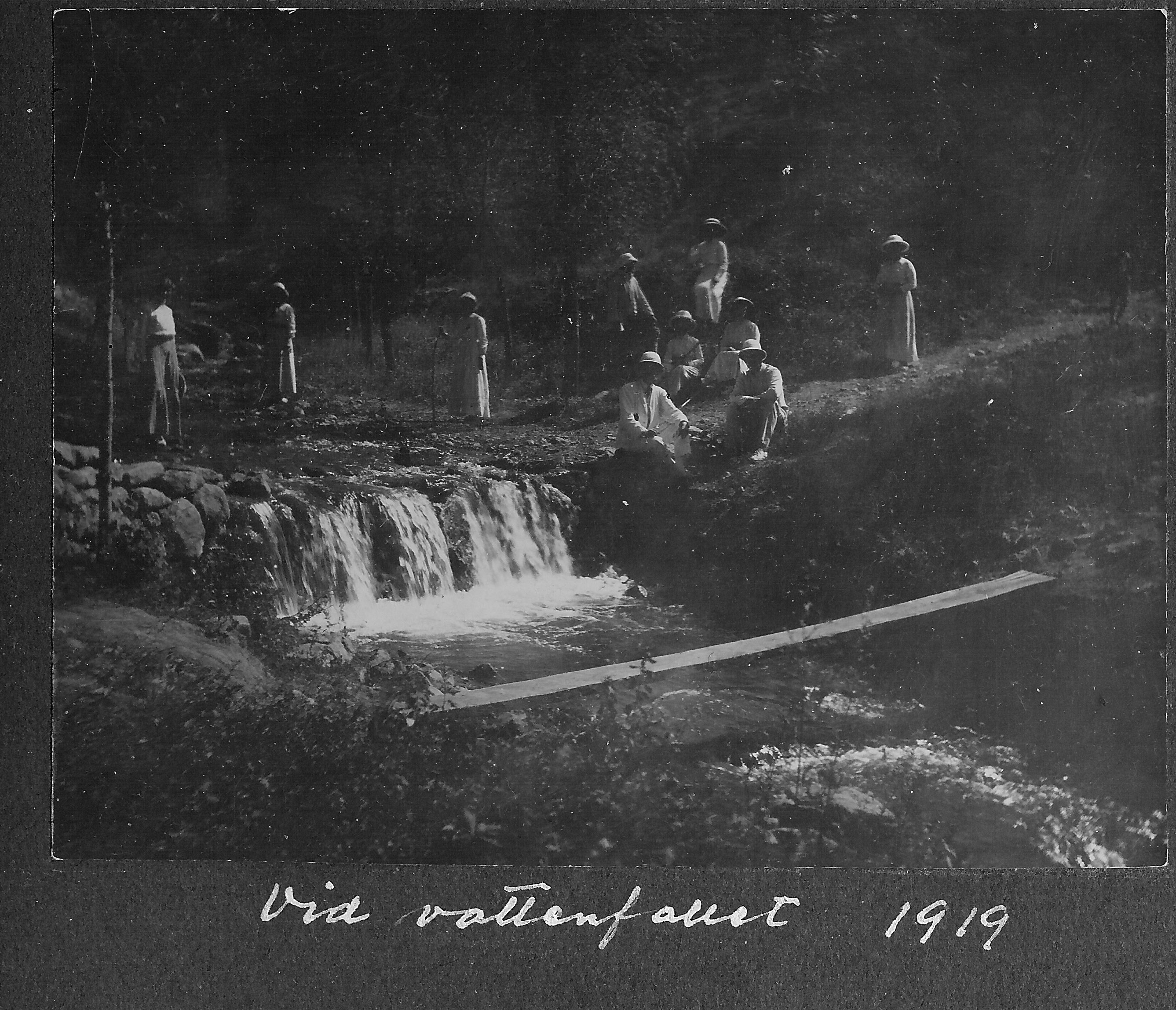
It appears that Nils and Olga lived in the compound at Shui-yu on several occasions. From their letters, it is evident that they returned there repeatedly and referred to it as a summer retreat. In September 1921, Nils wrote the following to the founder of the mission, Erik Folke:
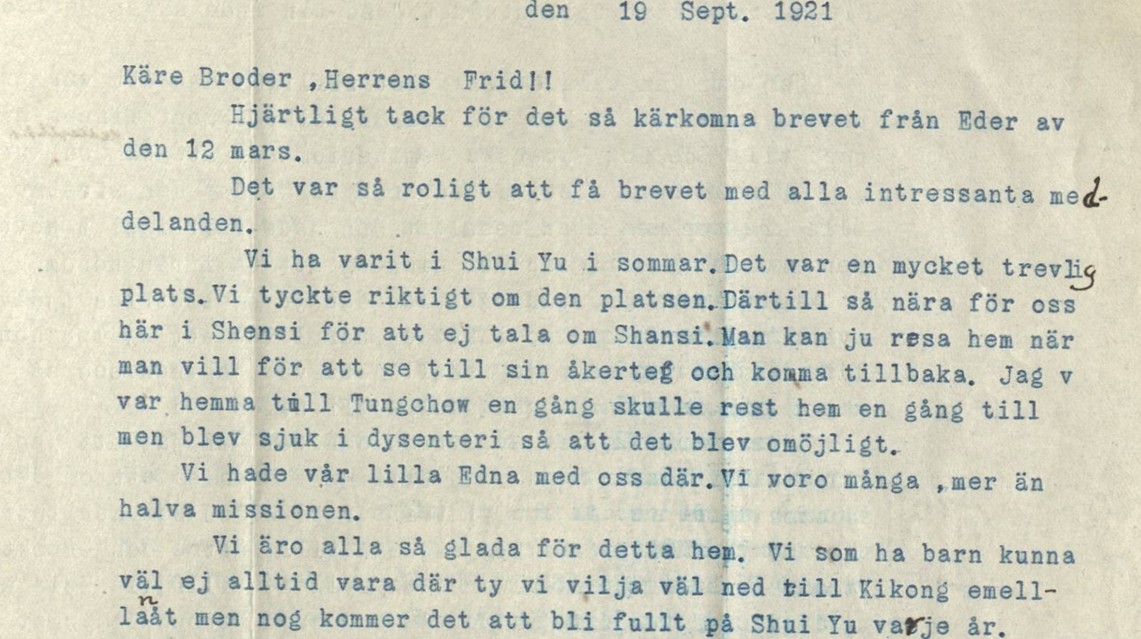
“Dear brother,
It was such a pleasure to receive your letter with all its interesting news. We spent the summer at Shui Yu. It was a very pleasant place, and we truly liked it there. Moreover, it is so close for us here in Shensi—not to mention Shansi. One can travel home whenever one wishes to attend to one’s own field and then return again.
I travelled home to Tungchow once, and intended to go again, but I fell ill with dysentery, which made it impossible. We had our little Edna with us there. We were many, more than half of the mission. We are all so grateful for this home. Those of us who have children cannot always stay there, as we will want to go down to Kikong from time to time, but Shui Yu will surely be full every year.”
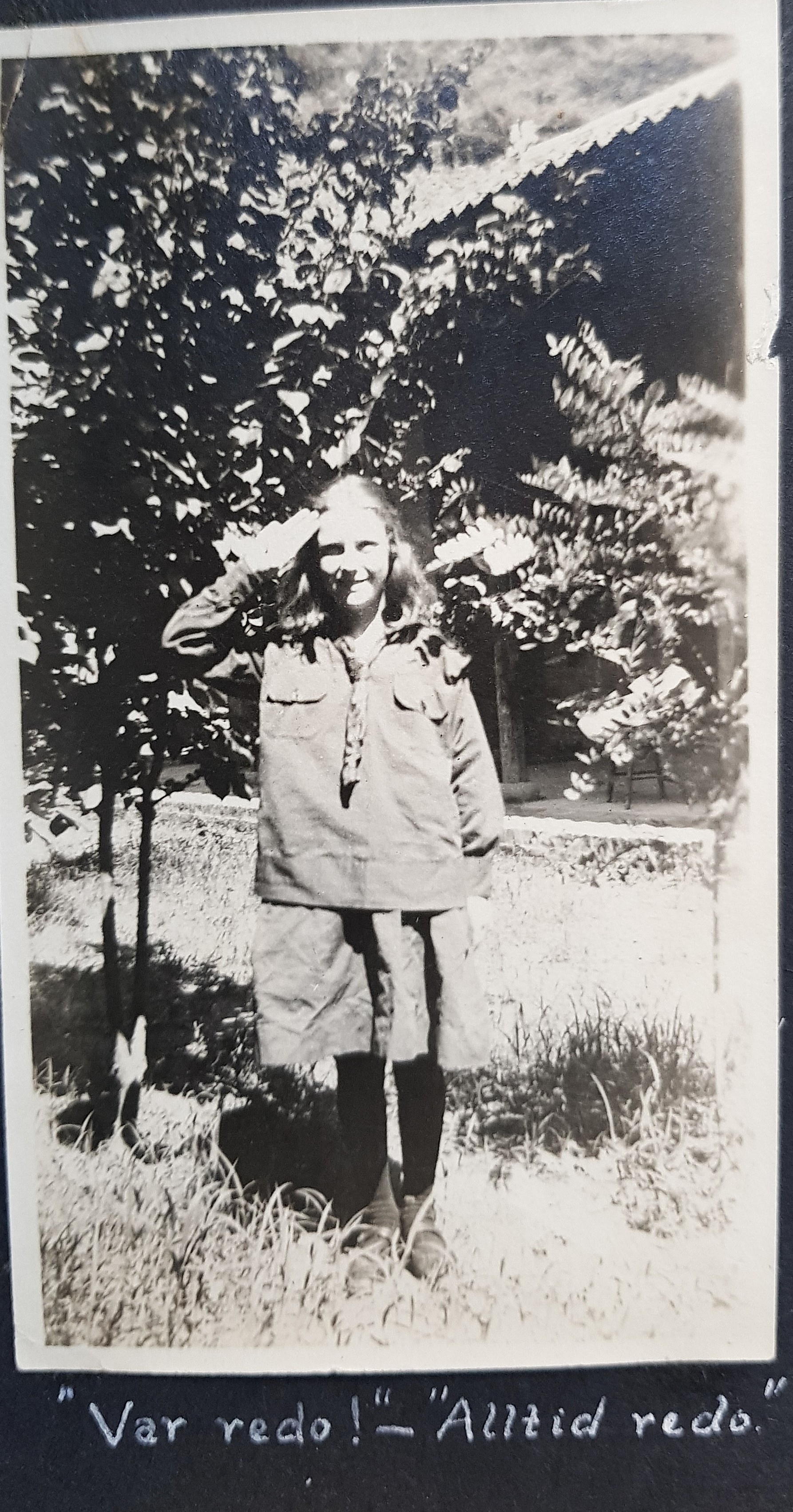
Reading the above, I assume this was the first year Nils and Olga spent time in Shui Yu. My grandmother Edna was 8 years old at the time. In her album I found this photograph from Shui-yu, where she is posing as a scout. Possibly it is from the very summer her father mentions in the letter.
In July 1934 Nils sent a letter from Shui-yu to Martin Lindén at the Swedish Mission in China secretariat, based in Stockholm.
In the letter, he speaks briefly about the summer retreat in Shui-yu, and about who was staying there at the time. He opens the letter with the words “Here at old Shui-Yu,” which suggests that the place was no longer a novelty to him, but rather somewhere he had already visited many times.
“Here at old Shui-Yu there are now seventeen of us, not counting the children. Of these seventeen, nine are here for the summer retreat. All our other colleagues are at Kikung. Olga and I had planned to stay at home this summer, possibly to travel to the Tjäder Caves in Hai if things became too difficult, but instead the request came for us to host the summer stay here, and we gave in to the temptation.
The day before yesterday the Bergquists and Arvid arrived. They should have come earlier, but they became ill. Elsie had dysentery. Now everyone is well again, even if one cannot say that all are strong. Last Sunday I went down to Juicheng for the monthly meeting. It was truly enjoyable, with many people present. At the communion service there were as many members of the congregation as there would be at a major gathering.”
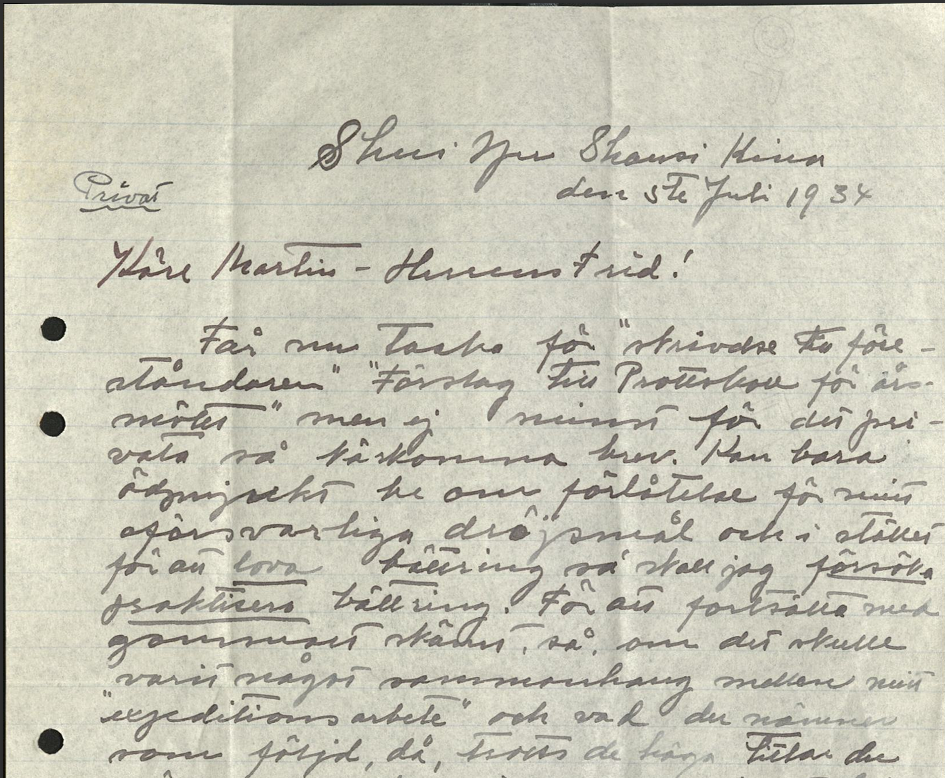
I am now preparing for a Bible course that we have agreed to hold during the first week of August. We are happy at the prospect of Gerda’s return. May the Lord grant her the strength she needs. Ebba Widen is very active and capable and is making good progress with the language. She is staying with us for the summer retreat. We have two Chinese language teachers here, both kept fully occupied. So, as you can see, language studies are being pursued at full speed.“
In a follow-up letter from September 1934, Nils writes about the summer in Shui Yu:
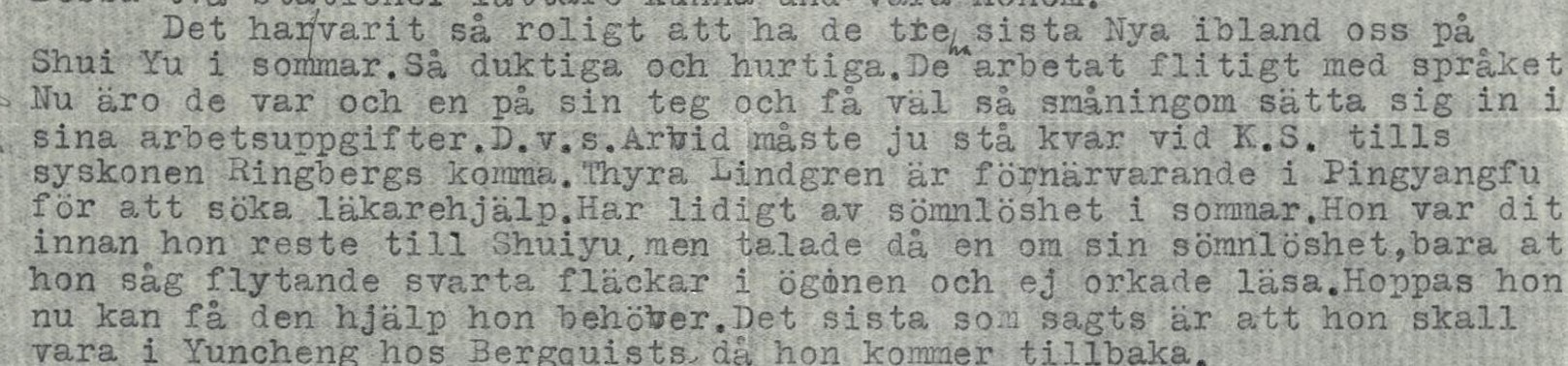
“It has been a great pleasure to have the three most recent newcomers among us at Shui Yu this summer. They are capable and full of energy, and have worked diligently on their language studies. They are now each at their respective posts and will gradually settle into their duties. That is to say, Arvid must remain at K.S. until the Ringberg siblings arrive.
Thyra Lindgren is currently in Pingyangfu; before traveling to Shui Yu she did not mention her sleeplessness, only that she was seeing floating dark spots in her eyes and lacked the strength to read. We hope that she will now be able to receive the help she needs. The latest information is that she is to stay in Yuncheng with the Bergquists when she returns.
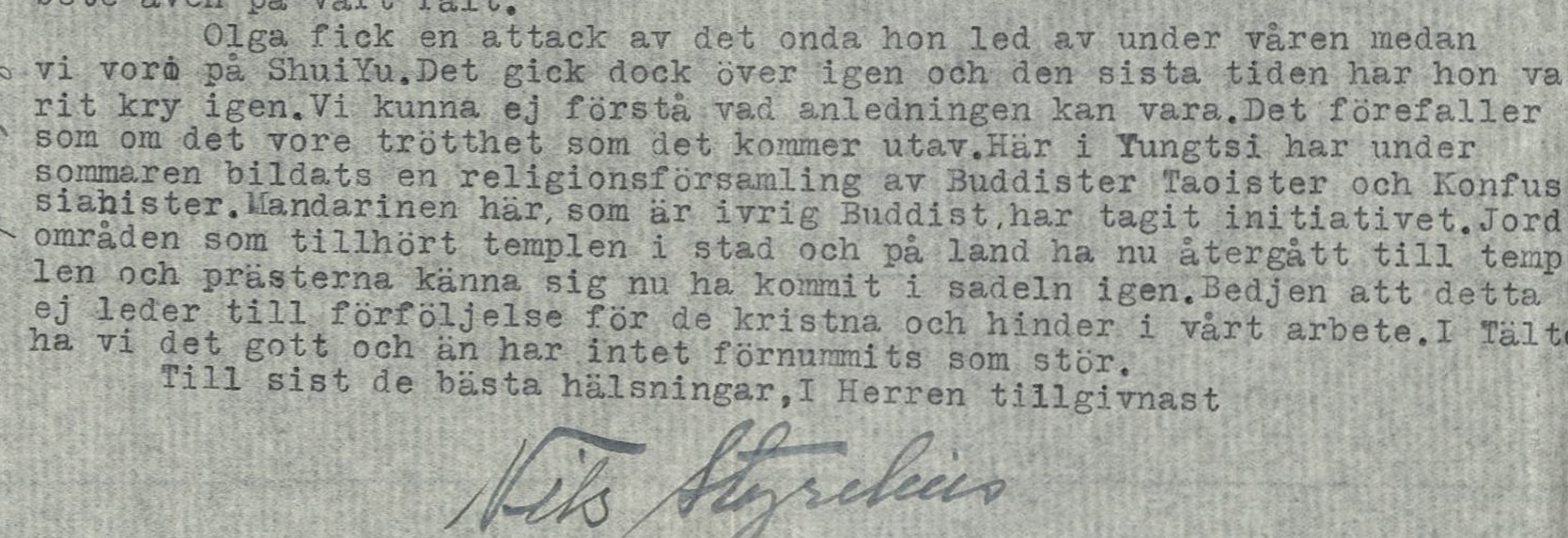
The letter ends with:
“Olga suffered an attack of the illness she had struggled with in the spring while we were at Shui Yu. However, it passed again, and lately she has been feeling well once more. We cannot understand what the cause might be. It appears to be fatigue, but what lies behind it is unclear.
Here in Yungtsi, during the summer, a religious association has been formed consisting of Buddhists, Taoists, and Confucians. The local mandarin, who is an ardent Buddhist, has taken the initiative. Land that had previously belonged to the temples, both in the town and in the countryside, has now been returned to them, and the priests feel that they have regained their former standing. Pray that this does not lead to persecution of the Christians or create obstacles to our work. In the tent we are doing well, and so far nothing has been sensed that would disturb us.”
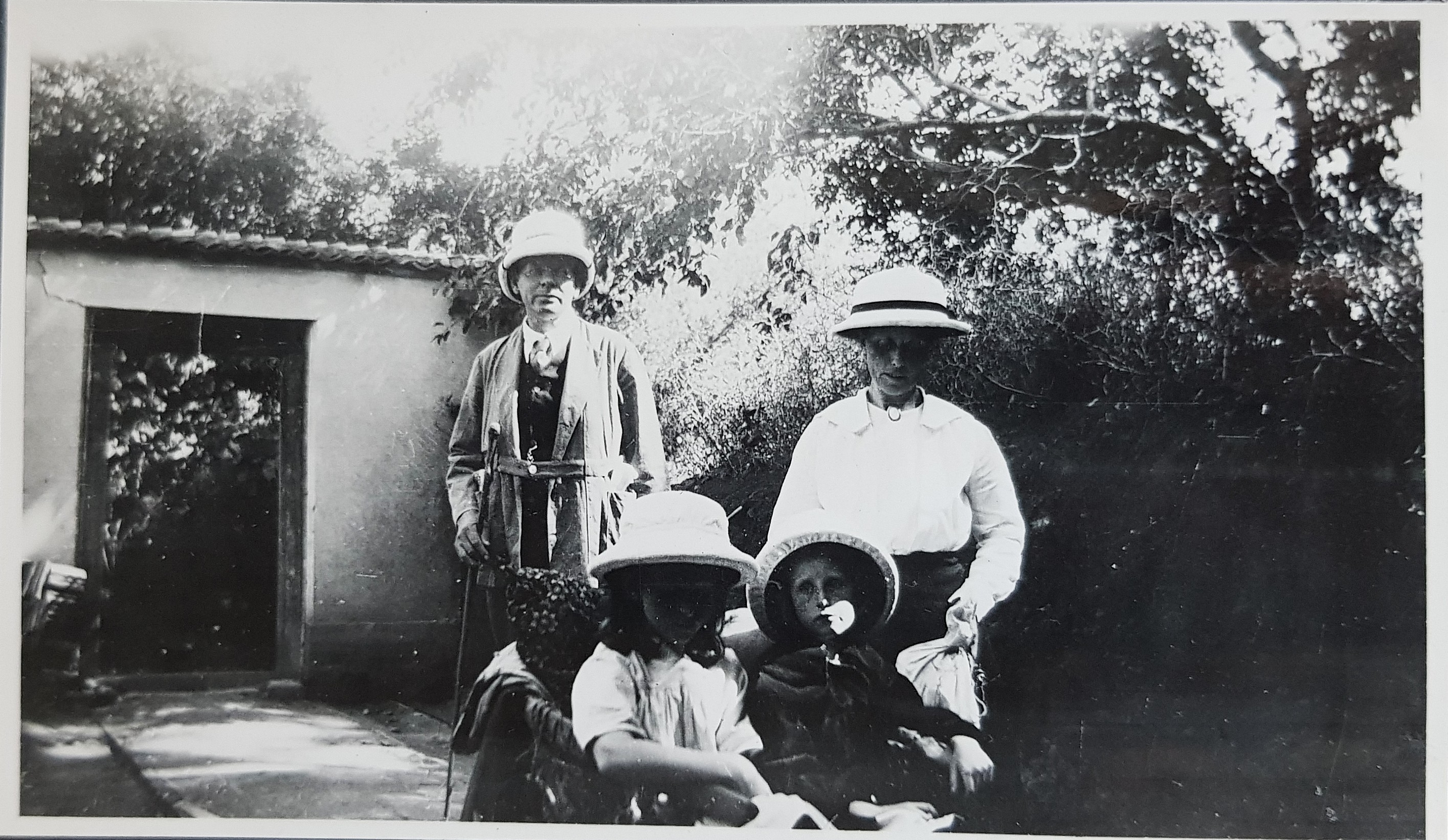
The missionaries appear to have suffered from a wide range of ailments, often without knowing exactly what they were. Dysentery, frequently caused by contaminated food or water, seems to have been a common illness they dealt with. It must have been a relief for them to rest and spend time together in Shui-yu, and the photographs from there portray rather happy moments despite the illnesses many of them struggled with.


What a treasure to have these images and insights into your family’s past!
LikeLiked by 1 person
Hello Mitch! Yes, I feel very fortunate! If they had not been missionaries, I wouldn’t have so much material. There is not much to find out about the other side of my family, for instance. And that there are others, also researching missionary history, certainly helps. It is a lot of fun!
LikeLiked by 1 person
I enjoyed learning about the “summer rest” very much, particularly the photos of families relaxed and enjoying themselves in pleasant surroundings. (Although contracting dysentery would have been awful.)
LikeLiked by 1 person
Thank you, Liz! I believe dysentery was a real pain for them – and it must have been difficult to protect oneself against it. I am also happy they got to enjoy each others’ company during summer – and where it was a bit cooler 🙂
LikeLiked by 1 person
You’re welcome, Therese! Particularly dangerous for infants and the elderly.
LikeLiked by 1 person
That is true – a very tough disease!
LikeLiked by 1 person
Vilken skatt detta är, alla bilder och brev. Fantastiskt.
LikeLiked by 1 person
Hej Helena! Ja, jag är så tacksam för att det finns så mycket information och foton – och att det ofta går att hitta brev med referenser till platser som fotografierna visar! Det ger kontext och färg till albumen och deras liv på ett helt annat sätt 🙂
LikeLiked by 1 person
Du gör ett enormt jobb m allt. Ska du samla det till en bok?
LikeLiked by 1 person
Det har blivit en hobby, måste jag säga 🙂 Och ja, jag håller på med en bok – men inte en ren släkthistoria, utan en fiktion med dessa verkliga händelser som bas. Det är också ett sätt att komma närmare mina släktingar och sätta sig in i deras värld och känsloliv. Och så hoppas jag att det kanske kan vara kul för mina barn att läsa framöver 🙂 Litet nischat kanske, men en rolig grej att syssla med!
LikeLiked by 1 person
Låter ju jättekul. Ett bra sätt att samla ihop deras historia om än till viss del fiktivt. Säkert fler som kan se ett värde i en sådan berättelse än närmsta släkten. Tänker exempelvis på deras kristna mission också. Många församlingar skulle säkert finna det här intressant.
LikeLiked by 1 person
Tack för pepp! Ja, man kan ju alltid hoppas att det skulle vara intressant för fler 🙂 Det är ju dessutom ett ganska stort äventyr och en kvinnohistoria likaså. Men, som en äldre släkting sa till mig – det är processen som är det roligaste. Och den här processen har verkligen visat sig ge så mycket mer än jag någonsin kunnat ana, så för tillfället är jag böjd att hålla med honom 😊.
LikeLiked by 1 person
Och om inte vägen är givande är det verkligen inte värt det. Härligt att du känner så. Dessutom det märks i berättarglädjen.🙂
LikeLiked by 1 person
😃 tack snälla! Så roligt att du tycker det! 🙏
LikeLiked by 1 person
Photographs and letters like this are true gems, Thérèse. They give an insight in perhaps not common, daily life, but still in how life has been in that area of China in more relaxed days. I can imagine that getting together with other Swedish missonaries from time to time indeed was a great joy and a break from maybe quite lonely days in their ‘work’ town. Oh, and mr Hong can’t be praised enough!
LikeLiked by 1 person
Dear Peter,
I agree – it is so nice to read the letters referring to happy times during the summer, that my grandmother was there enjoying her parents’ company during more relaxed times. At the mission stations they were so busy and from the age of 7 she was at the Swedish School – a boarding school in China, so that she spent the summer with them in Shui-yu is so nice. I know – Mr. Hong is the best!
LikeLiked by 1 person