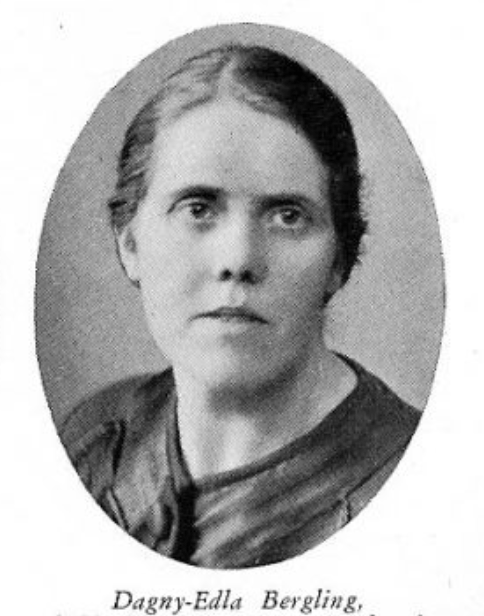
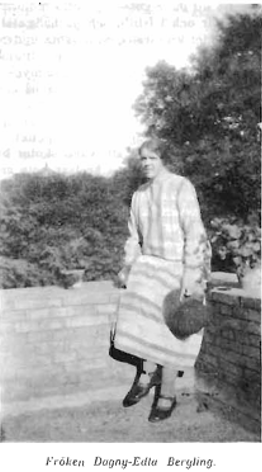
On New Year’s Eve 1927, 98 years ago, Robert and Dagny’s eldest, and only surviving, daughter, Dagny-Edla, finally set foot in China again, this time as a missionary in her own right. She had been sent home from China to study in Sweden in 1907 and had longed to return ever since.
During her years in Sweden, Dagny-Edla lived as a foster child with Lotten Hagelin, while her brothers stayed at the missionary home in Duvbo. Lotten was a strict woman with high expectations of Dagny-Edla. I have written about their relationship before – here.
Lotten died in 1920 and Dagny-Edla inherited some money from her. The years following Lotten’s death were not easy for Dagny-Edla. Although they had eventually made their peace, Dagny-Edla struggled through a demanding period. She studied and qualified as a nurse, but then suffered a bone infection in one of her fingers. The infection led to repeated inflammatory episodes and a long series of operations. After eight surgeries, the doctors were finally forced to amputate her right arm.
The loss was a devastating blow. Dagny-Edla had dreamed of becoming a missionary in China, following in the footsteps of her parents and her two older brothers. Yet she refused to let this end her calling. She applied to several missionary societies, but all of them declined – including the Swedish Mission in China. At the time, none were willing to take responsibility for a one-armed woman in a country as dangerous and unstable as China.
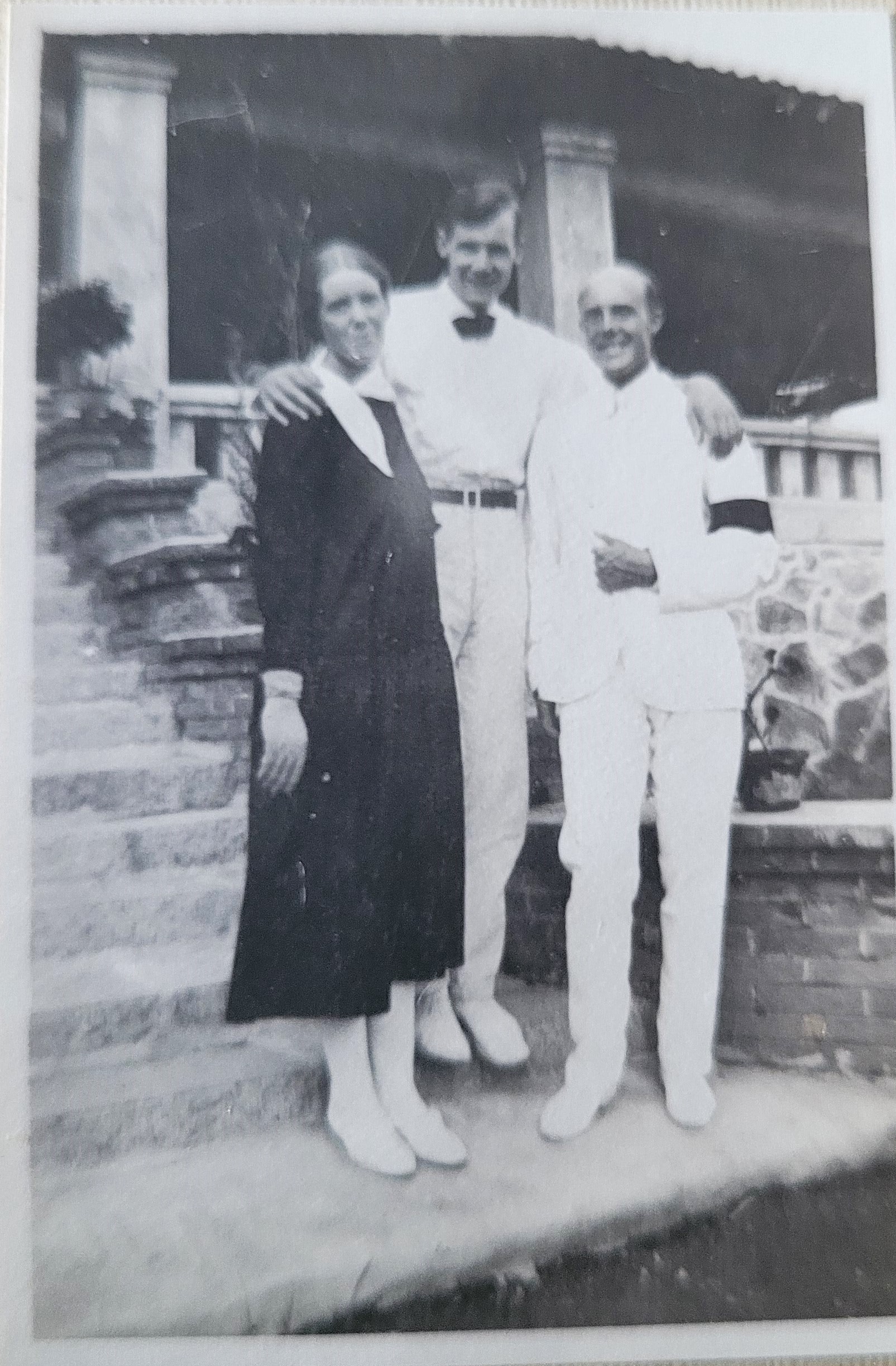
By 1927, almost all of Dagny-Edla’s inheritance from Lotten Hagelin had been spent, largely on the many hospital treatments her injury required. When she finally left the hospital for the last time, she felt utterly devastated. In a book about Dagny-Edla’s life she talks about this experience:
“I felt that I was not like other people. A cold February wind was blowing, and the empty sleeve of my right arm fluttered slightly in the wind. I had tried to tuck the sleeve into my pocket, but the pocket on my coat was set too low, so it didn’t work. Instead, the sleeve moved in the wind and showed everyone that it was empty, that there was no hand there.
“Everyone can see,” I thought, “that I am not like others. I am mutilated. I can never be normal again. For the rest of my life I will be disabled. I will never be like other people. Everything always happens to me.” The bitterness was close to taking over my mind. I felt myself growing heavy and dark inside.
“No,” I finally said to myself. “This won’t do. There is no point in complaining. God has not abandoned me.” Now I decided to thank God that I was finally feeling healthy again after so many months. I gathered all my willpower and began to thank God for my health. Then I thanked Him for being allowed to be God’s child and for His care for me. I thanked God for my friends, the Rudvalls, with whom I would be staying for the time being.
There was more and more to be thankful for. Before I had finished my whole list of thanksgiving, I found myself standing at the Rudvalls’ gate. In the end, it was a truly happy and cheerful Dagny-Edla who rang the Rudvalls’ doorbell.”
And this seems to have formed the core of Dagny-Edla’s inner character: she had the ability to turn adversity into opportunity. Despite the amputation of her arm, she managed to raise the money for a ticket to China and set off on her own. She was to work as a missionary in her own right – for when no one wants you, you take matters into your own hands.
Dagny-Edla is a woman from whom one can draw strength. Her determination and perseverance are remarkable. She arrived in Hong Kong on New Year’s Eve in 1927. By then she had been robbed of one of her suitcases, yet she found the strength to sew new clothes during the sea voyage to China.
The ship docked in Hong Kong for only one day. When Dagny-Edla reached Tientsin the day after New Year’s Day, she felt that she had finally arrived in China.
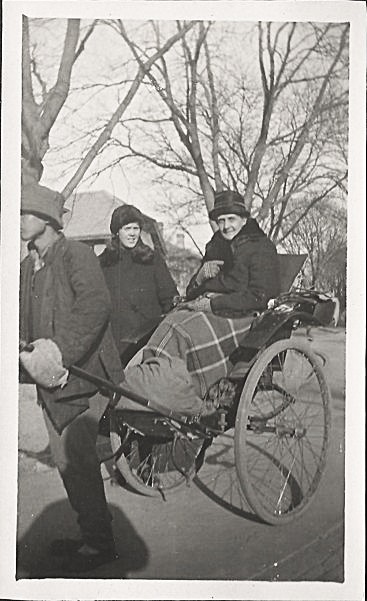
She describes her first impressions like this:
“I could not get enough of looking at the people. They were so wonderful! The children (…) stared back at us foreigners. The adults paid little attention to us. In Tientsin people were used to seeing foreigners. I longed to dress myself in a long, grey Chinese robe and try to look like the Chinese. The streets were not much like the streets of Stockholm. Sidewalks were almost nonexistent. Along the sides of the streets, different vendors sat offering their goods. In some places people stood far out in the street in clusters around food laid out on cloths directly on the ground.”
From Tientsin, she planned to continue to Hoyang, where Dagny and Robert were living, but the train from Tientsin did not leave for another two weeks. After celebrating the New Year, she travelled to Peking, changed trains, and continued for 13 hours. She eventually arrived in Yüncheng, where Morris and Carola lived. She was only meant to stay a few days, but news arrived that Hoyang was surrounded by enemy forces.
Later, Dagny-Edlas older brother Martin managed to travel from Hoyang to Yüncheng to collect her. Fighting had been so intense that people had been forced to stay indoors. By this time it was March; Dagny Edla’s journey had begun the previous November.
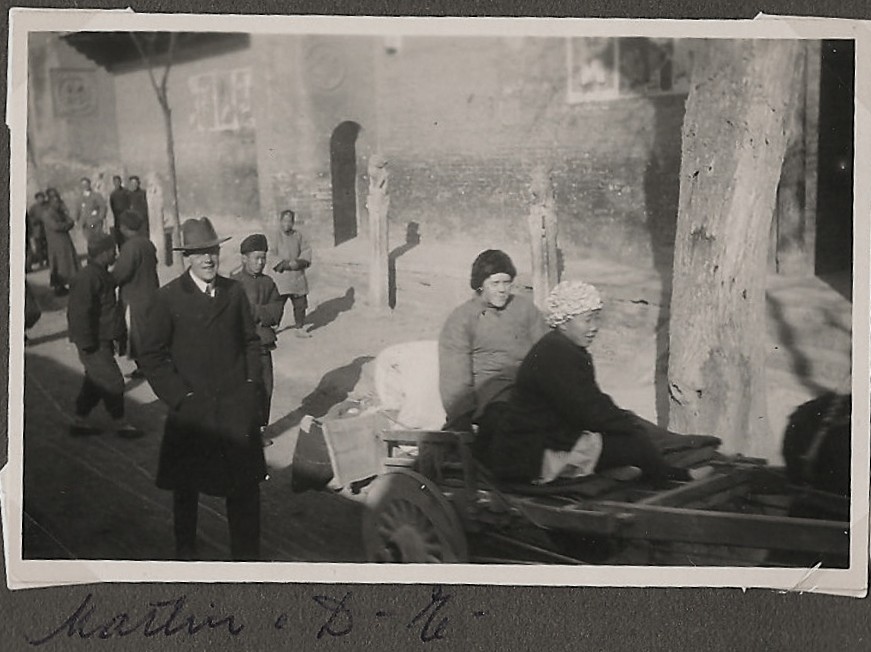
On the return journey with her brother, the mule cart overturned into a ditch and Dagny-Edla was trapped underneath. After much persuasion and payment, local Chinese villagers helped lift the cart back onto the road. Dagny-Edla finally returned home on Easter Eve in 1927. She stayed for only three days before they all had to leave because of the nationalist army that threatened all foreigners residing in China. They had to leave for the coast and could not return to Hoyang for over a year.
With Dagny-Edla’s bravery and ability to overcome adversity in mind, I wish you all a Happy New Year!
–> Dagny-Edla’s story can be read in the book “Uppdrag i Kina” by Elsa Brännström (my late father’s late cousin).
 Thérèse Amnéus
Oh wow! That is an amazing story! I don’t think I knew that Dagny-Edla had had her arm amputated! And the fact that she went back to China anyway, after overcoming her sadness and bitterness with thanksgiving. She is truly a role model for us today! Thank you for sharing her story!
LikeLiked by 1 person
She was truly amazing and a real fighter for her dreams! I agree – we can learn a lot from her! So happy you enjoyed the story, Debra! I wish you the best New Year!! 🎉🥂
LikeLiked by 1 person
Thanks! Same to you! 😀🎉🥳
LikeLiked by 1 person
Thanks!! ✨️
LikeLike
WOW! What an incredible (and determined!) woman Dagny-Edla was. I’m so impressed. Thank you for sharing her story.
LikeLiked by 1 person
Thank you, Liz! So happy you appreciated Dagny-Edla’s story!! Happy New Year! ✨️
LikeLike
En så berörande berättelse om en riktig kämpe. Gott nytt år Thérèse!
LikeLiked by 1 person
Tack snälla! Och Gott Nytt År till dig!! ✨️
LikeLiked by 1 person
Well, Thérèse, speaking about strong minds and wills! Dagny-Edla is a true example. ‘(for when no one wants you,) you take matters into your own hands.’ Thát is the spirit! Thank you for your new years wishes and I wish you the very same!
LikeLiked by 1 person
Thank you Peter! Yes, Dagny-Edla is a great example of a person who keeps on trying, even though she faced major challenges. And that is all one can do, really – to go on and find a way somehow. I am happy she succeeded with her dream, even if it might not have been exactly as she had once envisaged it.
LikeLiked by 1 person