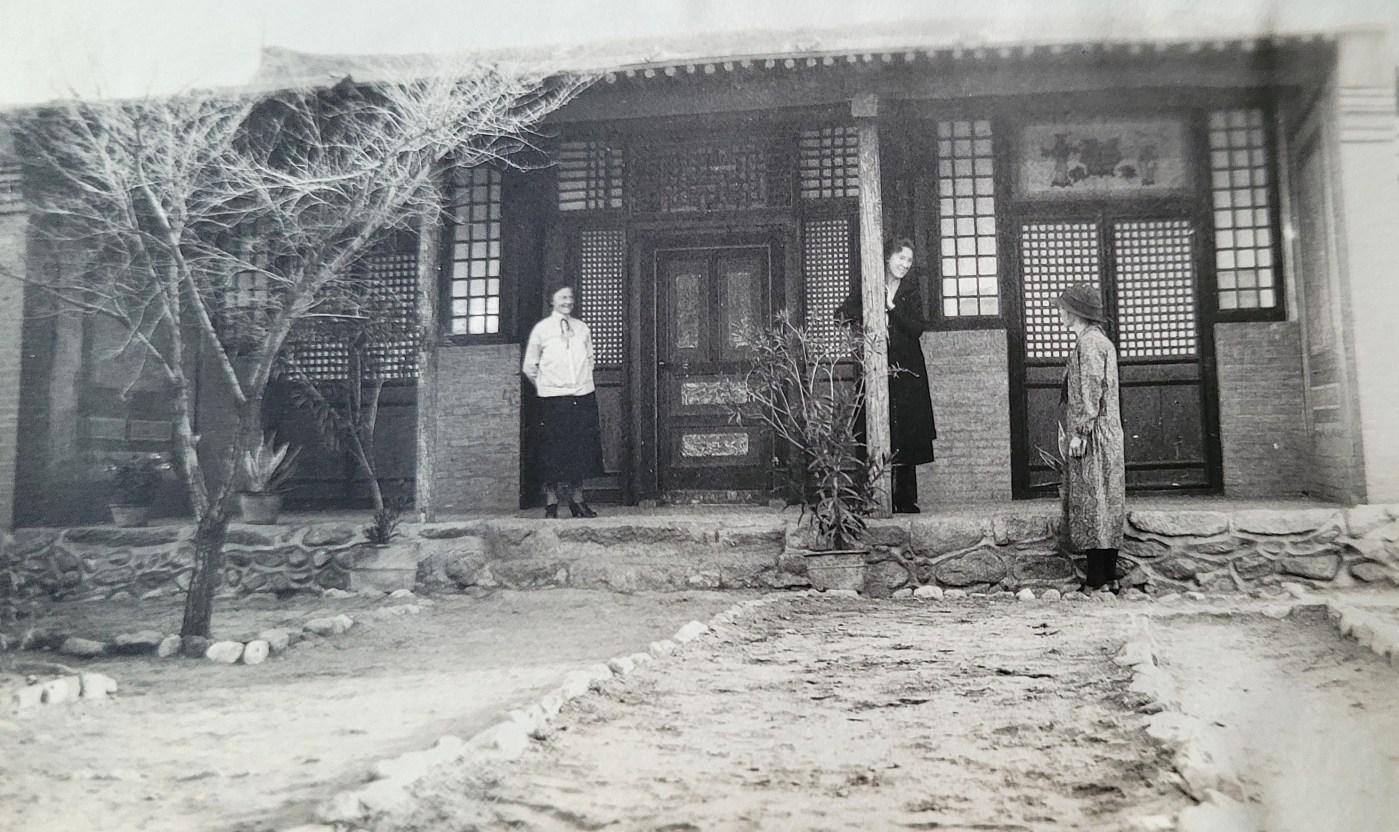
Not long ago, I met with my father’s cousin Kurt, who is a paternal grandchild of Robert and Dagny, just like my father. He is going on 90, but completely clear-headed and full of interesting stories from the missionaries’ time in China.
We usually do something cultural together and this time we went to the house of the Swedish artist Bror Hjort, in Uppsala. For those of you who have yet to discover Bror Hjort, he was a very influential Swedish artist and sculptor and many of his works are on display in towns all over Sweden.
When you arrive at Uppsala central station, you instantly see his magnificent fountain sculpture “Näckens polska” – an artwork that shows “Näcken,” an evil spirit of water in Swedish folk belief. He lured people into the streams with beautiful music to drown them. Being born in 1895, Bror Hjort was a contemporary of my great-grandparents and someone they would probably also have known about during their lifetime.

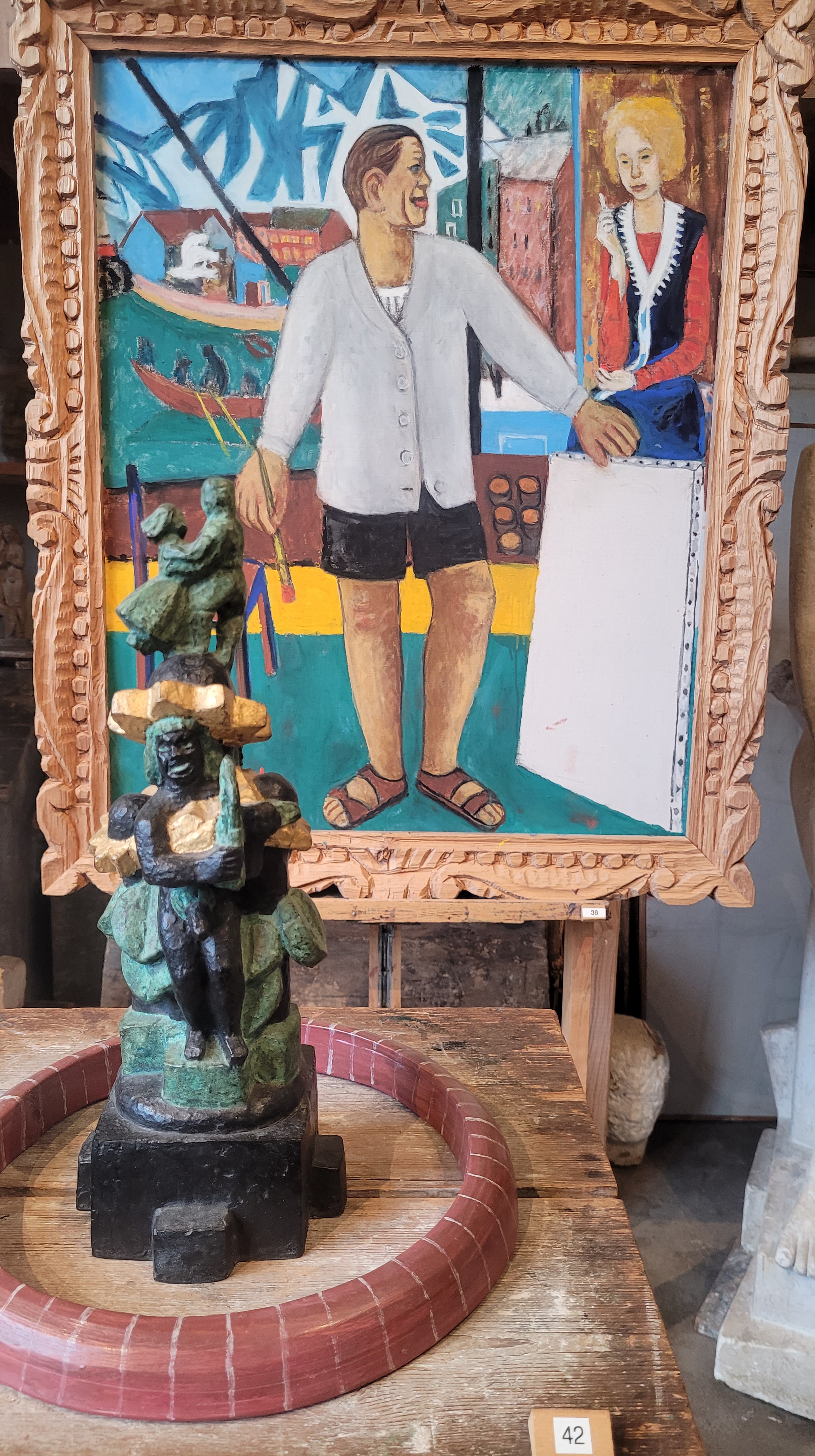
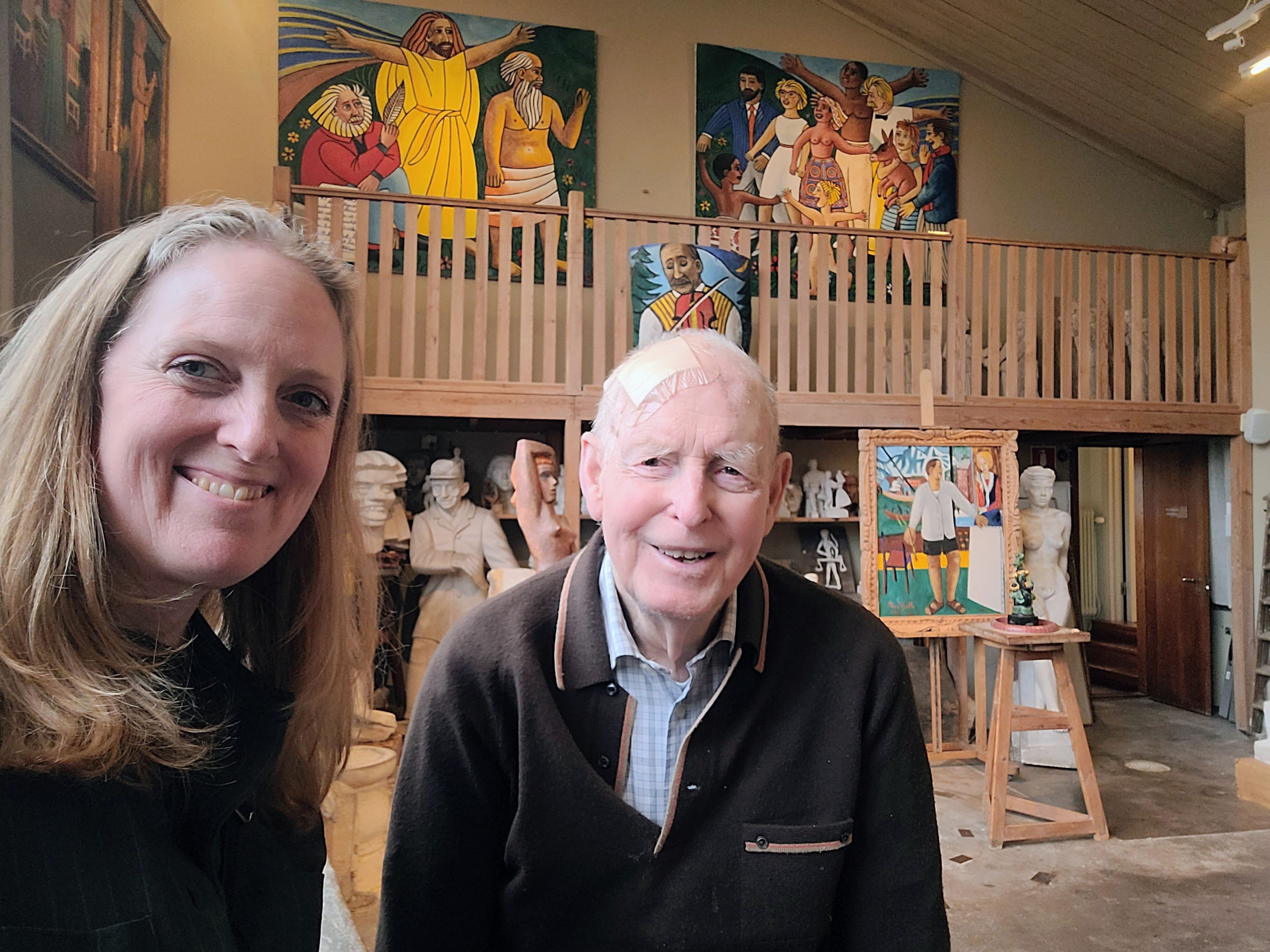
But we did not only discuss artwork – Kurt also told me a fun story about his father and his time in China. Kurt’s father was Martin, the fourth child of Robert and Dagny. He also became a missionary, together with his wife Birgit. As I have written before (se article here), Kurt was born in China, but the family travelled back to Sweden when he was only one year old, as both their children were very ill by in dysentery then, and had to return to Sweden to recover.
However, Kurt told me that when his father wanted to remodel the house he lived in, in a village in China, he asked some Chinese workers to open up a hole in the wall and put in a door, so that they would not have to go outside into the courtyard to get into the next room. The workers started opening the wall and carving out the clay and wood that were holding it up. As they carved into the wall they discovered dead scorpions and Martin was surprised to hear joyful cries from the workers. When he went in to check on them, he saw them pulling white, almost see-through scorpions out of the wall and putting them in their mouths. He was very surprised that they could eat them like that, not least because he thought they might be poisonous.
The workers offered him one to taste, and after having removed the stinger, he accepted. And now he understood why they were laughing. The scorpion made his head spin. He didn’t feel like himself for some time – and in Kurt’s retelling of the story, they later concluded that he must have gotten some kind of high from it.
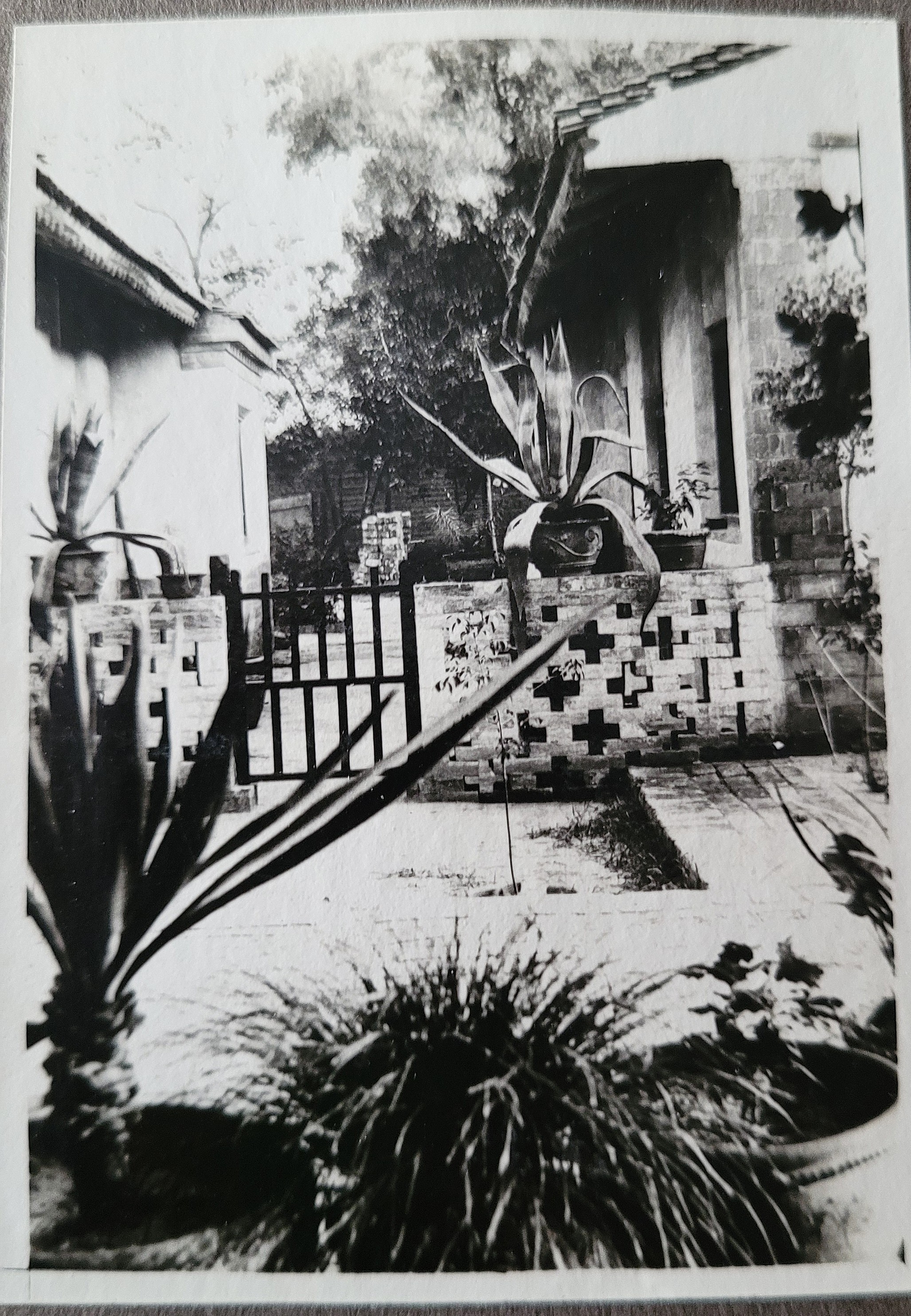
I do not know how much of this story is true, and how much has been added since it happened around 100 years ago, but I looked up what kind of scorpion it could possibly have been. Apparently, a common scorpion in China is “Olivierus martensii”, sometimes called the Manchurian scorpion. It is common in the northern and central parts of China and likes dry, warm spaces. It hides in cracks, dirt, behind stones, and in buildings. This is the species that can be found in the walls of country houses built with clay, bricks, or stone. They defend themselves with their tails, like other scorpions, but they are not life-threatening to adults. I cannot find any records of scorpions making people “high.” It seems scorpion toxin is used in different medicines, and some is being tested against various cancers. According to Wikipedia, this particular scorpion’s tail has been used in traditional Chinese medicine for many centuries to treat various neurological problems, such as chronic pain, paralysis, apoplexy, and epilepsy.
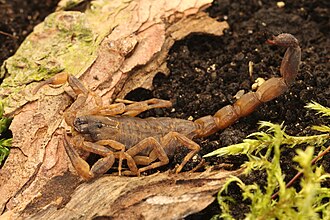
Perhaps this is a true story – it could have happened once. But over the years it could also have been embellished for dramatic effect. I cannot find anything that says the Chinese used to eat raw scorpions, but rather that they could cook them over a fire or dry them and then use them. Though, perhaps the scorpions were already “dry” – being dead in the wall…
What do you think about the story – true or false?
I think it is a funny story in any case, and Kurt had a good laugh telling me about it 😀
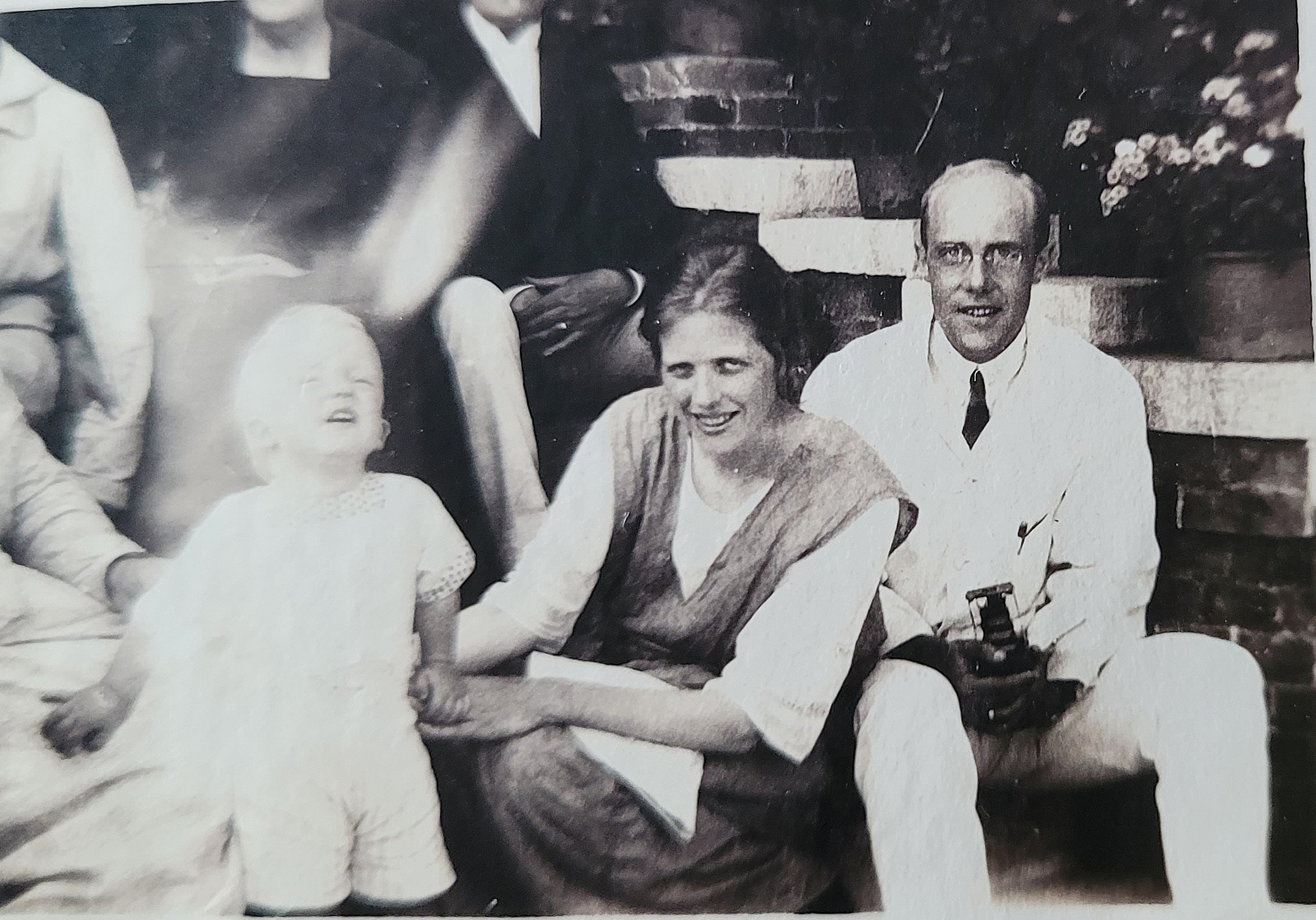
Photo at the top: Missionary house in China, Kurt’s album.
 Thérèse Amnéus

Wow, that’s quite a scorpion scenario you wrote about, Therese!
LikeLiked by 1 person
Haha, yes 😄
LikeLiked by 1 person
That scorpion story is not for the faint of heart! I suspect that the original incident was embellished in the the retelling!
LikeLiked by 1 person
I very much hope so! It is not an experience I wish for anyone 😄
LikeLiked by 1 person
I wouldn’t either!
LikeLiked by 1 person
Well, there seems to be a practise in South-East Asia where they are grinding scorpions and then smoke them together with tobacco or hasj. And yes, apparently that gives a strong hallucinogenic effect, although it can be rather risky. Perhaps the hasj also plays a role. I’m obvisously not an expert in this matter so I the internet was my friend here. Diving into the matter I also learned that the venom of a cobra can make one high (in case of an overdose maybe a bit to high) and the poor mans high can be obtained by licking the skin of a certain toad. We just have to love animals don’t we? 🙂 So maybe the story indeed was true (to some extent). The grinding wouldn’t have been necessary, that was done more or less by drought and time. Whatever it was Thérèse, it’s a cool story in any case!
LikeLiked by 2 people
Wow! I didn’t know people smoke scorpions! But I suppose there is no end to human curiosity, and that certainly makes for interesting traditions 🙂 Thanks for adding such fascinating facts to the story – and I agree, the lion part of it is probably true, but HOW the scorpions were eaten is up for debate 😄.
And I also loved hearing it told so vigourously by my dear Kurt – his joy in telling it was so uplifting!
LikeLiked by 2 people
Wow! That’s wild about the scorpions. I think it’s probably true, maybe they were considered a delicacy by the Chinese, and it affected Kurt’s dad like that because he wasn’t used to eating them? 🤔
LikeLiked by 1 person
I agree – they can probably be a delicacy 🙂 And imagining eating dead, whitish scorpions from a house wall could also probably make anyone feel nauseous without even tasting them… So, I suppose the story can be true, though we will never know for sure!
And I kind of think that is the charm about stories that are passed down from generation to generation – the questionmark is doing something with the imagination. The “what if?” that makes you think about these people in another way. Like, if Martin did eat the scorpion, I think he was quite brave, and a bit reckless at the same time – and the recklessness is not something that I associate with him from what I have previously gathered. He sounds a bit “fun” in this story – that certainly adds something to his charachter 🙂
LikeLiked by 1 person