
We are fast approaching the end of the school year in Sweden. At the moment, both teachers and students are very busy. Every week there are several examinations that require a lot of studying. We are all very much looking forward to summer holidays.
A hundred years ago, my grandparents Rudolf attended Year Four and Edna Year Three in the Swedish Union School in China. The school was situated at the mountain of Kikungshan (today Jigong Shan), surrounded by greenery and beautiful views over the valley below. The closest trade town was Hankow (today Wuhan), 170 km to the south. Jigong Shan was also used as a recreational area for the missionaries – many different societies had summer houses built on the mountain.
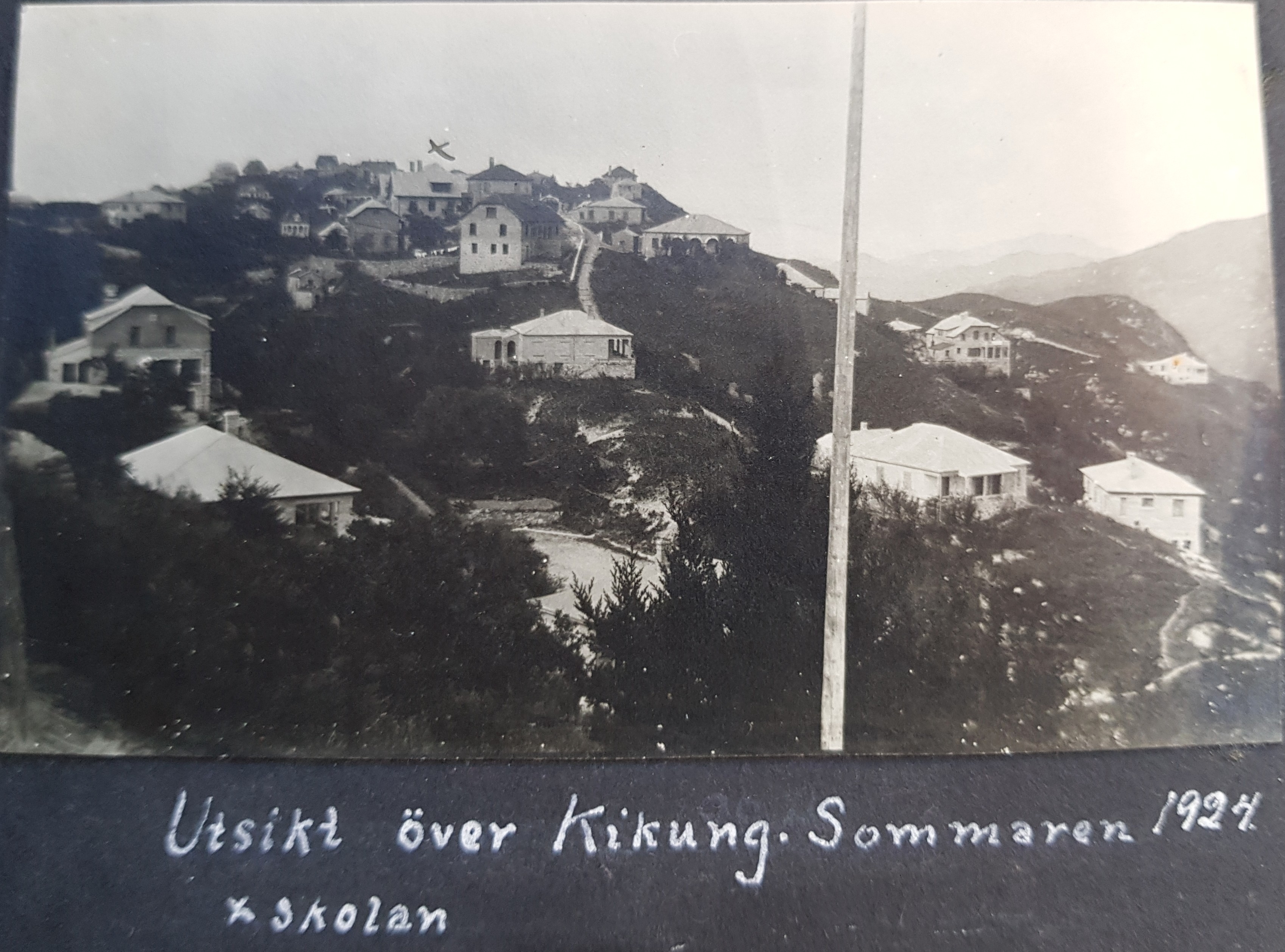
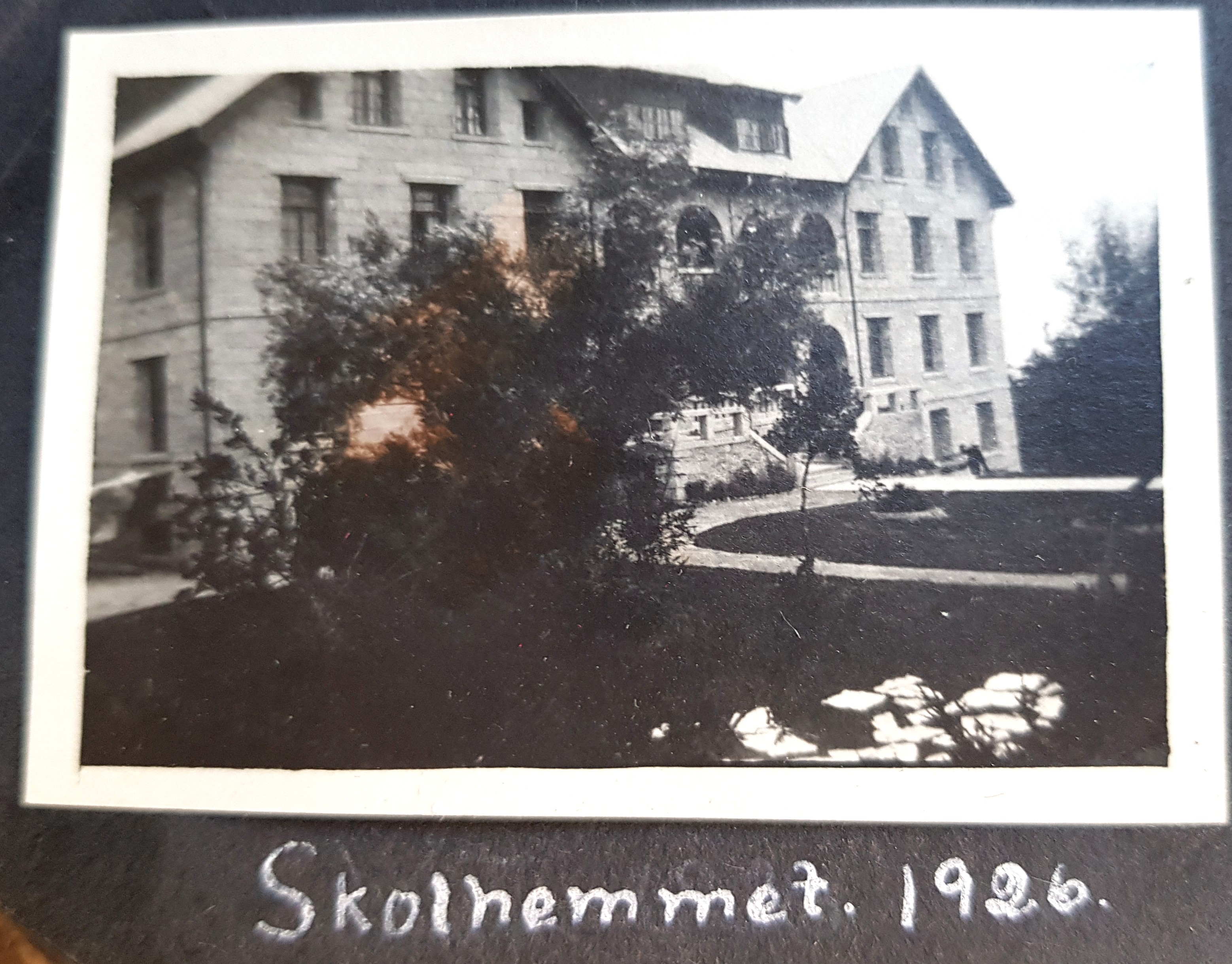
When the spring term came to a close, the students looked forward to returning home to spend the summer vacation with their families, This year however, would turn out differentely for quite a number of them, due to armed conflict in northern China when national forces and regional warlords clashed. There are several records by the missionaries of the events that summer and autumn. Thanks to the school keeping a diary, I also found out that my great grandparents were highly involved at the school during that particular time.
From the school diary:
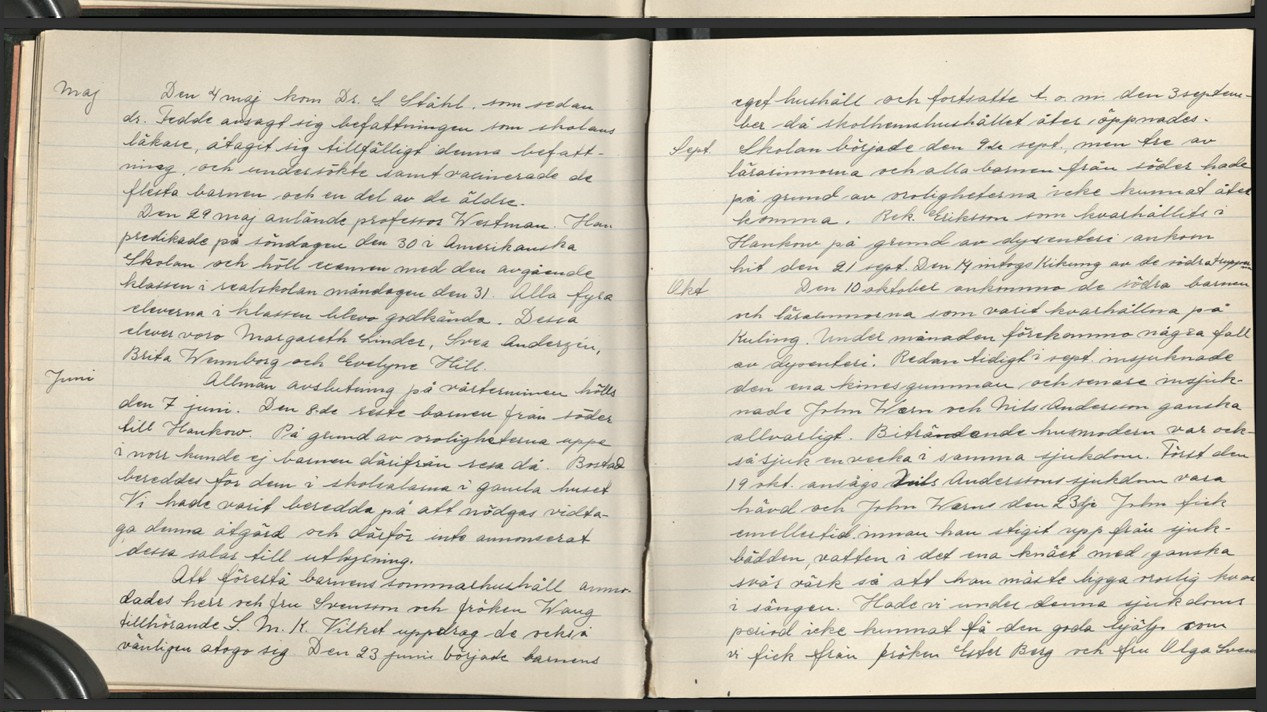
“The general closing ceremony of the spring term was held on 7 June. On the 8th, the children from the south travelled to Hankow. Due to the unrest up in the north, the children from there were unable to travel at that time. Accommodation was arranged for them in the classrooms of the old house. We had been prepared for the necessity of taking this measure and had therefore not advertised these rooms for rent.
Mr and Mrs Svensson and Miss Wang, belonging to the Swedish Mission in China, were requested to supervise the children’s summer household. This assignment they also kindly undertook.”
My great-grandparents Nils and Olga (Mr and Mrs Svensson) had arrived to pick up their children from school that year. Instead of going back to Tungkwan, they now agreed to stay to help out with all the children who could not travel back.
The mountain was not a bad place to spend the summer, as it was a bit cooler up there. For Edna and her little sister Linnéa, the disappointment of having to stay at the school over the summer was probably overshadowed by the joy of having their parents with them.
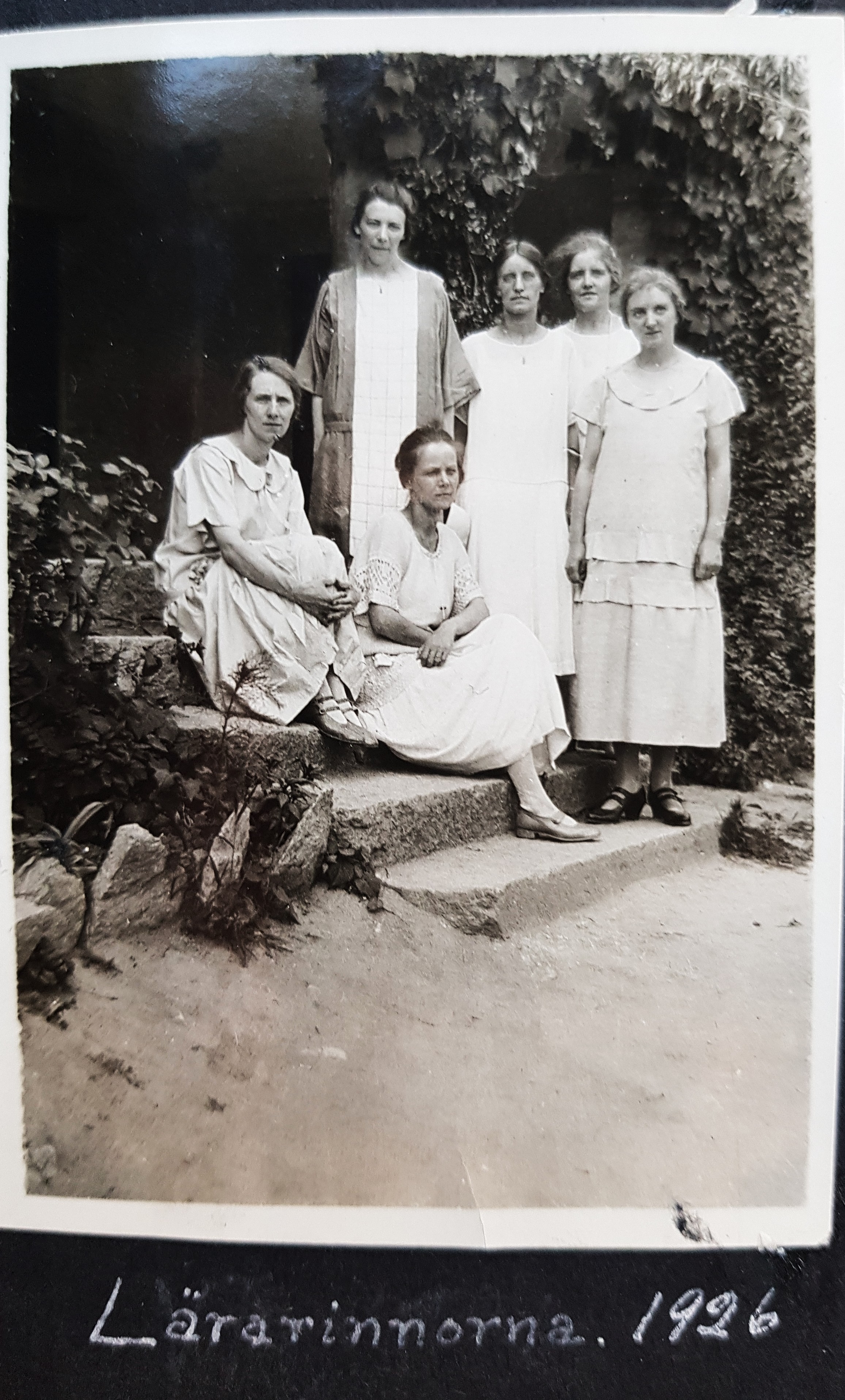
The school normally hosted around 40-50 children, and had seven employed teachers.
The Swedish Union School had the privilege to offer a Swedish realexamen (a lower secondary school leaving examination). In my grandmother’s photo album I found a photo of four girls who achieved this feat in June 1926.
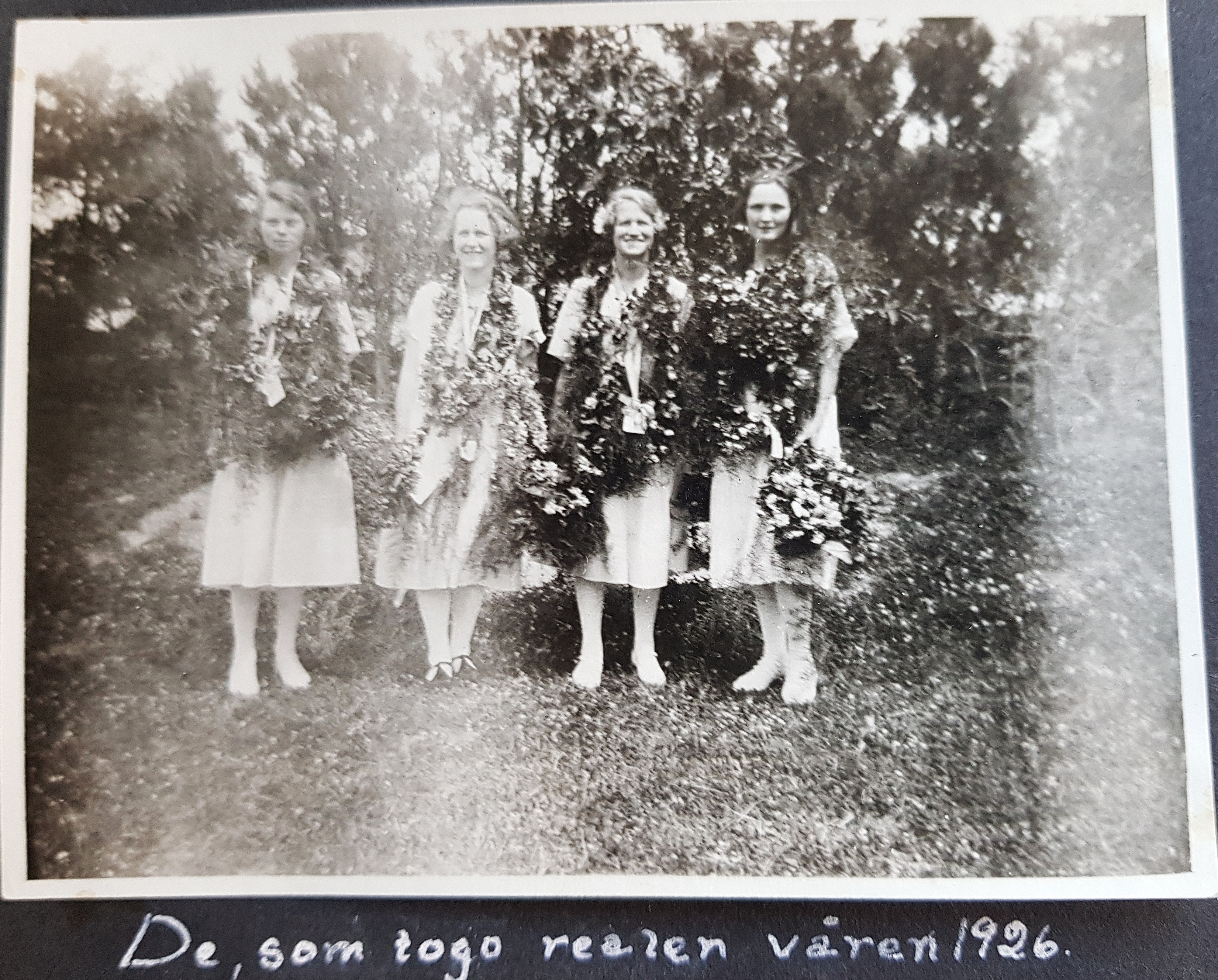
From the school records, I deduct that the girls were: Eva or Svea Anderzén, Brita Wennborg, Evelyne Hill and Margaret Linder (who later married Vilhelm Bergling, brother of Rudolf). Today, we do not have that kind of school system in Sweden, but we still celebrate the studentexam by hanging lots of flowers around the students’ necks 🙂
I am not sure if these girls also had to stay back and spend their summer in school, even though they were finally finished and could have returned home for good… but if they did, I hope they kept their good spirits up – just like in this lovely photo!
The school diary does not give away what activities Nils and Olga undertook together with the children at school during those summer months, but I imagine they went on hikes around the mountain, bathed in the streams and played different games. My grandmother Edna was 13 years old at the time.
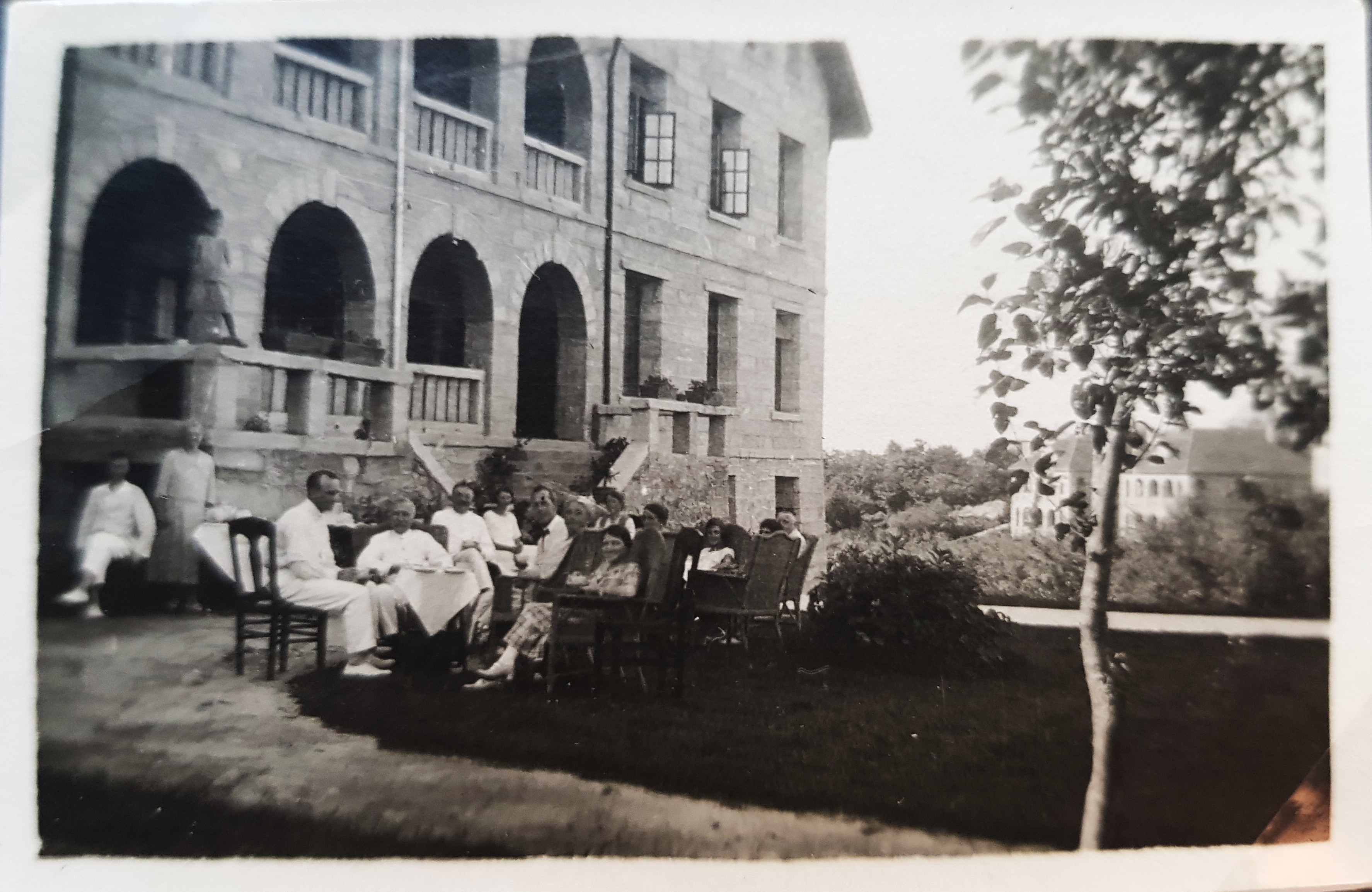
Here, the missionaries and the remaining school children are relaxing in front of the school building.
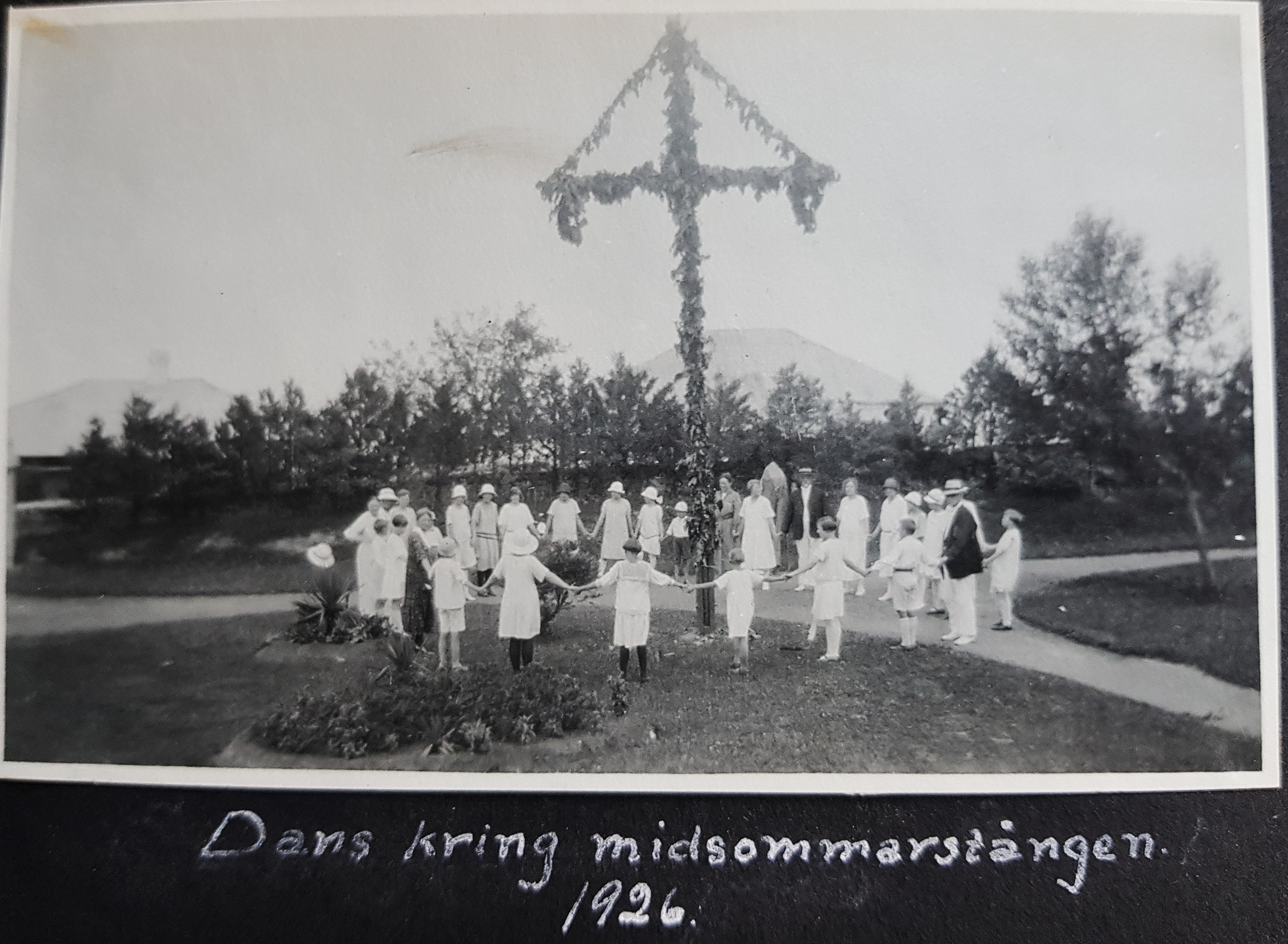
And as true Swedes – they made sure to celebrate midsummer! I am impressed that they managed to raise a may pole as well – it looks very traditional even though it is in China.
Continuing unrest
When autumn came, the situation was still not safe in the country.
School diary: “September: school began on 9 September, but three of the female teachers and all the children from the south had been unable to return due to the unrest. Principal Eriksson, who had been detained in Hankow due to dysentery, arrived here on 21 September. On the 14th, Kikung was seized by the red troops.
October: On 10 October, the southern children and the female teachers who had been detained at Kuling arrived. During the month there were some cases of dysentery. As early as the beginning of September one of the Chinese women fell ill, and later John Waern and Nils Andersson became quite seriously ill. The assistant housekeeper was also ill for a week with the same illness. Not until 19 October was Nils Andersson’s illness considered resolved, and John Waern’s on the 23rd. John, however, before he had risen from his sickbed, developed fluid in one knee with quite severe pain, such that he had to remain lying immobile in bed. Had we during this period of illness not been able to obtain the good assistance we received from Miss Ester Berg and Mrs Olga Svensson, it would have become very difficult, given that the sick needed someone to help day and night.
Mr and Mrs Berg, Mr and Mrs Svensson, Bergling, Westers, Berg, Gustafsson and Wang remained here due to train obstructions until 22–23 October, when they undertook their return journey via Hankow–Nanking–Hsücho–ChenChow, as the only possible route available.”
The story goes on
I looked in my great-grandmother Olga’s book to see if she had written anything about this and found a big part of a chapter dedicated to the difficult return to Tungkwan from Kikungshan.
Olga writes:
“In the autumn of 1926 we were to travel home after our holiday, which we had spent on the mountain of Kikungshan, where there had also been war and unrest. Our girls attended school there and we had been prevented by political circumstances from leaving the mountain as early as we had intended. It was then that Chiang Kai-Shek, with his soldiers on his campaign northward, defeated the military governor Wu-Pei-Fu, and likewise drove out General Ien, who was the governor of Kikungshan.
It was a fierce affair for a night and a day up there, while the mountain was occupied, but none of us, young or old, were harmed. There were quite a large number of us at the school. We Swedish missionaries from Shansi/Shensi, as well as from Honan, were to travel northward, but owing to the ongoing war in Hupeh/Honan we had to travel down to Hankow first, and from there by boat up to Nanking, and then north-westward by train. It was a long detour, but safer.
We were quite a large party of missionaries travelling together. At Shanghsien in Honan we parted ways. Most were to travel across the river to Shansi. My husband and I hired a small river boat that was to go upriver to Tungkuan.
It took a full week. We lay tucked inside a low cabin in the interior of the boat, but could occasionally spend time up on deck — if one can call the cabin roof that! We arrived at Tungkuan early one morning, quite unexpectedly. One of our evangelists had spent a couple of days walking along the riverbank on the Shensi side in order to meet us and prevent us from coming back, as it was so unsettled. But since during the nights we had lain at anchor on the Shansi side, he had neither seen nor heard anything of us. And now we were already at the mission station.
Our Chinese co-workers tried to get us to cross immediately to the other side of the river, but we had no inclination for that just then.
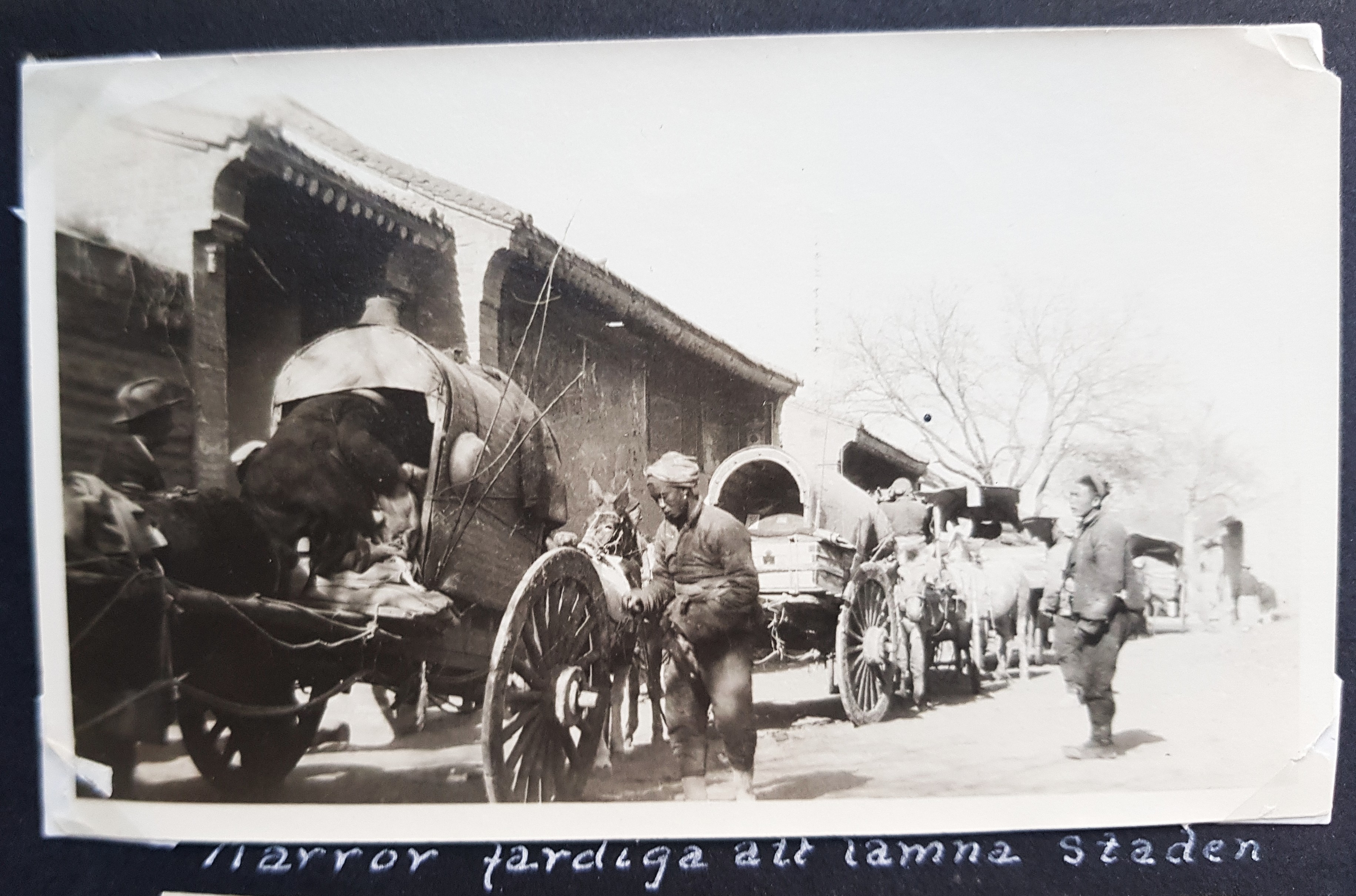
It was a Friday, and we suggested staying over Sunday to see how things stood at the front by then. We stayed, and for several days it was calm, so that we began to believe the danger of fighting in our district was over for this time. Women and men from the countryside gathered for a baptism course, and we hoped to be able to hold our autumn general meeting in peace and quiet. We had been home for 16 days when one morning our evangelist, who had been out “asking around,” came rushing in to us, agitated and urgent. “No, now it’s started!” he cried. “You must leave at once. Crowds of people are fleeing from the west, and many from this town are leaving too.”
We had not unpacked since our return home, and so one man took our small trunk on his back, another took our bedding bag, and we ourselves carried what we could in our hands, and on foot we went down to the riverbank.
Down there, it was a dreadful crush. Several ferries, already fully loaded, drifted past us as we stood there. Many boats never came to shore at all, for people waded out into the water as far as they could and climbed up onto the ferries until they were overloaded. It looked hopeless for us. We prayed for guidance and help as we stood among the crowd on the riverbank.
A boat came slowly gliding past; a man on the boat called out to us: “Are you crossing the river?” “Yes, if it can be managed,” my husband replied. The man then ordered the captain of the ferry to send three men ashore to carry us and our luggage out to the boat. They carried us on their backs, and a third man took our belongings. My husband came on board first, and believing I was already there, he began looking for me. The man carrying me was small in stature, and as the boat kept drifting further from the shore the water grew deeper and deeper, so that when he came to lift me on board he could not reach up to the side of the boat! I looked in vain for my husband. Fortunately, the gentleman who had helped us get a place on the boat took hold of me and hauled me on board!
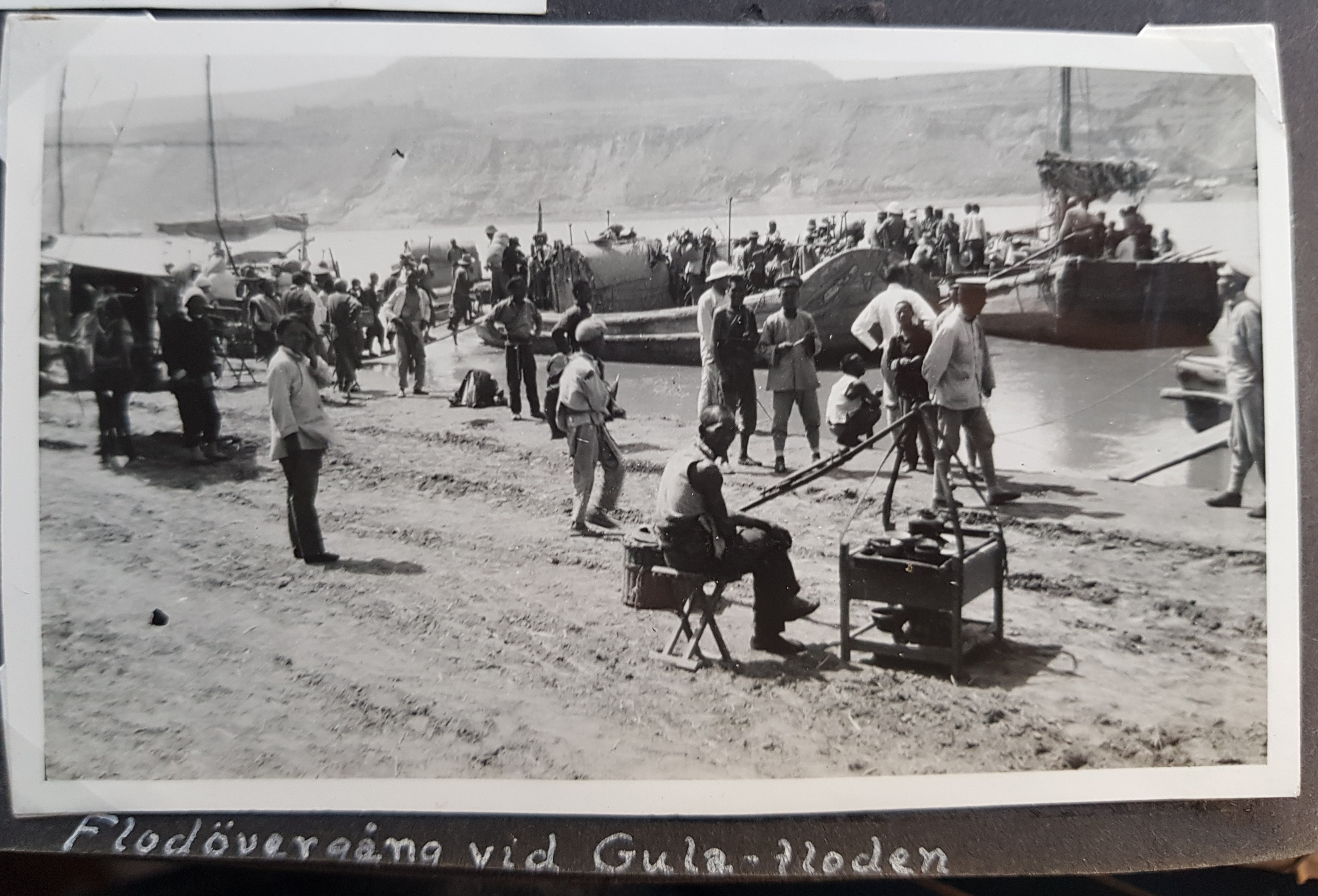
Then I saw that it was our postmaster in Tungkuan who had helped me. I was so grateful to him, and he himself felt that he had done well – which indeed he had. “For,” he said, “if I had not pulled Mrs Styrelius* on board, you would have drowned.” Yes, it could have ended so badly. This postmaster had, during an earlier war, lodged with us. Now he was able to repay that help by helping us.
It was not a moment too soon that we had got out of the town, for it was not long before we heard the cannons thundering over Tungkuan. The following day we continued to the town of Yungtsi and stayed there until Christmastime, for several weeks the river crossing was closed and no boats crossed at all.”
It is such a joy to read Olga’s own account of the events — her writing reveals so much of her personality, with its humour, courage, and very strong faith that kept her going even when the situation looked grim. Only a few months later, in 1927, the Swedish Union School in China closed for good, and my grandparents, Rudolf and Edna, left for Sweden, never to return to China again.
(Nils and Olga returned to China in 1929, after having spent a couple of years with their children in Sweden. The children stayed with retired missionaries at the mission’s home in Duvbo, Stockholm.)
*Olga and Nils changed their name from Svensson to Styrelius during their time in China, which is why they appear as ‘Mr and Mrs Svensson’ in the school diary but when Olga is saved by the postmaster, she is called Mrs Styrelius.
 Thérèse Amnéus
That must have been both exiting and scary for Olga and Nils. Saved by the bell, so to say, or as far as Olga goes saved by the postmaster. This is history told by eye witnesses, people who were really there. It’s sad they had to leave China forgood for this reason and not out of free choice. But that is how life can go. Wonderful story, Thérèse, and very fine pictures!
LikeLiked by 1 person
Haha! Yes, saved by the postmaster! That goes to show how good it is to be generous to others – they remember it 🙂
They did leave China, but Olga and Nils came back again – without their children. That was of course difficult, but without a Swedish school in China, the children had to complete their education in Sweden. It is hard to imagine how the missionaries had to choose between family life and their calling. It took a toll on everyone, of course, but from their records and letters, they thought it was worth it. The children managed quite well, staying at the missionary home in Stockholm, but of course they missed their parents immensely. In China, they had been able to go home for vacation once or twice a year to see their parents at the mission station. Now, they would have to wait for seven years until next time… and we all now how much teenagers change during those formative years. I am happy you enjoyed Olga’s story and the photographs – I was very happy to find the matching ones when writing the article!
LikeLiked by 2 people
I didn’t realize as I was reading this essay that Nils and Olga’s time in China was almost at an end. What a tumultuous time for them! Do you know why they changed their last name? I particularly enjoyed the excerpt from Olga’s diary. As Peter noted, the photographs are exceptional.
LikeLiked by 2 people
Hi Liz!
I notice now that the ending of the article could imply that it was also the end of Nils and Olga’s time in China, but it was not. They did go home to Sweden together with their children, as Edna and Linnéa had to continue their schooling in Sweden after the closing of the Swedish Union School in China. But Olga and Nils only stayed in Sweden for two years at that time. They returned to China in 1929 and left their children at the missionary home in Duvbo in Stockholm. Nils passed away in China in 1942 and Olga came back to Sweden for good in 1945.
Nils and Olga changed their name to Styrelius because there were other missionaries called Svensson in China at the time. They got mixed up with mail, packages and so on, why it was easier to take the name Styrelius. Olga had also changed her name once before for much the same reason. Her father’s name was the very common Jansson, and before even leaving for China the first time, she changed to her mother’s name Ahlman. When I first started researching my family history, these name changes did make it a bit difficult for me 🙂
I am happy you enjoyed Olga’s text – she is such fun to read in Swedish, and I hope that translates a bit as well!
LikeLiked by 3 people
Thank you for the additional information, Therese! I appreciate your taking the time to answer my questions.
LikeLiked by 1 person
It’s my pleasure! I am happy you take interest in the articles I put up here! 🙏
LikeLiked by 1 person
I enjoy learning new things, particularly about other countries and culture.
LikeLiked by 1 person
Me too! I think that is part of what makes life so interesting:)
LikeLiked by 1 person
Absolutely!
LikeLiked by 1 person