One of the most difficult things to come to terms with on a personal level, when diving into missionary history in China, is the fact that my great-grandparents had to send their children back to Sweden by the age of seven. In practice, this meant they could only be present in their children’s lives during those early years. After that, others took over – raising them, watching them grow, and shaping the adults they would become.
In reality, they became foster-children at an early age, even if no one saw them as such. I know this separation was deeply painful for many of the children – and of course, for their parents as well. Still, it was necessary for the children to receive a proper education, that could not be had in China. It wasn’t until 1918, with the opening of the Swedish Union School in China, that missionary children could remain in the same country as their parents. Even then, regular contact was limited due to the distance between the missionary stations and the school on the mountain of Jigongshan. If lucky, they saw their parents once a year.
My grandfather’s oldest brother Morris was born in 1898. By that time, Dagny and Robert had been in China, without a vacation in Sweden, for 5 years. In 1899 Dagny fell ill and the small family had to go back home, even though they still lacked one year before a regular vacation would be admitted. Read more about their stay in Sweden here.
It seems Dagny’s illness was a blessing in disguise, as the Boxing rebellion increased in severity during the summer of 1900. During the rebellion, over 200 westerners were killed, 56 of which were Swedish, and the majority were missionaries. The family returned to China in 1902, having been blessed with a daughter, Dagny-Edla, born in 1900, and another son – Hudson Adolf Wilhelm born in 1901. Morris was four years old at the time and only three years later, he had to leave China, his parents and his siblings to go to school in Sweden. During Morris’ time in China, Dagny and Robert had yet another son – Martin – born in 1903 and poor little Hudson Adolf Wilhelm passed away in 1904.
In a book that Morris has written, he talks about the separation from his parents and his life in Sweden thereafter:
“The donkey cart began to move. My mother stood for a long time, watching the vehicle roll away. She wept quietly, submissively, and felt something of this: ‘Lord, could this cup not pass from me?’
The impending journey struck me as a thrilling, joyous adventure. On the steamer I was to share a cabin with the director of the China Inland Mission after Hudson Taylor: D. E. Hoste. Hudson Taylor himself had been the host at my parents’ wedding. The day came when I was to leave my parental home to be raised by ‘second parents’. My father would accompany me a part of the way, while for my mother the separation loomed heavy and painful. It was the eldest son who slipped from her sight. Mother would endure several more painful farewells. My sister Dagny‑Edla left home. And when the youngest of us, the sixth, was taken from her, she wrote to me in a letter mixing her mothertongue Norweigan with Swedish:
“Oh, these separations, Morris; one day we shall never part again.”
(In her own words: Ack disse skilsmisser, Morris, en gang skal vi aldrig skilles mer.)
My father revealed his feelings more seldomly, but they ran deep and strong. Five years later, my parents arrived in Sweden. Two years after that, in 1912, they set out once more for China – this time for eight years. Eight years! For me, it meant losing my parents’ guidance and care during the most critical years of my life – years that were pivotal for my faith in God, my Christianity, and the choice of my life’s calling. Missionary children could sometimes grow up to feel nothing but hatred for the mission and all it stood for. My siblings and I sought to preserve our spiritual bond by gathering every Sunday in my room to pray for one another and for our loved ones in China.
My years in secondary school roughly coincided with the First World War, that global inferno and widespread suffering. We hung war maps on the walls and followed with intense interest the horrific battles at the Masurian Lakes, the Marne, Verdun, the Isonzo, the Carpathians – indeed, around the world’s seas and continents. Every month I sent a report – newspaper clippings about the war – to China. My father was keen to receive these updates, since out there he could only follow the military operations through the reports issued by the Entente powers.
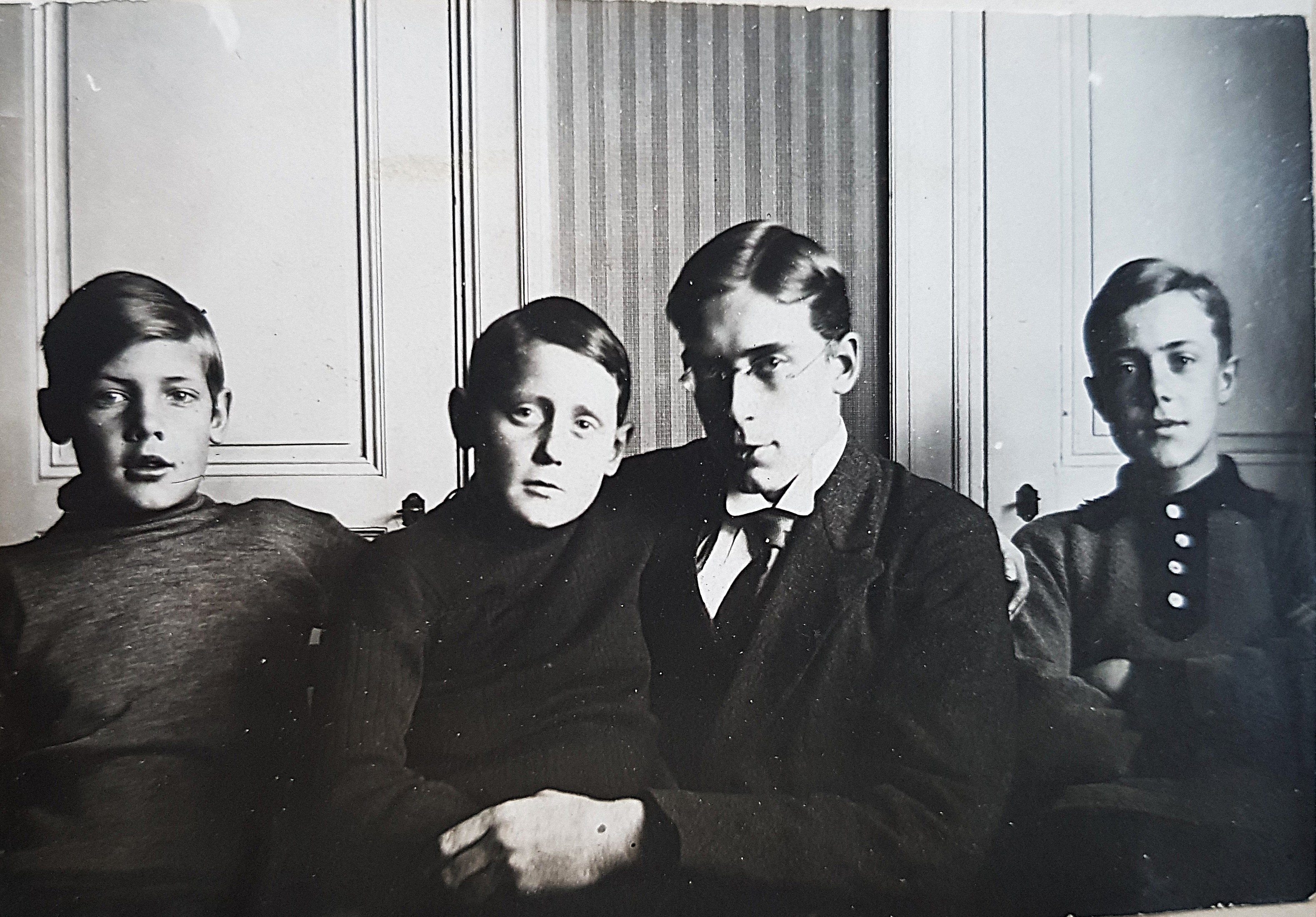
After I sat my final exams in 1918 and went to collect my diploma, I found myself subjected to a cross‑examination by an adjunct teacher who asked what I intended to become. “Perhaps a missionary,” I replied. He was outraged: “Why that? Your grades in the sciences point to very different life pursuits. Leave the heathen in peace! They live in such an idyllic and happy state!” I was taken aback by his aggressive stance and thought: Does he know nothing of ruthless slave trades and cruel medicine men in Africa, of widow burning and the caste system in India, of China’s poverty and its hellish temples? I mentioned some of these things, bowed politely – and left him to ponder his ignorance.”
A special meeting
Morris goes on to talk about a meeting that I have also heard about now and then from various relatives:
“The following summer, I was invited as a tutor to a large estate on the border of Värmland, in Ölsboda*. In its magnificent library, I read, among other works, Gösta Berglings saga and afterward set out on a bicycle ride to the long lake Löven.
(Editor’s note: The Gösta Bergling’s Saga was inspired by places around the lake Fryken in Sweden, which is called “Löven” in her book).
At Mårbacka, Selma Lagerlöf sat on her veranda, watching the dying sun’s caress across the water and the blue-tinged hills. I strode forward, brushed the dust from my student cap, and introduced myself as “born in the East.” The phrase pleased her. She invited me to sit beside her and asked me about the mission, folklore, and legends of the Middle Kingdom. In return, the incomparable storyteller recounted her travels in the Near East.
(Editor’s note: Morris refers to the “Near East” – a term that today would be replaced by “the Middle East.” The journey Selma Lagerlöf spoke of was likely the one she undertook with Sophie Elkan to Jerusalem. They traveled for about six months, visiting many countries and having remarkable experiences along the way. After the trip Selma had the novel Jerusalem published, an important work that contributed to her receiving the Nobel Prize.)
As evening mists began to gather in a fairy-like dance along Fryken’s forested shores, I rose to take my leave. She blessed me with “God’s grace.” In the stillness of the summer night, I pedaled onward toward the Geijersgården estate.”
Curiosity about China
The encounter between my grandfather’s brother Morris and Sweden’s most famous and iconic female author intrigues me. I don’t think that Selma Lagerlöf would invite simply anybody to sit on her veranda, which tells me that Morris must have made an impression, and that China was a fascinating subject to her. I wish Morris had written more about their conversation. Their meeting was in 1919, 10 years after Selma Lagerlöf was awarded the Nobel Prize in literature as the first female and the first Swedish person to receive it.
*Fun fact: Selma Lagerlöf wrote parts of The Löwensköld Ring at Ölsboda Manor. Morris worked as a tutor at Ölsboda Manor, where he also led the household devotions.
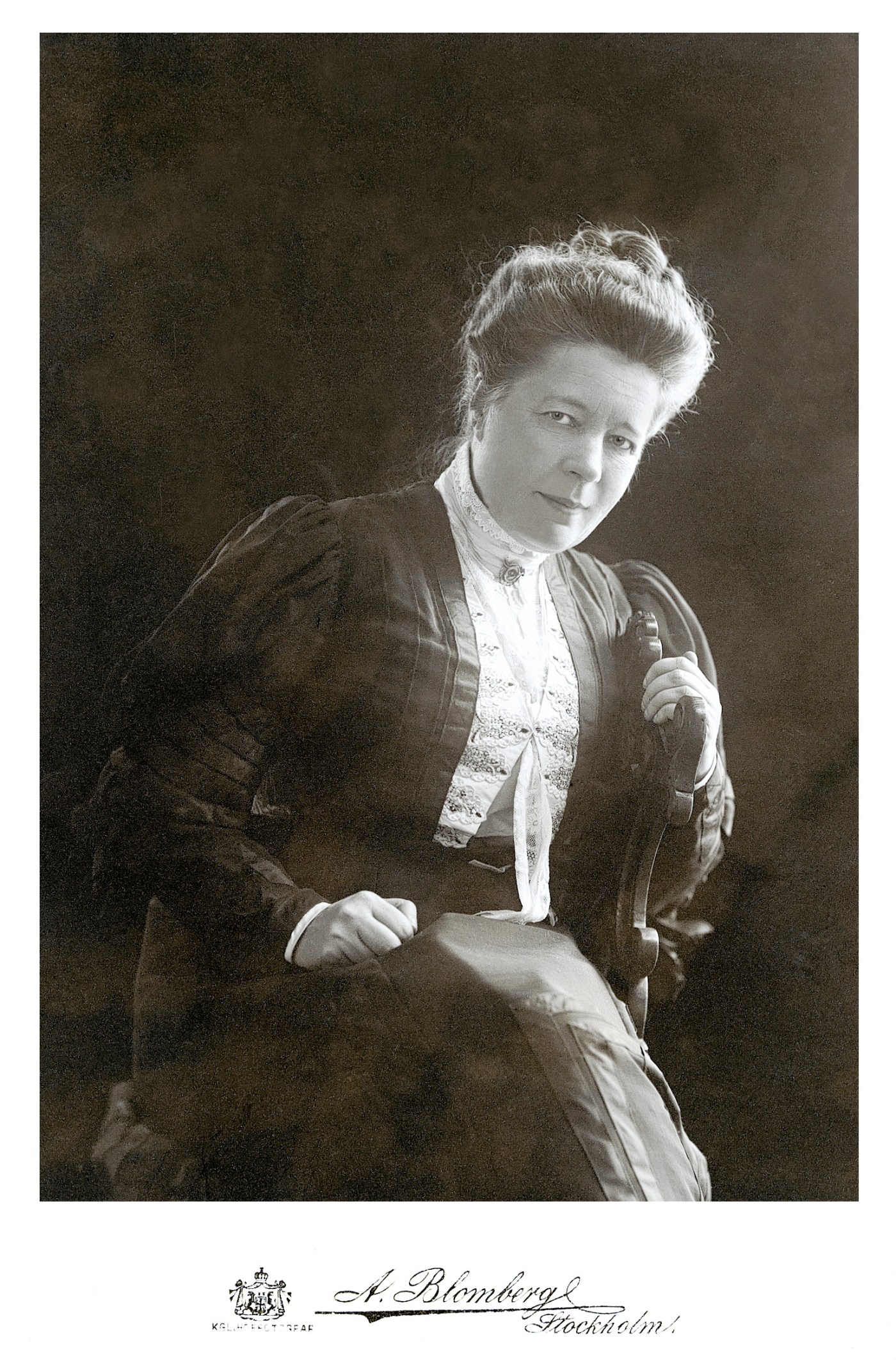
The photo featured at the top of the post: Selma Lagerlöf in 1906, photographer Anton Blomberg, Wikimedia commons.
 Thérèse Amnéus
Wow! It never occurred to me about the children having to go back to Sweden for their education! If you think about it, it an incredible sacrifice that whole families made for their faith. So cool that Morris wrote a book too!
LikeLiked by 1 person
That is what would make me reconsider my choices – I could never let go of my children at that age. I would go back with them, for sure 😀. Morris wrote a thin book about his beginnings in China and life in Sweden, but mainly It was about the religious beliefs in China – he was very interested in that!
LikeLiked by 1 person
Your family has had such an interesting history. Imagine being invited to chat on a veranda with a Nobel Prize winner! I really enjoyed Morris’s first-hand account of his experience as the son of missionaries.
LikeLiked by 1 person
It must have been such a treat to talk to Selma! And when he writes about their encounter, his text becomes more poetic… as if he wants to mimic her in a way. Very cute 😉
LikeLiked by 1 person
It must have been heartbreaking to send you children away, knowing you wn’t be able to see them for years, of perhaps never again. Same of course for the ones being send back to the home land. Children tend to be flexible though, but still, what a grief. Morris was an excellent writer, and thus, one might expect, storyteller. Perhaps Selma Lagerlöf recognised a ‘brother in arms’. Very interesting post again Thérèse.
LikeLiked by 1 person
I imagine it was the worst part of their mission, indeed! I think Selma was very interested in hearing about far away countries and cultures – that must have been a mutual interest. Her very famous book ”The Wonderful Adventures of Nils” was in fact commissioned as a geography book for public schools in Sweden – so her interest in travelling was well documented 😀
LikeLiked by 1 person
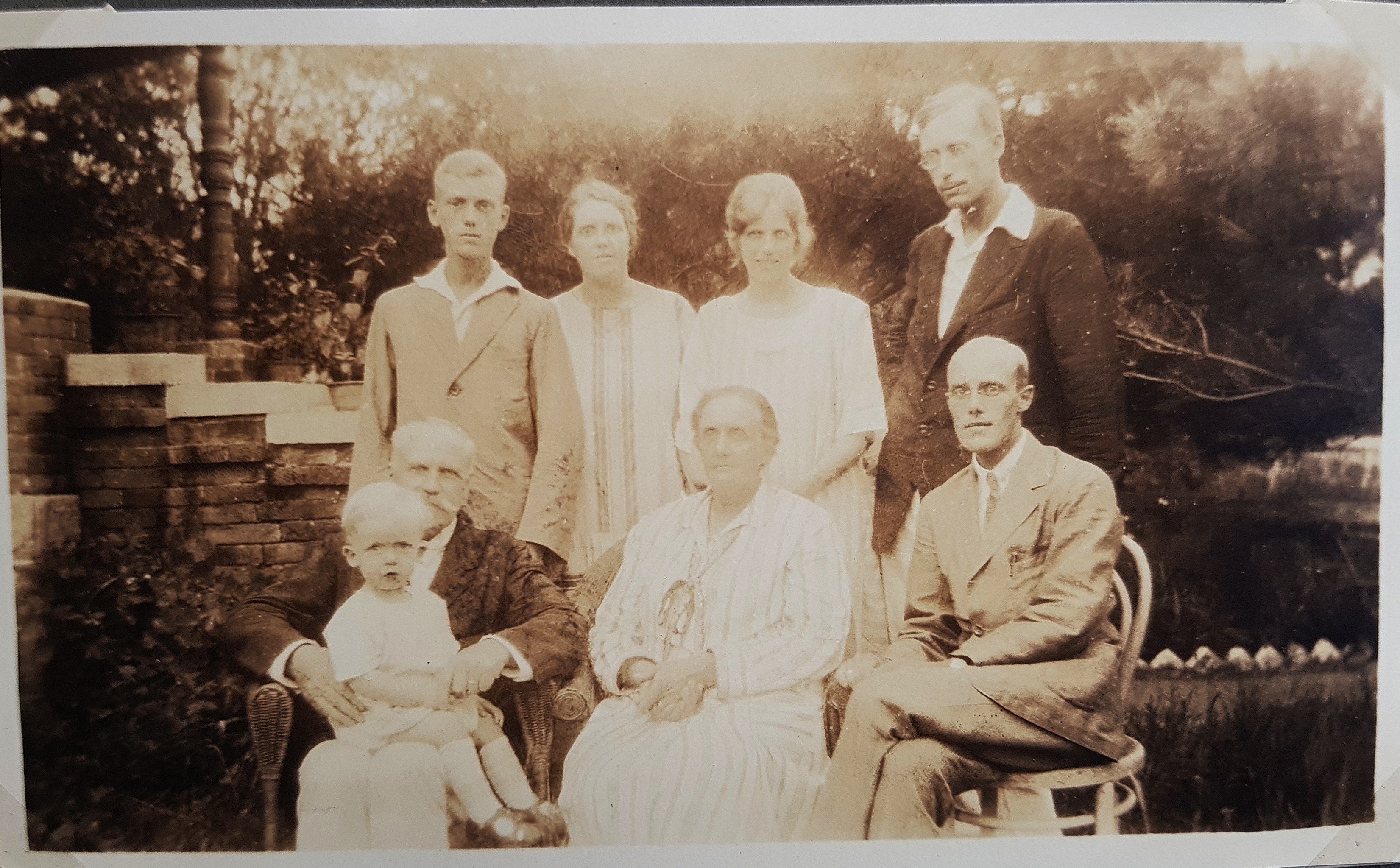
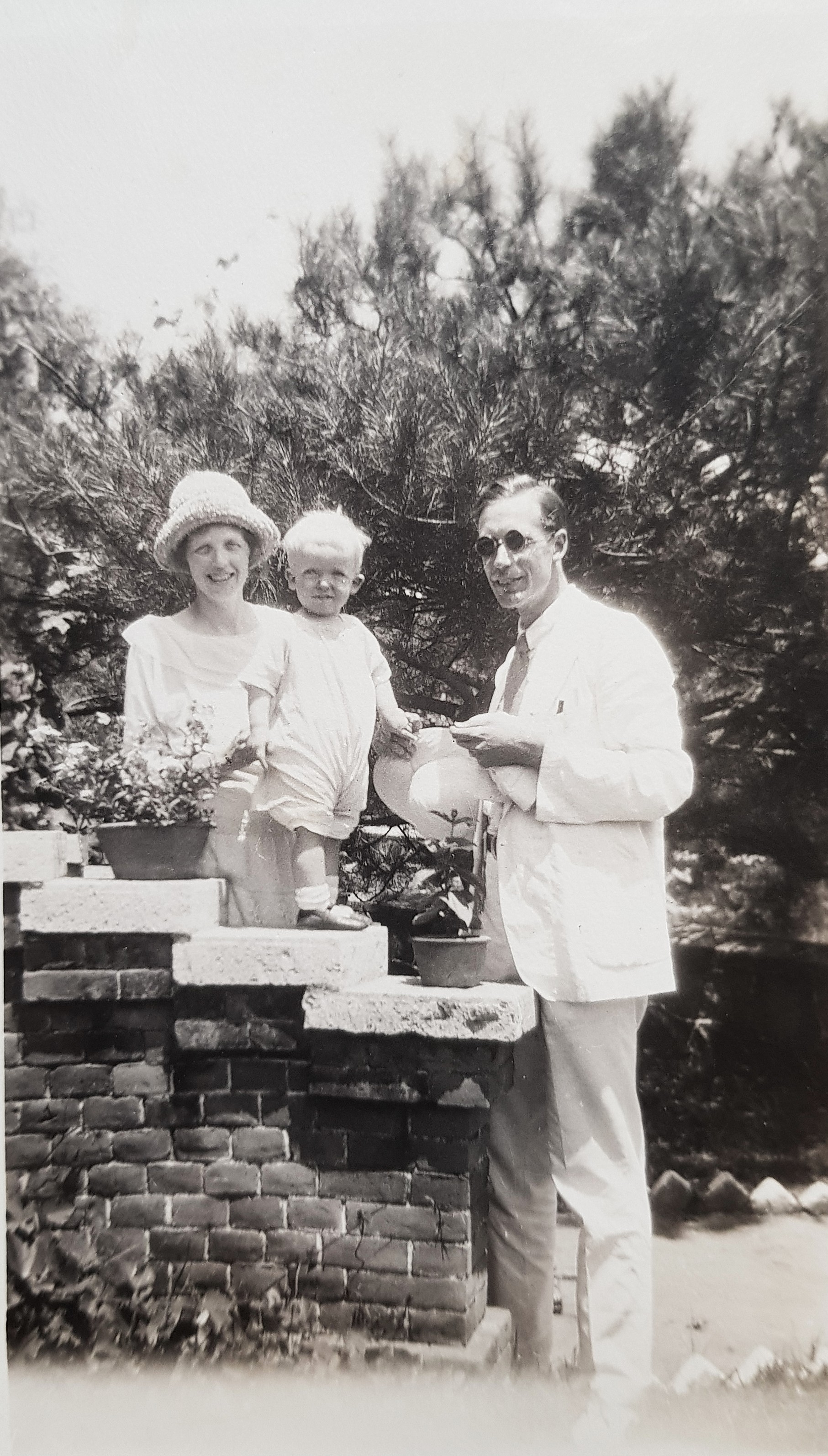
Hi again! I was just looking through some of my old family photos and I came across a small album from around 1924, with pictures of American (I’m assuming of Swedish ancestry) who were Lutheran missionaries in China. One city it mentions is Hsuchow. I’ll email you some of the photos, if you’d like. 😀
LikeLiked by 1 person
Hi! Wow, that is so interesting! I would love to see those photos! Thereseamneus@yahoo.com
LikeLiked by 1 person
Just sent you two pics, if they come through ok I’ll send you some more. 😀
LikeLiked by 1 person
Thank you, Debra! They came through – lovely pics and so very alike many of the photos I have from China as well! 💯🙏
LikeLike
I’m amazed it didn’t dawn on me that I had those, especially after reading your blog! I’m trying to figure out now if any of them are actually related to me, or why I would have the photo album in the first place. 🤔
LikeLiked by 1 person
They could well be relatives of yours, considering your relatives are of Swedish descent. And also religious. Is it an album with many photos?
LikeLike