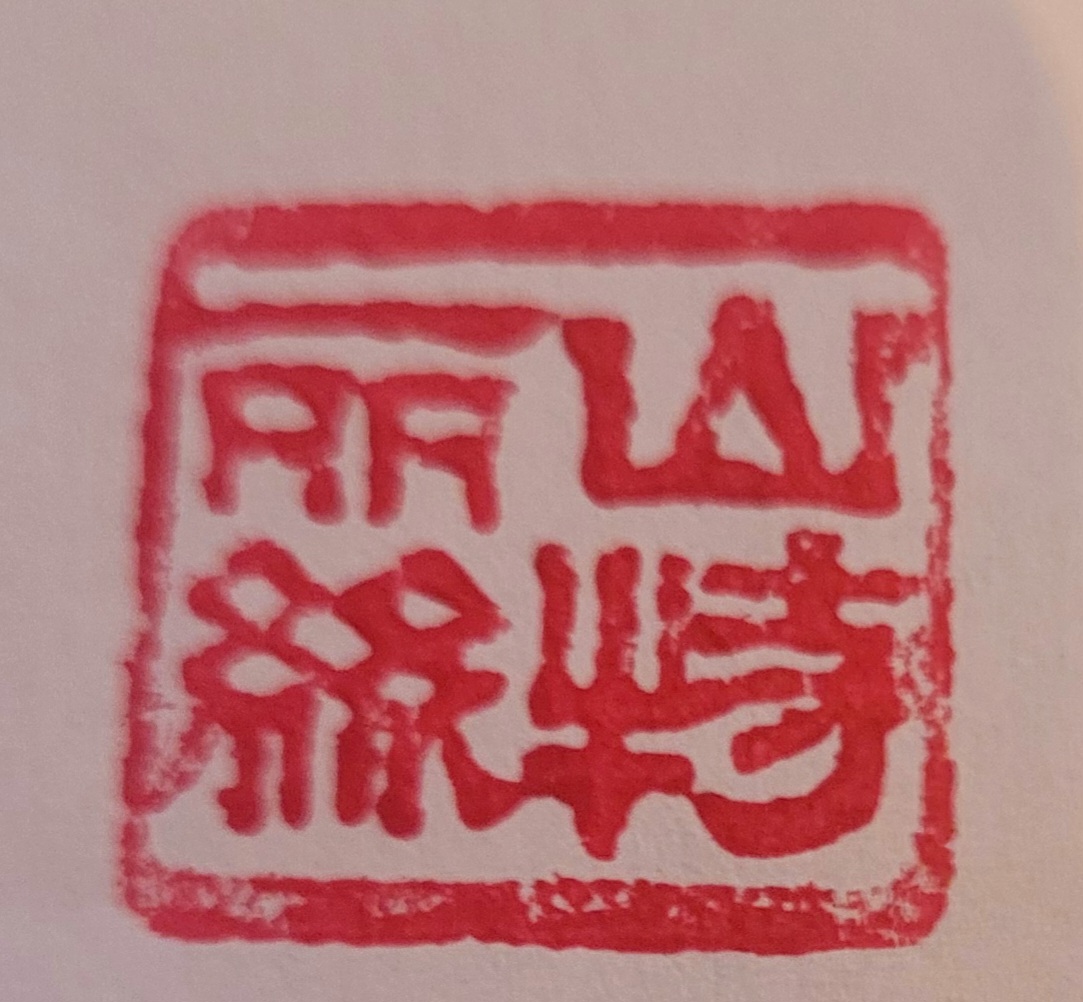
Those of you who follow this blog know that my relatives spent much of their lives in China, a country so different from Sweden that life there must have seemed like something out of a novel, or a parallel universe. To live there, in a foreign culture and a foreign language, they had to adapt in countless ways.
Not least when it came to their own names.
Dagny and Robert, Olga and Nils… These were not names one could expect the Chinese to take to heart, or even pronounce. To truly become part of society, they not only changed their clothing – they also adopted Chinese names.
I, too, have been given a Chinese name. When I traveled in China with my mother in 1983, her friends at the translation agency where she worked helped us choose names that could be pronounced in Chinese, yet still bore some resemblance to our own.
My mother’s name is Britt, so she became Beidu. My sister Helene became Hai-Lien. And I was given the name Te Li Si. My brother, named after our great-grandfather Robert, logically received the same Chinese name as him, Ruren.
And of course, we all shared the family name Bergling, which became Shan in Chinese. I have not yet found the Chinese names for Dagny, Olga, or Nils, though surely they must have had them. I asked my research friend Haifeng – who you encountered in may last post on this blog – how he would translate their names into Chinese, and what he thought of mine.
“Shan Te Li Si (山特丽丝) has no meaning in Chinese. It’s like a phonetic female foreign name. (…)
Nowadays, the translation of foreign names in China is based entirely on pronunciation. In the early years, the translation of foreign names was based on the pronunciation of names similar to those used by the Chinese. Chinese names are usually three characters or two characters, the first being the family name, and in some cases four characters. I think every foreign missionary had Chinese name in China.
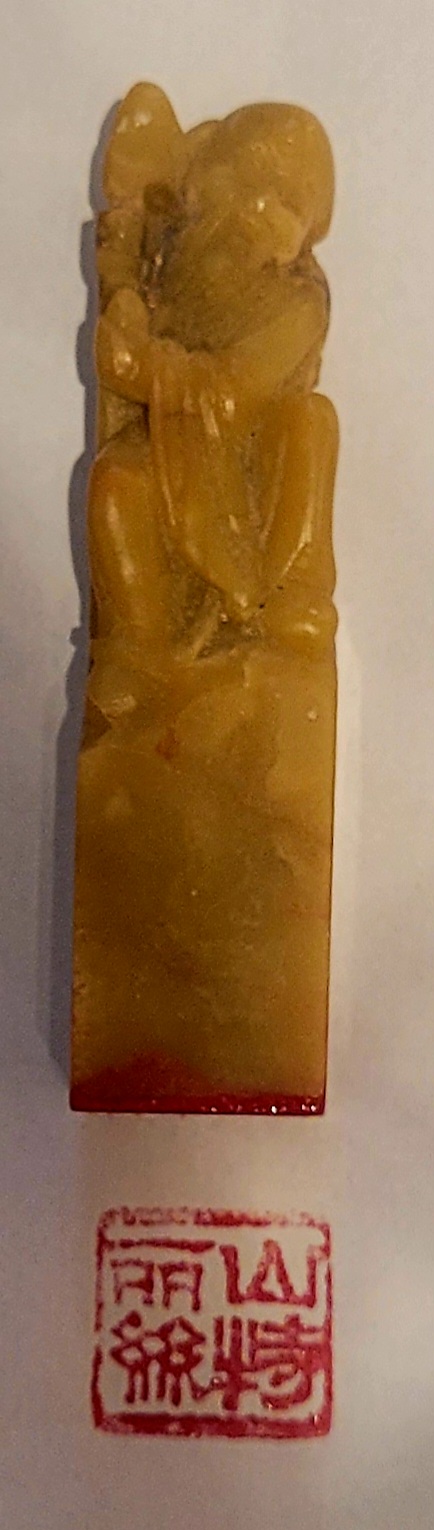
Thérèse Amneus is 泰蕾兹-阿姆尼奥斯 in Chinese nowdays, but 山特丽丝 is best thanslation of your name based on your grandfather’s Chinese name.”
Haifeng also noted that, in order to determine what names Dagny, Olga, and Nils were given in China, one would have to consult historical records, sometimes preserved in the congregations where the missionaries worked. Unfortunately, that is not feasible for me, so I hope to discover this information by other means.
My other research friend Hong wrote to me about the meaning of Robert’s Chinese name: 山如仁 (Shan Ruren):
“In the Chinese name of 山如仁, 山 is his surname, meaning mountain; and 如仁 is his last name. In his last name of 如仁, 如means “as”or “like”and 仁 means ’benevolence’ or“kind-hearted”. So his last name 如仁 means that he is a man of great benevolence, or that he is a highly kind-hearted man. 如仁also means to treat others with benevolence.
An SMK missionary was given a Chinese name when she or he left his or her language school in Anking or Yangchow.”
This is what I have understood as well: the missionaries certainly threw themselves into China with all their abilities – they dressed like the Chinese, they spoke Chinese, and they even took Chinese names. I have been curious about my relatives’ Chinese names for quite some time.
The first and only time I met Hong, when he gave a lecture at the annual meeting of the EÖM in 2024 (the former Swedish Mission in China), I asked him if he knew what Robert’s wife, Dagny, would have been called in Chinese.
He took my notepad and wrote the following:
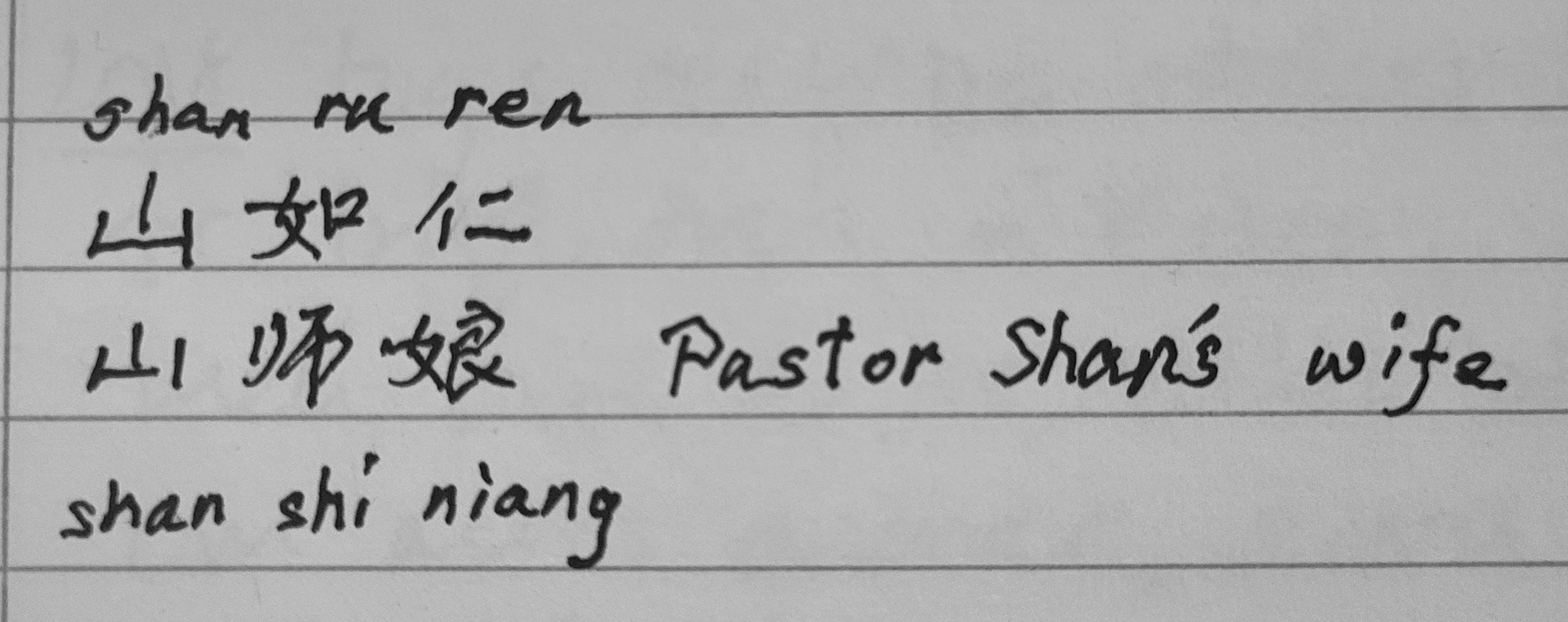
The first name is that of my great grandfather – Robert. The name below would be that of Dagny – she would have been defined by Robert. But, when she first arrived in China, she was not yet married, so she would have had another Chinese name corresponding to Dagny Aas (her maiden name). This I have not been able to find out, but perhaps some answer might come through this blog post – here’s to hoping!
Modern conversion
I also tried to check what my relatives would be called today by entering their names into a name-conversion site – yes, such websites do exist 🙂 Some just convert the name, others want to know your birthdate and talents to create something fitting – it’s quite fun!
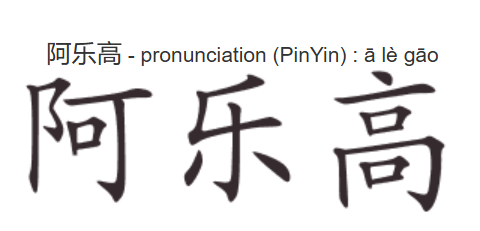
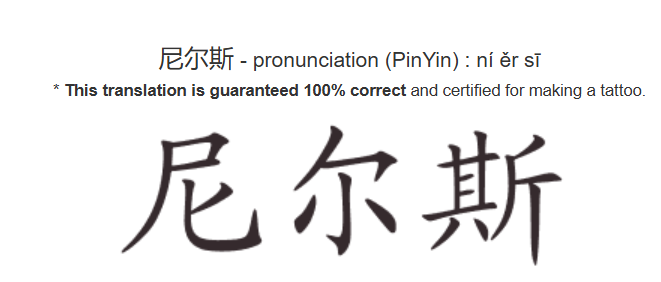
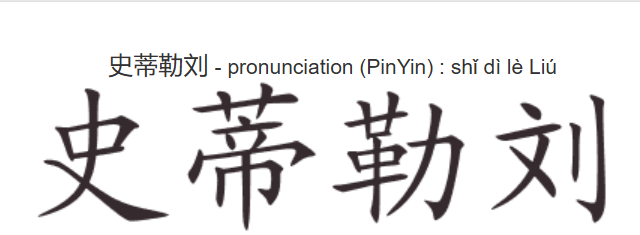
1. Olga, 2. Nils, 3. Styrelius
Please note that the translation is certified for making a tattoo (No 2). I’m not convinced. Haven’t we all seen far too many tattoos in Chinese, Japanese, or other languages that do not mean what they were supposed to mean? 🙂
Needing a change
Today, changing your name is not a big deal. I know many who have done it. Some do it to feel more at ease with themselves, others because it’s more convenient. And when you travel to, or live in, other countries, you have to listen to your name being pronounced very differently to what you are used to – which is a sort of change in its own way.
But what was it like back then, when my relatives did it? Names were important for how people connected to the world, how one determined what family they came from, what township and so on. In Sweden, the system of giving people a surname based on their father’s first name was common well into the 19th century, especially in the countryside. But long before that, it was not so common with surnames – instead only the first name would be used.
During the beginning of the 19th century, the surnames gradually started to be inherited and turned into family names. So, if a man called Bengt Eriksson had a son, in the 1800’s his surname would be Bengtsson and his daughter would be called Bengtsdotter (Bengtsdaughter). When these names turned into family names in the 1900’s the “son” ending was the one that prevailed. Bengtsson would be the surname both sons and daughters inherited. When married, the man’s surname would be inherited to the next generation. Today, it is common to keep both maiden names – people in Sweden often have double names as surnames. For instance they are then both called “Lindkvist-Rosén” or similar. Today, the most common surname in Sweden is Andersson – 213 605 persons carry that name. The second most common is Johansson with 211 641 carriers.
Nils’ father was called Sven Bengtsson. Thus his surname became Svensson – as he was the son of Sven. This way everybody in the community knew what family he came from and which house he belonged to. When he emigrated to America, he still kept his name, but in China he changed his last name to “Styrelius” (to not get mixed up with other Svenssons, as the postal service was a bit unsure in China) and on top of that, he took a Chinese name – that looked nothing like Styrelius, of course.
Had he kept Svensson, his family would have had one of the most common surnames in Sweden with 85 114 carriers. Many emigrants did change their names – to make the pronounciation easier and to integrate faster. There are for instance still many Swedish-sounding names in America, due to the very massive Swedish emigration during the late 1800’s, beginning 1900’s. There are for instance many Johnson, Lindquist and Gustafson in America (in Sweden we would add an “s” – Johnsson, Gustafsson… and even though we have Johnssons here (12 219 carriers), as you see above, most are called Johansson (the name deriving from the first name “Johan”.) As for “Styrelius”, the name is very uncommon in Sweden – I have only found a handful of people with this name (and they are related to my grandmother’s sister).
The missionaries did what they felt they had to do, and perhaps they didn’t give it much thought. Still, I can’t help but wonder whether it affected how they felt about themselves in the end.
Have you considered changing your name or have you changed your name and what are your thoughts about it?


My name would be
Or: bi té er
I like Te li si better! It could be a song: Te li si/do re mi/happy as can be/sing this song for me/Te li si.
Now you gave us the name-translator I will be occupied for the next week or so finding the names of my family and friends. An then start a tattoo-shop. 🙂
LikeLiked by 1 person
Thank you for the lovely song, Bi té er 😄!! But be careful with the tattooing – only the verified translations should come in question… There are so many people out there with faulty tattoos in Chinese 😅.
https://www.google.com/amp/s/www.thesun.co.uk/living/2094891/people-get-bad-chinese-tattoos-and-this-is-what-some-of-the-worst-translate-to-in-english/amp/
LikeLiked by 1 person
This is so amazing! I guess it makes sense that they would have had Chinese names, but it’s something I wouldn’t have thought of myself. Of course I had to go on the website and see what Foster and Panda’s names would be! If they go back to China they’ll have to use their Chinese names. They went to see Panda’s long lost relatives a few years ago in “Panda Abroad”. 😂🐱🐼
LikeLiked by 1 person
Haha! Wow! I imagine at least Panda would have a set name in Chinese 😄. But Foster… well, I’ll have to check it out as well – and your story of course 🥰
LikeLike