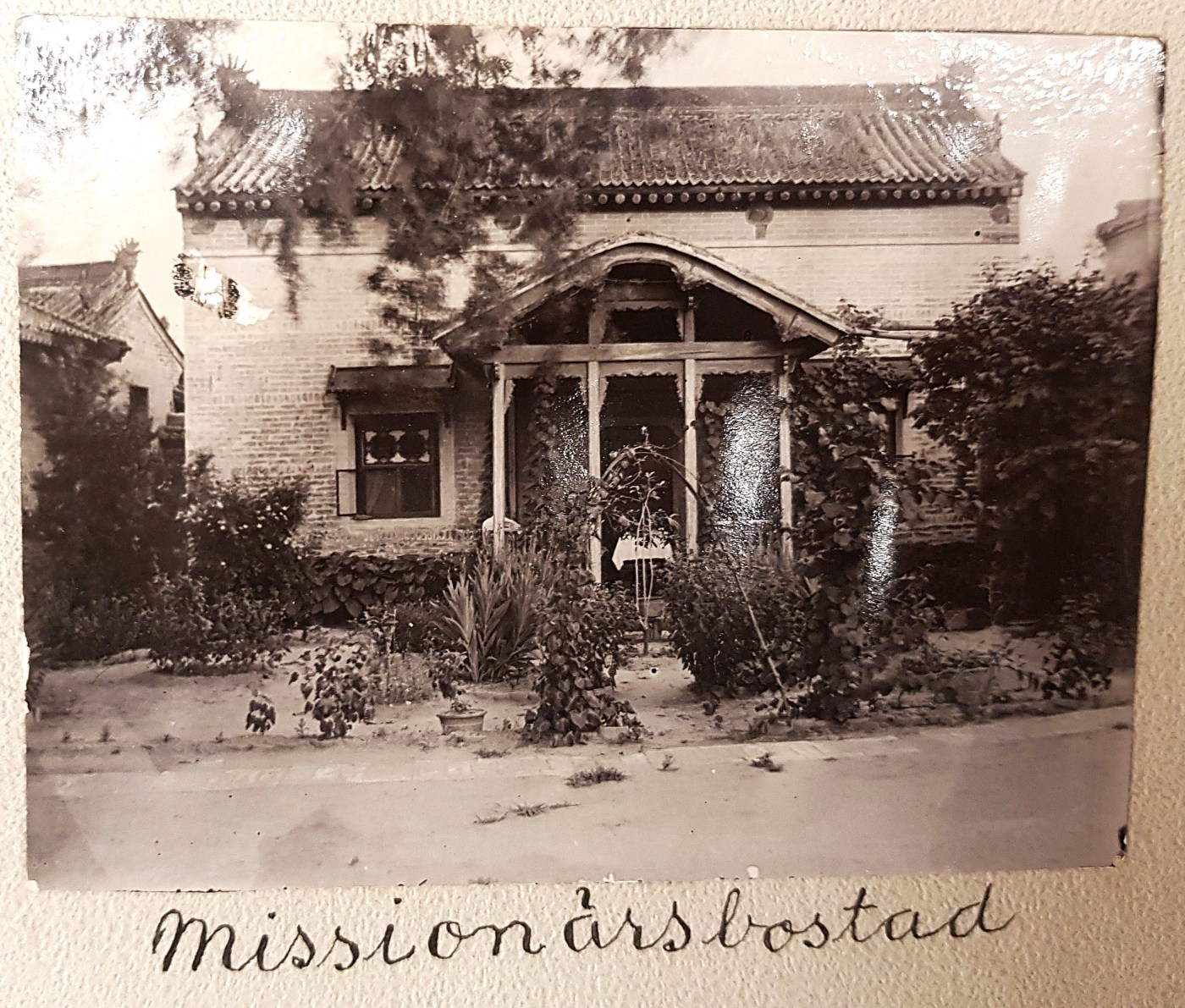
A couple of weeks ago, I received an email from Mr. Liu Hong, a passionate researcher of Swedish missionaries in China. He shared with me a passage about my great-grandfather Robert’s challenges in establishing a mission station in Hancheng, Shaanxi. In the late 19th and early 20th centuries, it was incredibly difficult for foreigners to gain acceptance in China, and expanding the mission field was no easy feat. Robert’s journey began in 1894, and he ultimately succeeded in 1902.
According to Mr. Liu Hong the text was from a chapter entitled “Village Xiyuan Expelling Shan Ruren” (Robert’s Chinese name was Shan Ruren) by Ji Chun in 2013*. Mr. Liu has translated it to English for us:
“In the 20th year of Kuang-hsu’s (Editor’s note: emperor Guangxu) reign (1894), Swedish Christian pastor Robert Bergling led several people to preach in Hancheng in Shensi from Hotsin in Shansi. They stayed in Beiguan Tongshun Inn. As the Chinese people hated the imperialist invasion and opposed the spread of foreign religion, they did not allow Robert Bergling to stay. Robert Bergling and his men then turned to rent a house in Liuchih Village near Hsichuang Town, and often went to the nearby villages to preach and send the gospel books for about two years. The local villagers were so disgusted with the foreign religion that they demolished the house in which Pastor Robert Bergling and his men stayed. In the 23rd year of Kuang-hsu’s reign (1897), Robert Bergling leased two houses in Chi-chia-chai Village, outside the East Gate of the county. The two houses were used as a guest room and as a small chapel for worship meetings. At that time, there were only a few believers, and only 20 people were baptised into the church in a few years.
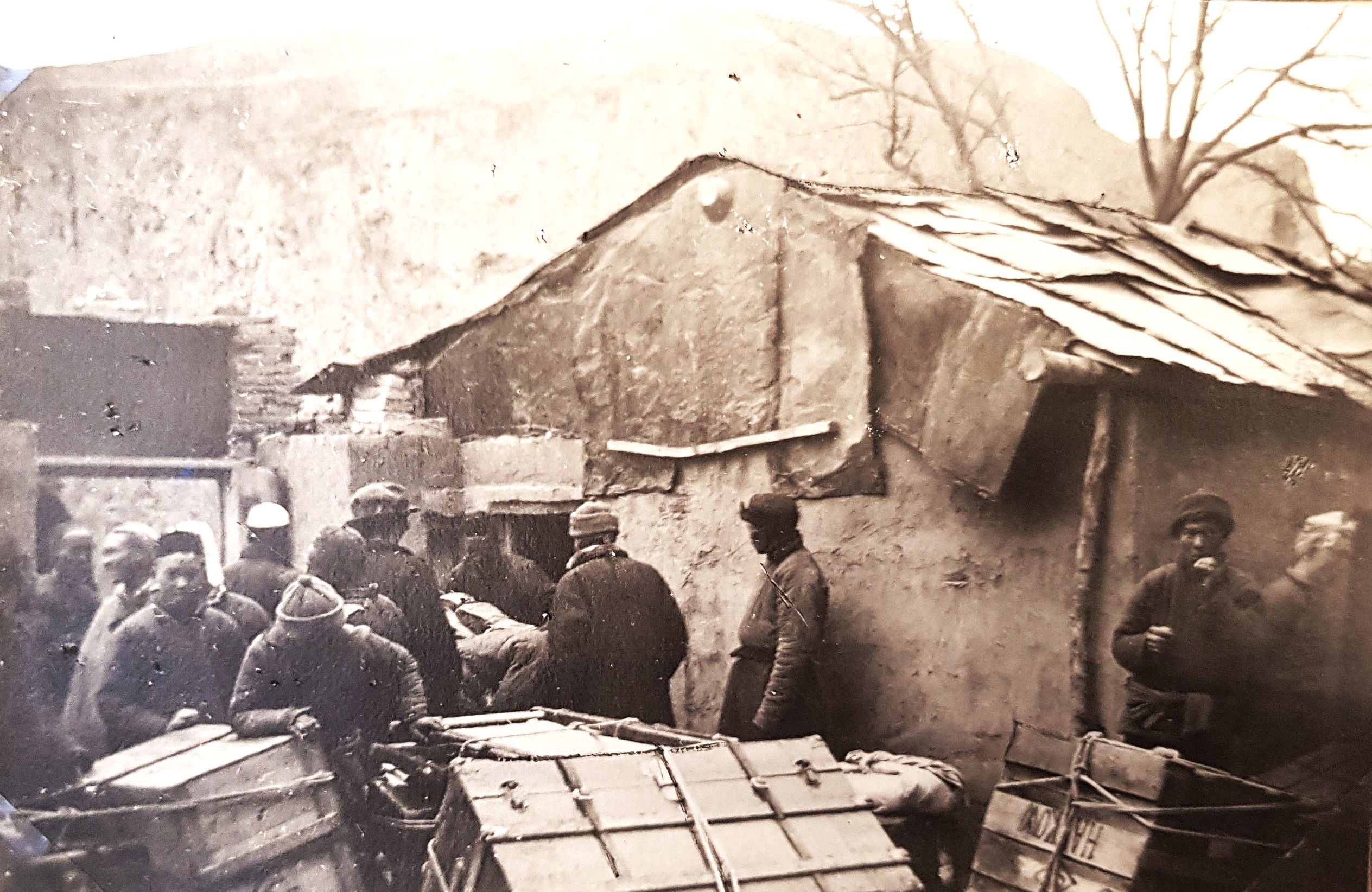
The first person baptised into the church in Hancheng was Sun Peitsing, a villager from Liuchih Village. In the 27th year of Kuang-hsu’s reign (1901), Hancheng mission station was established. In the 28th year of Kuang-hsu’s reign (1902), a plot of land was purchased in the neighbourhood and a large chapel and women’s room were built. Believers increased to more than 100. Out-stations were respectively established in Liuchih Village, Chengpei Village, Baichiachuang Village, Luchuang Village, and Tsan Village. And in the city, 29 rooms in the two courtyards, 5 street rooms, and 2 halls were leased on North Street, where a street chapel was set up and an elder presided over the preaching.”
As I read the text, I knew I had come across it before. Flipping through Dagny’s book about her life in China, I found the passage where she described this very challenge. The two texts complement each other – Chun’s account is more matter-of-fact, while Dagny’s version adds a personal touch, with direct quotes from those involved that bring the story to life:
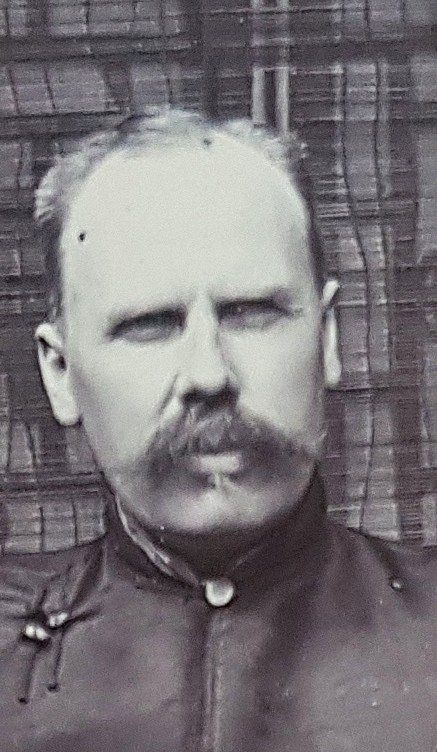
“For a long time, we had cried out to the Lord for the opening of Hancheng. Finally, the day came when my husband came home and said, “Things are brightening up. I have a contract for a mortgaged house barely a mile outside the city of Hancheng. If we can just get there, it will be easier to gain a foothold in the city itself.”
Robert had received some opium patients at an inn about a mile from Hancheng. In particular, a couple of teachers had become interested in the message they had heard, and they had tried to help us find a house. A brother of one of them owned a suitable house, and it was mortgaged. But the people in the area did not want any foreigners there, so trouble arose. The owner of the house had to flee for a time, and those who were there to wean off opium had to hide. A relative of the owner offered 200 cash to anyone willing to help tear down the house. The village youth found this an especially great amusement. They would also get money, and joyfully, they set to work demolishing the house.”
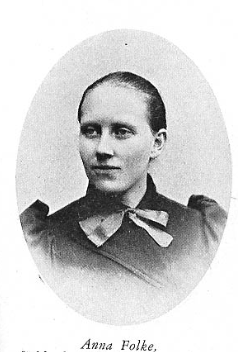
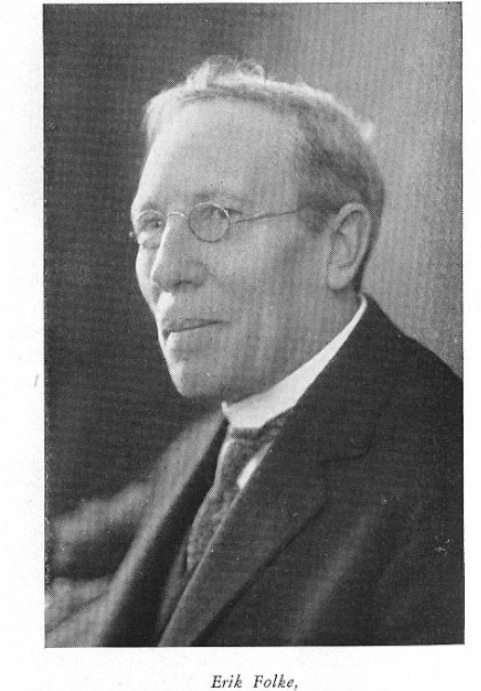
When Robert heard of this, he decided to find out if there was something he could do about it – perhaps reach an amicable agreement of some kind. Dagny writes that Erik Folke, the founder of the mission, was visiting them at the time, along with his wife Anna and their son Harald. She recounts the following events, and the emotions she and Mrs. Folke experienced, not knowing what the outcome would be:
“I will go with you,” said Mr. Folke, and my husband was glad to hear it. As they set off, Mrs. Folke and I did not know whether we would ever see them again or if the enraged crowd would harm them. ‘Why do you despair, my soul, and why so troubled within me? Put your hope in God, for I will yet praise Him for His salvation.’ Our comfort was in God’s faithful word, and so we continued to pray – both for our beloved husbands and for the people of Shensi (Editor’s note: today Shaanxi), who were rejecting the message of salvation.
The Yellow River, which our husbands had to cross, was frozen, and large loose ice blocks had piled up at the Y-men-keo ferry. Two mountain ridges extend into the river there, making the passage narrow and, with the strong currents, dangerous. Our men and their horses had to leap across these ice blocks. It was a journey full of peril, and they cried out to God for help to make it across without falling between the shifting ice. And the Lord helped them.
When they reached the village, they learned that the villagers had already gone into Hancheng. The foreigners had been accused of renting one of their houses, then tearing it down and blaming the villagers for it. The courthouse was packed, as the mandarin himself was presiding over the case. Among other things, he is said to have remarked: ‘It may be that I am a simple man, but I am not so simple as to believe that the foreigners would acquire a house only to demolish it themselves. Now hurry home, all of you, and rebuild the house in better condition than before! When even the emperor cannot keep the foreigners out of the capital, how could we possibly exclude them from here? As missionaries, they have full freedom to buy, rent, or mortgage houses.’
By the time my husband and Mr. Folke arrived in Hancheng, all these proceedings had already concluded. However, they were unaware of this until a man approached them with these words: ‘Honorable foreign gentlemen, would you like to rent a house? I have one nearby.’
‘Do you dare to offer us a house? Have you not heard that the people of Liu-örtsuen tore down our house?’
‘Yes,’ the man replied, ‘but I was just in the courthouse and heard the mandarin’s ruling on the matter.’
On that journey, the mission secured the house that they would keep for the next 30 years.”
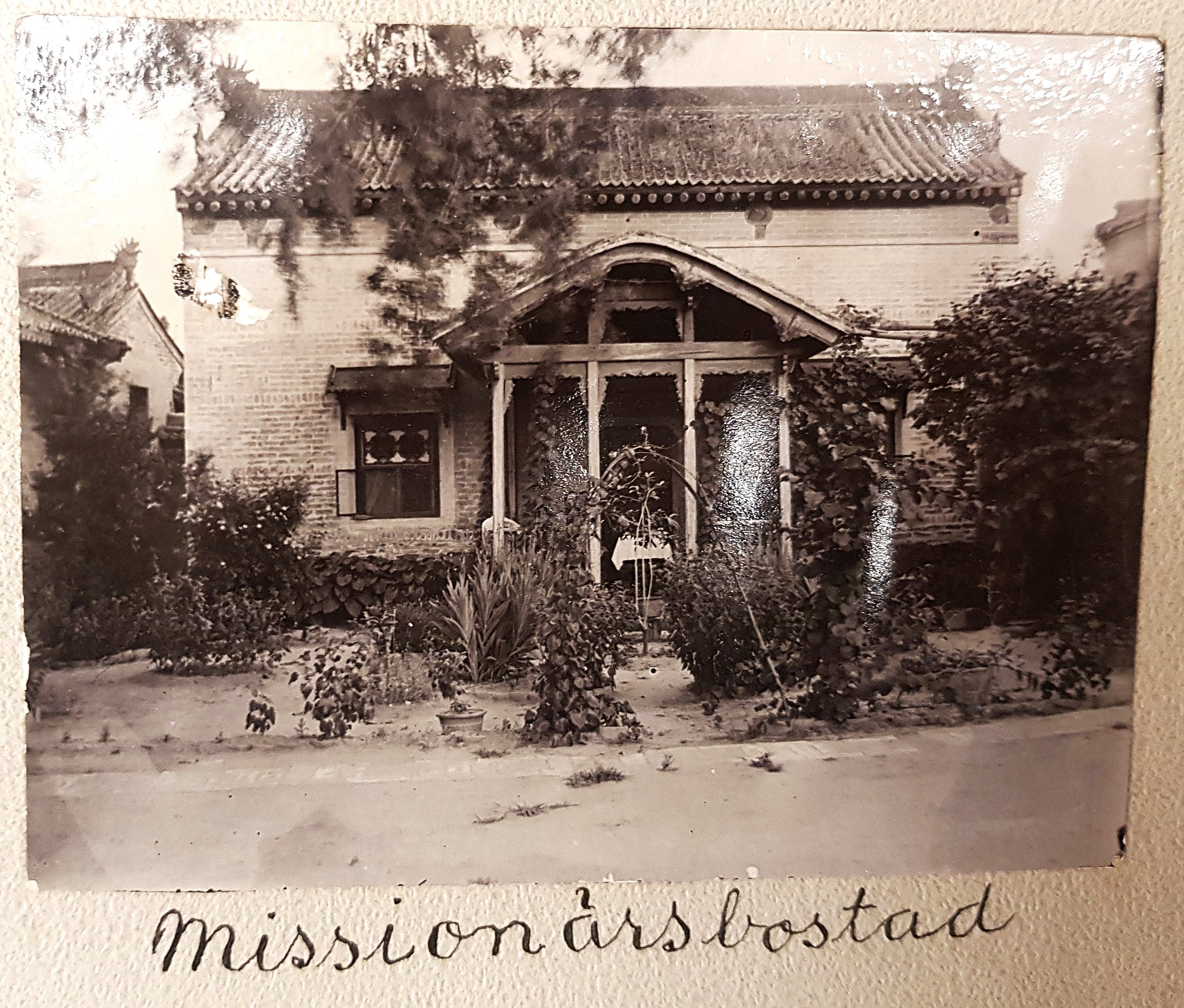
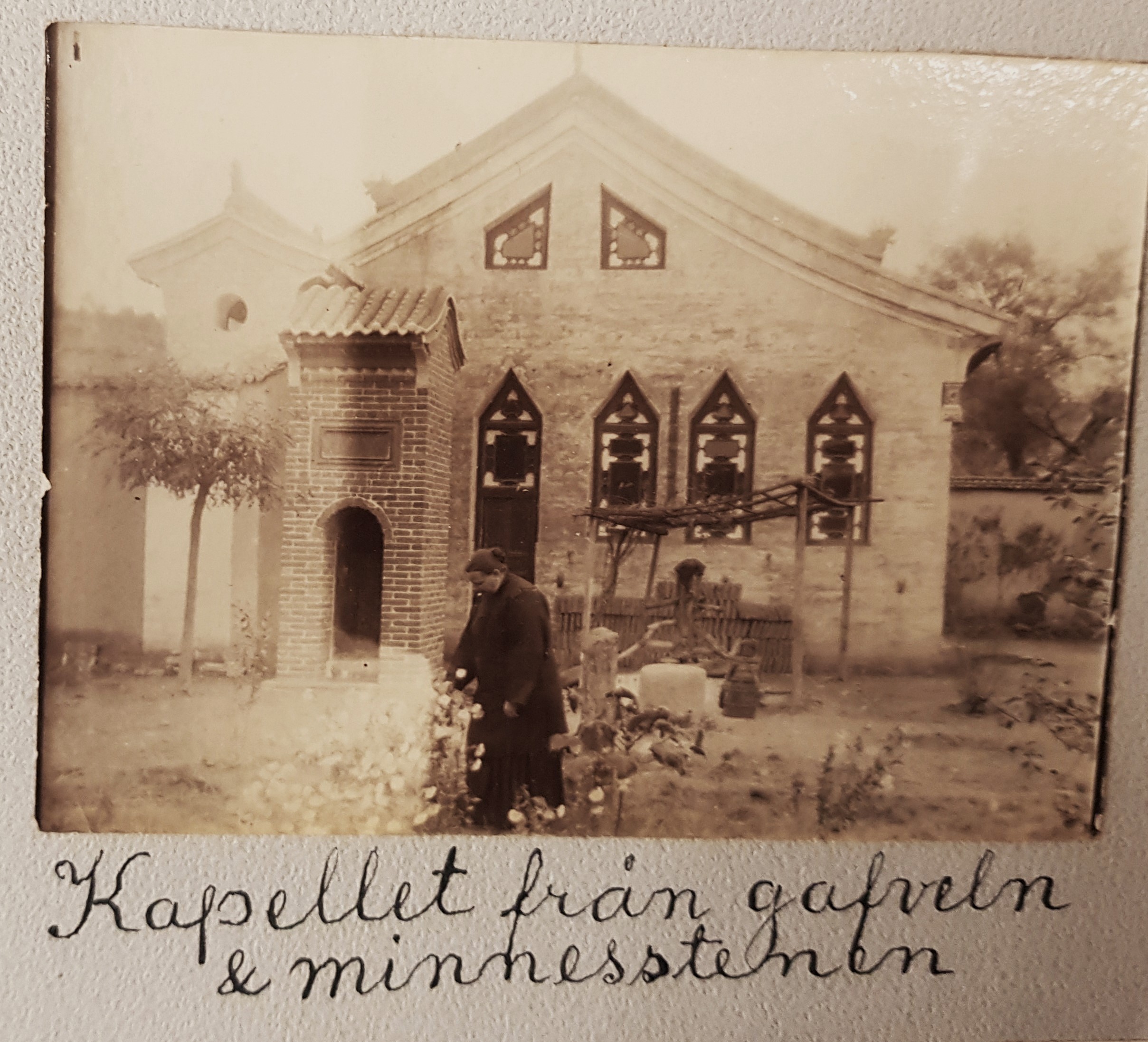
Dagny writes that the house that had been demolished was eventually repaired by the town’s residents. In her book, she attributes the great opposition to the missionaries’ establishment in Hancheng to Satan. When she later visited the town during summer, she was horrified by the countless idol temples she saw everywhere. She thought it would be difficult to convert so many people who believed in other gods to her own faith.
Dagny’s book was published in 1929. To write about her and Robert’s experiences in such detail, she must have kept a journal or extensive notes during her time in China. I haven’t heard of a journal, but with all the writing she did – letters, articles – it wouldn’t surprise me if she had documented her life in China, knowing she might one day publish her collected stories for other missionaries or her family to read.
I find it really interesting and a great complement to read about the same events from other authors and to find additional sources that corroborate what she wrote in her book. It also adds dates and details that help frame the story for a greater understanding.
This time, I want to extend my heartfelt thanks to Mr. Liu Hong for his invaluable contribution!
*Editor’s note: since I wrote this article, Mr. Liu returned to me with the information that it was not Ingeborg Ackzell who wrote about Robert’s experience in Hancheng, but instead Mr. Ji Chun. I have changed the text accordingly.
 Thérèse Amnéus
Great read again Thérèse. It indeed is wonderful to find, or rather to receive, another report of matters that have been taking place. How cool that mr Hong thought of you. Wouldn’t it be exiting to get hold of Dagny’s journal? Well, that perhaps is a bit to much asked. But imagine…
LikeLike
Thank you Peter! Yes, if she kept a journal, that would be my greatest wish to get an opportunity to read it. But maybe she didn’t keep it – I think someone in the family would have known about it in that case… But with her book and many, many letters, we do have plenty to read straight from her hand, fortunately 😊
LikeLiked by 1 person
I love all the detail in these two accounts! You have such a goldmine of primary sources to work with. Are you writing a book? (I don’t think I’ve asked you this.)
LikeLike
Thank you Liz! Yes, I am very excited about all the material I’ve been able to find so far, and all the help from relatives near and far. I am in the process of writing a book, but it will take a long time before it’s finished – as I don’t have enough dedicated time for it, unfortunately. But, as my great uncle Kurt said – the process of writing it is the joyous part, when it’s finished I will miss having this project to work on 😊
LikeLiked by 1 person
You’re welcome, Therese! I’ll bet that book comes together at some point when you’re ready.
LikeLike
I very much hope so 😊 You, if anyone, knows how much work is needed to make it happen!
LikeLiked by 1 person
Yes, I sure do!
LikeLike
😊👍
LikeLiked by 1 person
A wonderful read. So interesting, and so well related.
LikeLike
Thank you! I am so happy you enjoyed the read!
LikeLiked by 1 person
Wow! It’s so cool, if you think about it, how God was working “behind the scenes” the whole time Robert and Mr Folke were on their way to the city, and that it had all been resolved by the time they got there! This is a great story to have as part of your heritage. How awesome it would be if you found Dagny’s actual journal, if in fact there was one. I’m thinking that for someone who wrote as much as she did, there had to be one somewhere, unless it got lost or destroyed in a move or something. 🤔
LikeLike
I agree, it’s a great story – so happy Hong directed my attention to it 😊! I wish a journal would surface, but I am not hopeful. It was such a long time and many travels ago… but there is always the off chance a relative reads this and finds some papers or a book in the attic…😁🙏
LikeLiked by 1 person
Yep!
LikeLiked by 1 person