It’s September and I have just returned from the Gothenburg Book Fair, where many courageous persons gather every year. I write courageous as it has become increasingly challenging to put yourself and your thoughts out there in the public sphere.
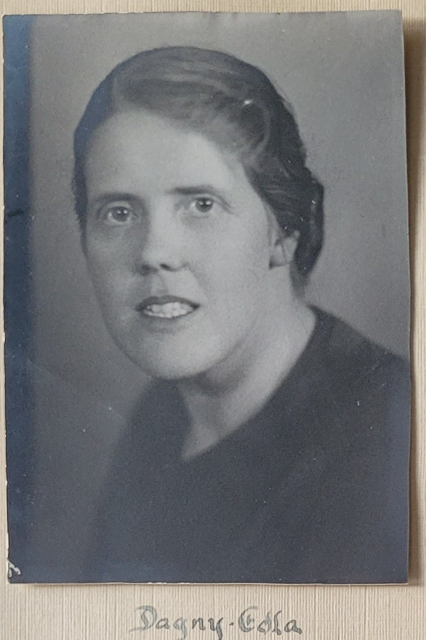
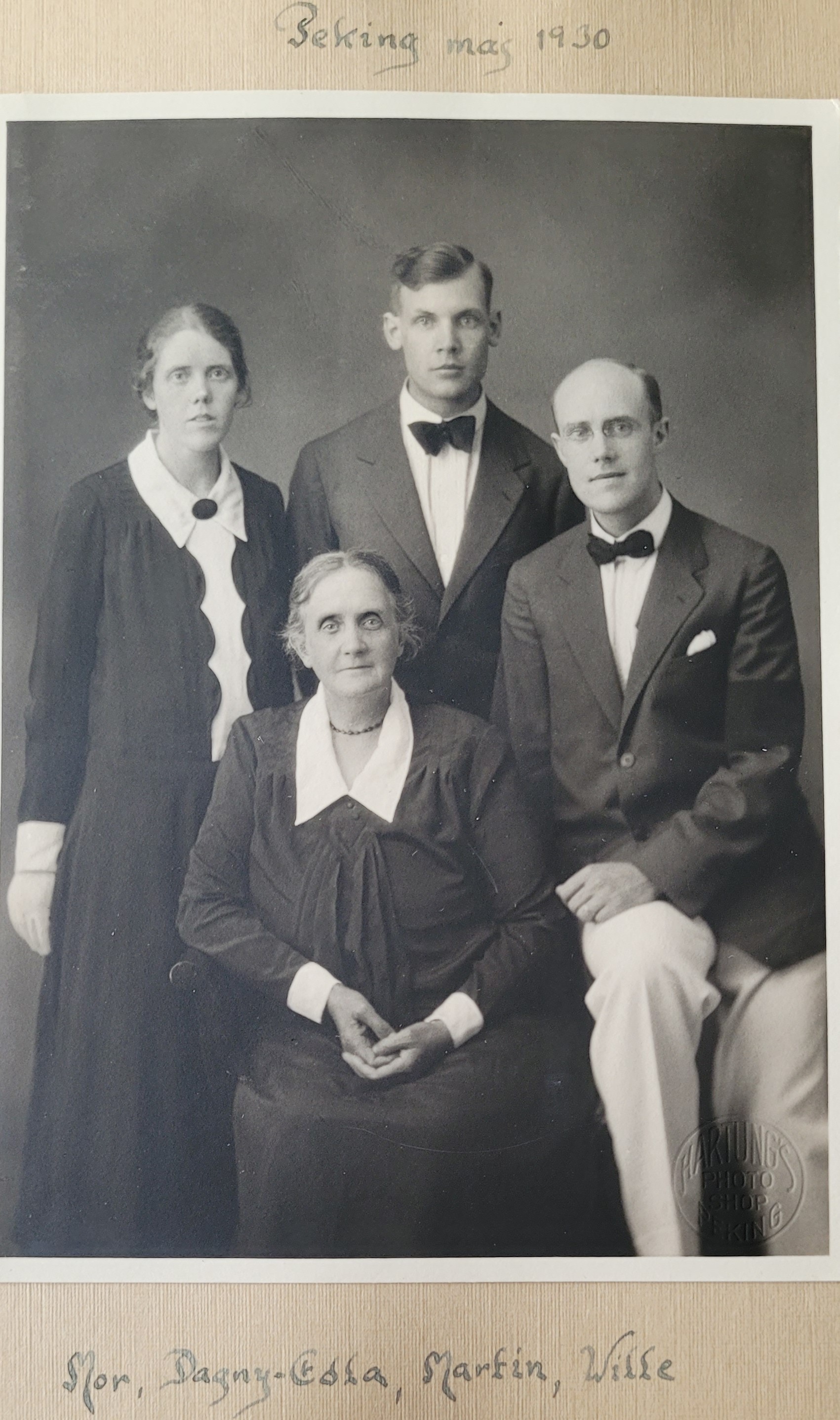
This made me think of another brave woman, born on the cusp of the new century, in the year 1900. Her name was Dagny-Edla and she was my grandfather’s sister. She travelled to China as a female missionary despite having an amputated arm – if that is not courage and devotion, I don’t know what is …
In fact, no missionary organization was willing to take responsibility for her. This meant that she had to travel out completely on her own in 1927, with help only from a benefactor in Sweden who believed in her individual strength and calling.
Dagny-Edla was a special kind of woman. Stubborn and full of resourcefulness. A woman who incessantly fought to be able to do what she believed was right despite the challenges. And she had a strong role model in her mother, Dagny, who had made the same journey — from a fine girl in a Norwegian family to a pioneer missionary in China. Dagny-Edla also tells, in her own book “Uppdrag Kina” (“Mission China” by her niece Elsa Brännström), how she drew strength from her mother in different situations.
“I thought about mother. She had always been so calm in every crisis. Could I be the same way? Once, mother made a journey together with a couple of Chinese men and Rudolf*, when he was four years old. They had to pass through a mountain pass, where robbers sometimes lurked. Just where the road went in between two rock walls, terrible howls were heard. About fifty men jumped out from the mountain crevices, with clubs and knives in their hands. Mother calmly stepped down from the ox cart and walked up to the first one who reached her.
‘Oh, how good that you came!’ mother hurried to say. ‘I understand that you’ve been sent to protect the people who need to get through the mountain pass here. I hear there are robbers around!’
The men were completely taken aback and just nodded a little foolishly at mother’s naive explanation. Then they lined up and marched alongside the cart. When the group, after half an hour, had passed through the mountains and was back out on the plain, mother thanked them very solemnly for the help she had received and for how kind they had been. In the polite Chinese manner, the robbers bowed and wished them a safe and successful continuation of their journey.
That was just typical of my mother, to be able to act like that. But could I do the same if I found myself in that situation? I hardly thought so.”
A close call
Dagny-Edla had to deal with many difficult situations on her own. One example is when she tried to escape her mission station in Paotow (today: Baotou) during Mao’s campaign in China. Unfortunately it was too late for her to get out. In her book, she recalls the situation that involved a harsh interrogation.
“Someone was banging hard on the door. Still half-asleep, I sat up in bed. It was hard to wake up properly and get my thoughts moving. The banging went on. I understood I had to open the door. I threw on my robe. My prosthetic arm was lying on the table next to the bed, I didn’t have time to put it on.
Just the day before, right after my failed escape attempt with the Catholic nuns and monks, Mao’s men had already come to see me. When we had stood at the West Gate trying to get out, they had simply sent us back without asking any questions. That would come later.
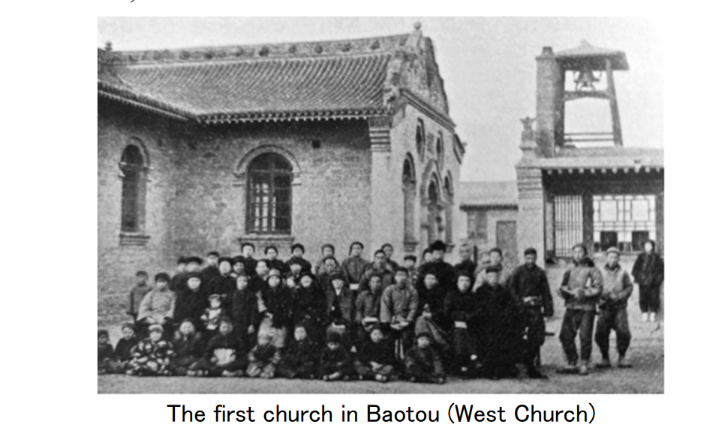
History of Christian Missions in
Baotou and Suiyuan” by Haifeng Zhang.
Paotow hadn’t been able to put up any resistance against the enemy. As far as I knew, no one inside the city had lost their life. But you could feel that a change of power had happened. Wherever I looked at a Chinese face, I saw fear written on it. On that very first day, I had been questioned for eight or nine hours straight. Different people took turns questioning me, but the questions were pretty much the same each time. What was I doing in China? Did I have any money? Was I a spy? Did I have a device to send messages? How long did I plan to stay in Paotow?
Again and again I explained to them that the only reason I was in China was that I loved the Chinese people, and that God had called me to preach the gospel to them. Each time, they had gone through all my belongings. It was as if they didn’t trust that the earlier searches had been thorough enough. Still, they never found anything. This time, the same thing happened again. Two or three soldiers pushed their way in to start searching my house. While they went in, I managed to grab a comb and try to fix my hair a little. What time was it, really? It felt awful not to be properly dressed. After the first two who forced their way in, several more came to search the house. Without asking permission or apologizing, the whole little group marched straight into my bedroom. I hadn’t had time to make my bed. How annoying! I was always the one who got up early and made my bed before anyone else.
One of the soldiers looked about forty years old. He was probably the one in charge. The others were very young — some of the boys looked like teenagers to me. It hurt me to see these young boys carrying weapons. They should have been sitting in a classroom instead, I thought.
The “commander” spotted my prosthetic arm lying on the table. He picked it up and turned it over. I nearly burst out laughing, because my poor arm had broken at the wrist. One of my missionary friends had helped me patch it up with a gauze bandage. The two of us had laughed so much about having to bandage an artificial hand. I’d been meaning to find someone to fix it properly, but hadn’t managed to yet. Now, as the soldiers crowded around the arm studying it, I stood there almost wanting to laugh. I wasn’t the least bit afraid. To me, the whole situation was simply funny.”
Then the real questioning began.
“Once the usual questions were answered, I understood this interrogation wouldn’t be like the others. This interrogator pushed further than the others had. I found myself thinking of Elna** again. She too had been isolated at her mission station. Had they interrogated her as well, and finally decided she didn’t hold the “correct,” approved views about the communists? I sighed a prayer to the Lord, asking to be able to answer the right way. Then I was reminded that He had promised we wouldn’t need to fear when called to answer for ourselves. The right words would be given at the right moment.
“Well,” the commander asked me, “what do you think of Chiang Kai-shek?”Just as God had promised, the answer came to me without my having to think it through or choose my words.
“I’ve never met him. How could I possibly have an opinion about him?”
“What do you think of Mao?”
Now the answer was already there. I just had to repeat it. “He’s never been here either. I’ve never met him. How could I know what he’s like?”
After that, the questioning moved on to other, less important matters. Inside, I could only rejoice. The Lord had given me exactly the right answers. If I had taken a side in favor of Chiang Kai-shek, it could have cost me my life. Now I didn’t have to take a stand for or against the communists.”
Making the headlines
This unsettled period in China was, of course, covered in Swedish newspapers. On one occasion, Dagny-Edla’s precarious situation was reported in Aftonbladet, on November 25, 1948.
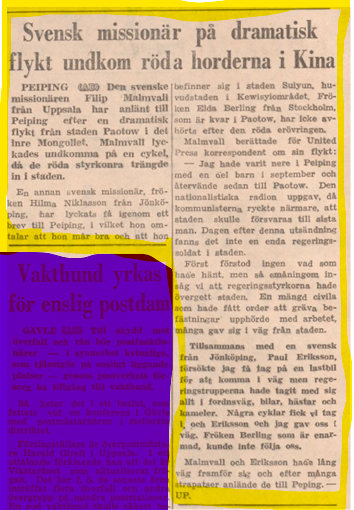
The article’s headline was “Swedish Missionary in Dramatic Escape, Escaped the Red Hordes in China”
It mostly tells the story of Dagny-Edla’s missionary friend Filip Malmvall, who arrived in Peiping (Beijing) after a dramatic escape from Paotow. The article explains that Malmvall managed to get away by bicycle as the Communist forces pushed into the city.
The article states:
“Miss Edla Bergling of Stockholm, who remains in Paotow, has not been heard from since the Communist takeover. Malmvall told a United Press correspondent about his escape:
‘I had been down in Peiping with some of the children in September, and then went back to Paotow. As the Communists drew closer, the Nationalist radio announced that the city would be defended to the last man. The day after that broadcast, there wasn’t a single government soldier left in the city.'”
The government forces had simply abandoned the city. At that point, the civilians who had been digging fortifications also stopped working and left the city. After a lot of trouble, Malmvall managed to get hold of a bicycle and rode off — but Dagny-Edla couldn’t go with him, since she only had one arm and couldn’t ride a bike.
Dagny-Edla made it through that time, with some courage and cunning (or in her world; help from above) — just as her mother Dagny had managed to survive tough situations before her. Perhaps the two of them were more alike than Dagny-Edla ever gave herself credit for?
*Rudolf was, as you know from this blog, my grandfather, i.e. the brother of Dagny-Edla.
** Elna Lenell became a martyr for the Swedish Mission in China as she was beaten to death in December 1947 when she did not want to renounce her faith.
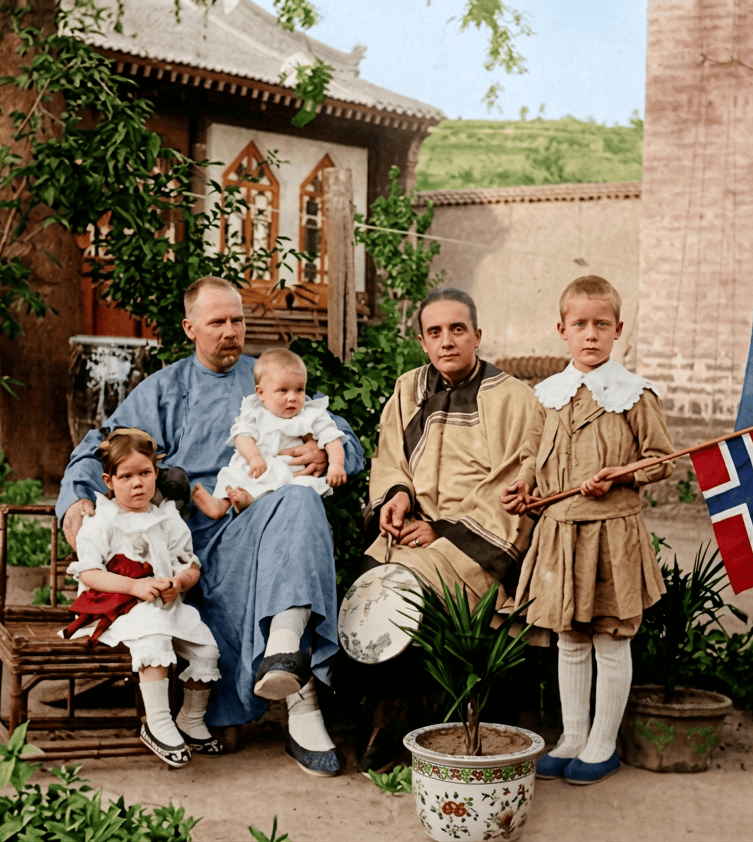
Photograph at the top of the article: a family photo with Dagny-Edla to the left, Robert with Martin on his lap, Dagny and Morris standing, 1904. Colorized.
Continue the story:
Before this: A New Beginning And A Happy New Year – Thérèse Amnéus (how Dagny-Edla finally returned to China as a missionary in 1927).
The People:
The Hero Behind the Scenes – Thérèse Amnéus (about Li-Niang, a Chinese woman whose courage and resourcefulness helped protect a missionary child from bandits).
The Family:
What’s In A Place? – Thérèse Amnéus (explore the mission stations where Dagny, Robert and their children lived and worked in China).
The Source:
Sinims Land – the Voice of the Mission – Thérèse Amnéus (discover the missionary journal that preserves contemporary accounts of life and work in China).
The Historical Context:
Travelling Home Through Warlord China – Thérèse Amnéus (read about the political turmoil and dangers that forced missionaries to flee China in 1927).
Next:
Stranded In School Over Summer – Thérèse Amnéus (another story about the dangers and uncertainty faced by missionary families during the conflicts in China).


It sounds as though Dagny-Elda was as remarkable a woman as her mother!
LikeLiked by 1 person
She certainly showed a lot of wit and strength when times were tough. Almost to the extent of being a bit too risk-taking. There are several stories about her that must have made her mother Dagny very anxious 😉
LikeLiked by 1 person
I can imagine!
LikeLiked by 1 person
What struck me the most was the scene in wich Dagny-Edla had difficulty holding her laugh when the Chinese soldiers were, most likely rather astonished, fondling around with her prosthetic arm. 🙂 I can fully understand the situation and her attitude about it. But yes, it takes a serenity that can only be felt when brave (or out of ones mind, wich would probably be my state of being.) Anyway, noticing the humour in the experience that is potentially dangerous charms me a lot. (I now wonder, did she get married?) Dagny-Edla sure seems to have inherited her mothers strong will and braveness. And perhaps her quest for adventure. I’m not a psychologist, but I would love to dive into the reasons for this endeavour(s) to the very other end of the globe, apart from faith. Wonderful post again Thérèse!
LikeLiked by 1 person
Dear Peter, you really put your finger on something here. This capacity to see humour in dangerous or complicated situations is truly something that runs in the family. Dagny was the same way, my father and aunt also – as well as myself. It’s something about being able to see the situation from a distance, even when being in the midst of it oneself … But you pointing that out is the first time I have thought about that aspect of it, so thank you!
Dagny-Edla never got married. Growing up she had a lot of pain leading up to the amputation and her goal to become a missionary in China would not have helped – many men (not only the mission societies) must have thought she would be too much work and not fully capable of running a household or taking care of children. But she proved everyone wrong. She does not write about having any romantic interests either, perhaps she just did not care for it, or was so set on the mission, that it didn’t seem plausible to her. I think that anyone would have been lucky to have been her life partner, she was really an incredible woman.
LikeLiked by 1 person