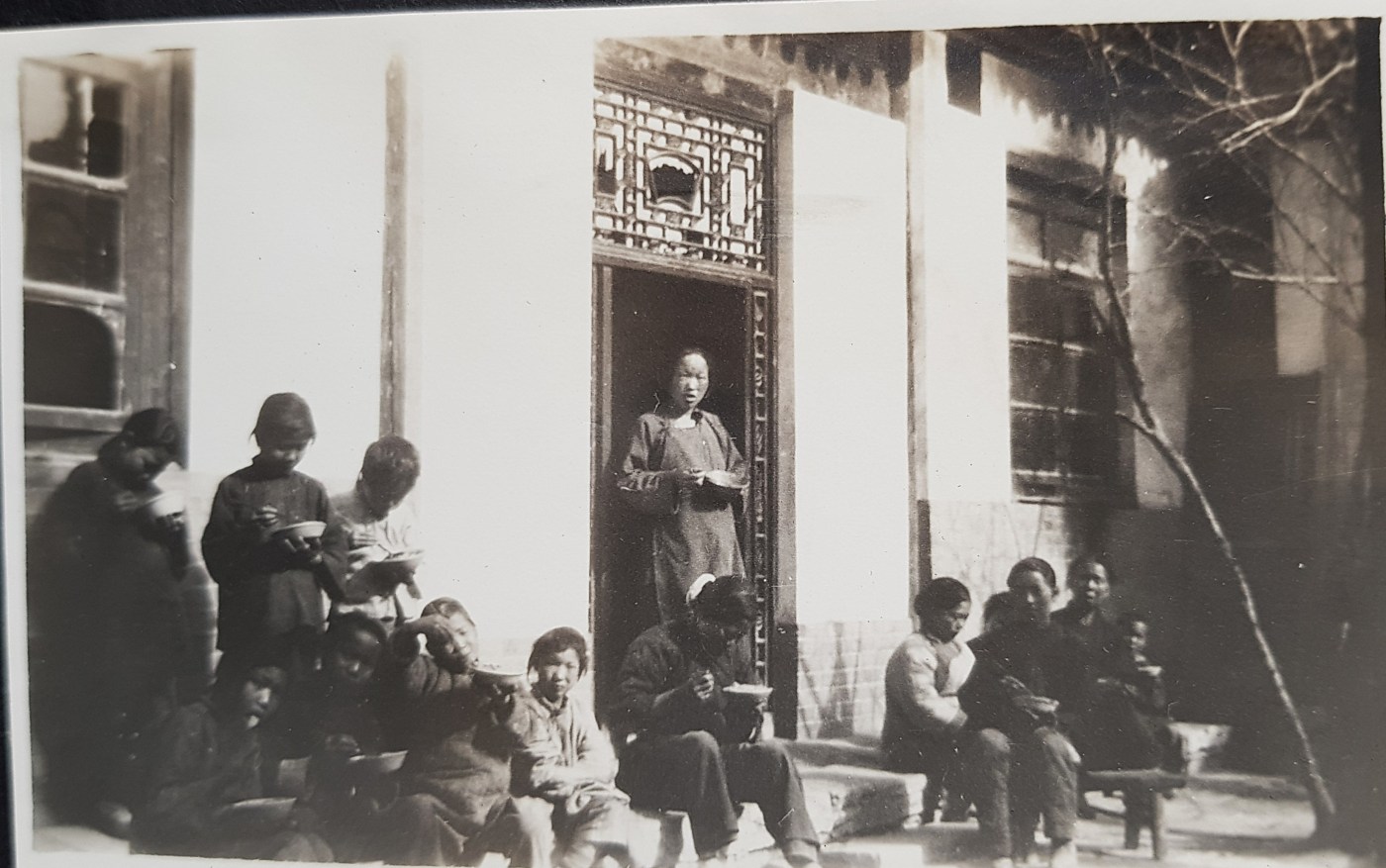
My great-grandparents wrote a lot about their missionary work in China, and through reading their accounts, you also get a glimpse of what life was like for the Chinese people in the areas where they worked. My great-grandmother Olga was a gifted writer who captured even the smallest details and had a keen eye for her patients’ living conditions and family life.
In this passage, we meet Mr. Wan and his wife as they struggle to make ends meet while also trying to make room in their lives for their newfound faith in God. The episode takes place during the Second Sino-Japanese war (1937-1945).
Old Wan and His Wife
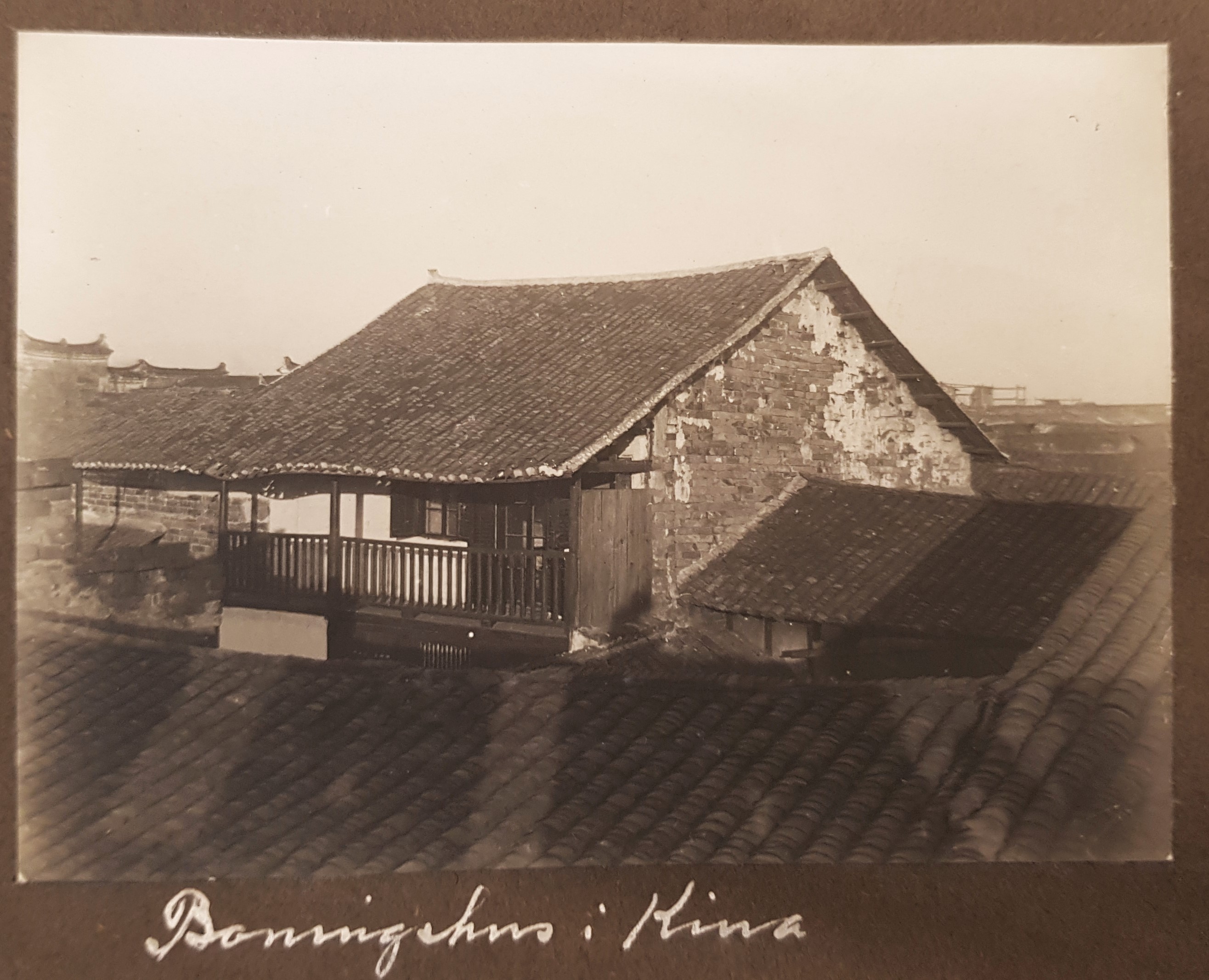
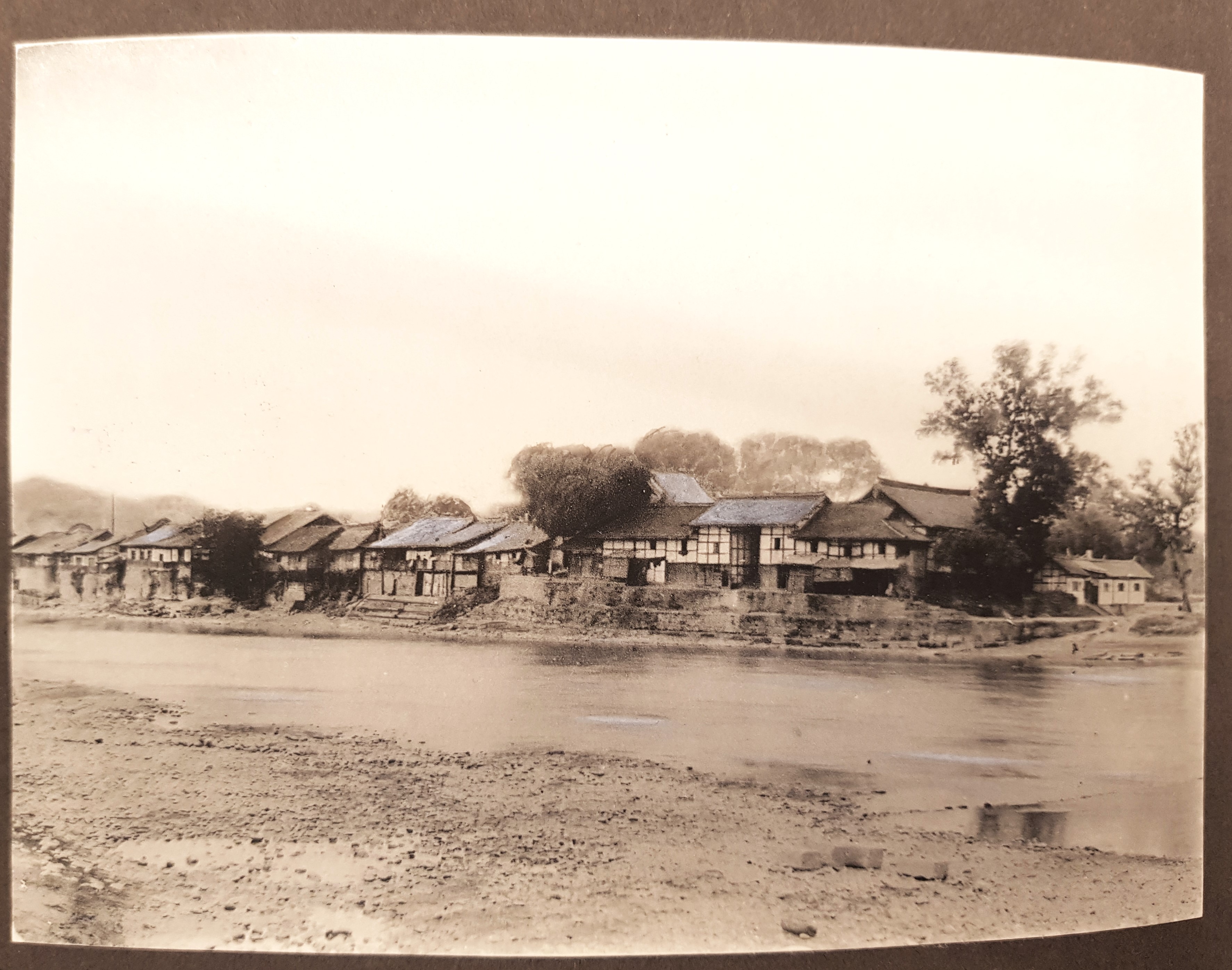
These two lived in a miserable little hut. It consisted of only one small room, and more than half of the room was taken up by the “kang”*, on which they slept. There they also had to sit when they ate or did any handwork. This was especially so during the cold season. At other times they could sit anywhere outdoors. Their food was also cooked outside, in a shed which they shared with their neighbours.
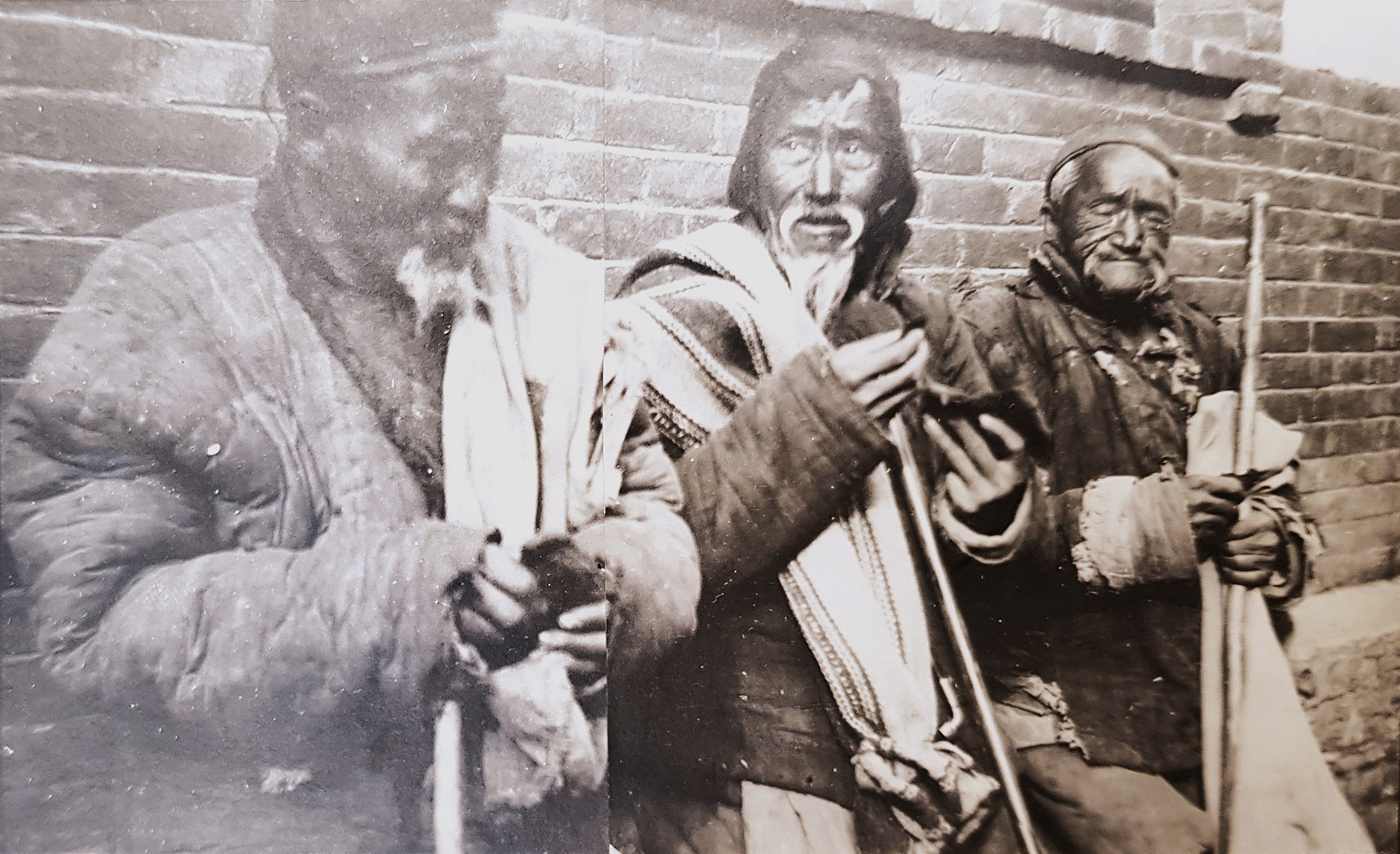
But Mrs. Wan was happy and content. She had found the true joy, the joy of belonging to the Lord. This was the great happiness of her life. Everything else seemed to mean so little to her. Whenever she came in contact with people, she spoke to them about this and urged them also to believe in Christ. To earn a little money, she used to spin cotton or wash clothes for others who could afford to hire someone to do such work.
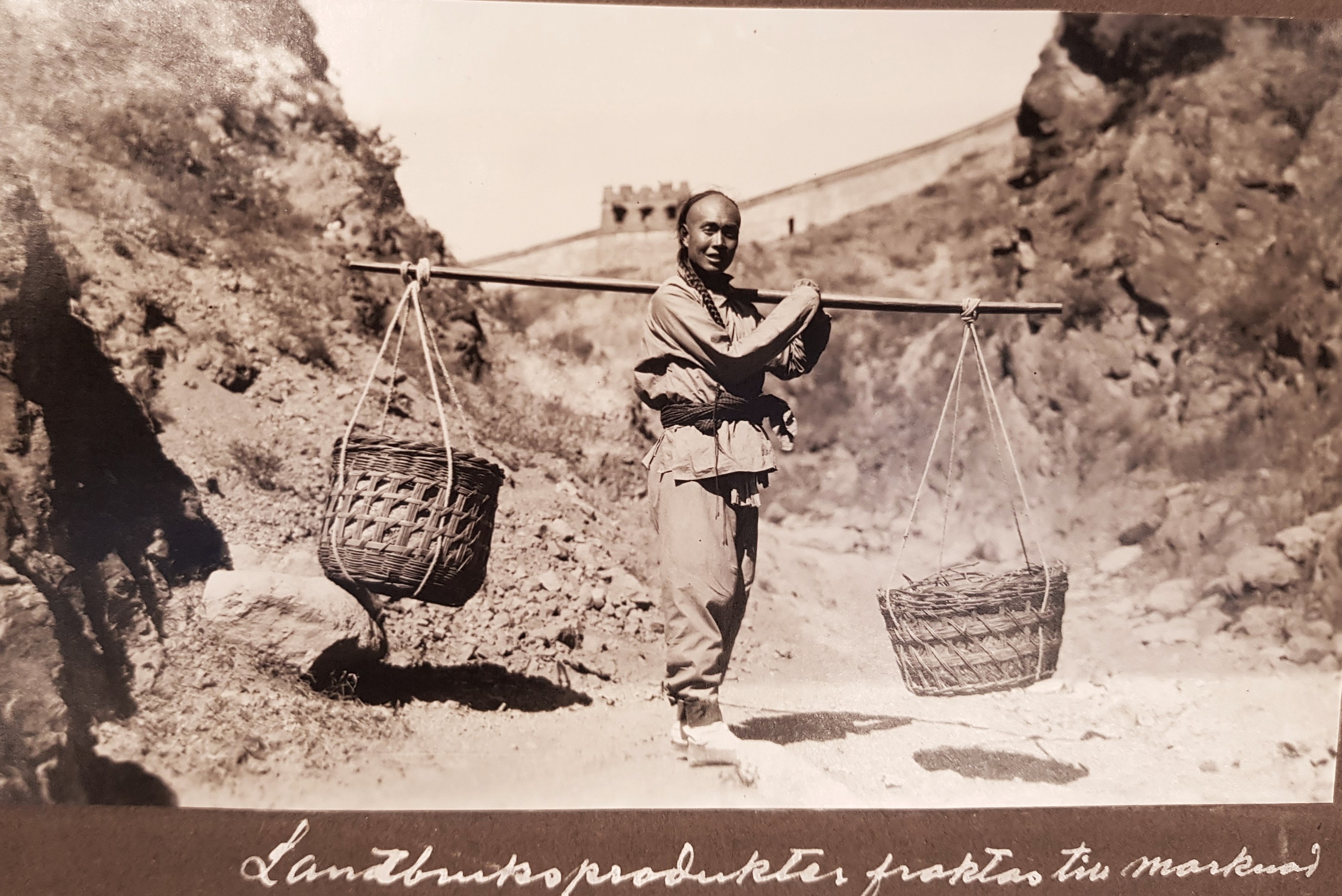
Wan himself mostly went outside the town to gather grass and twigs for fuel. Some of it was for their own use, and some he sold. It did not bring him much, but he also took whatever work came his way.
One evening a neighbour came to him and said that he could earn ten dollars the next day by helping the military, as they were to receive wheat in sacks which would be sent to the front. It was a good offer, but the next day was Sunday, and also the congregation’s autumn gathering. Mrs. Wan wanted her husband to attend the services and did not think he ought to go.
But the neighbour managed to persuade him. He thought that, since they were so poor, they should not let such a good opportunity slip away. Mrs. Wan went to the service, while her husband went to the grain depot and helped there, much to her sorrow.
She was sad that her husband was using the Sunday to earn money, when he could instead have heard so much good from the Word of God. In the evening, when the work at the grain depot was finished and they were to receive their pay, old Wan saw that some of the men who had been helping were hiding empty sacks under their clothes. He gave in to temptation and did the same.
An investigation followed, and strangely enough, old Wan was the only one who was caught. The sack was found, and he was put in prison for a few days. He was not paid for his work either, since he had tried to steal.
When his wife heard what had happened, she simply said: “Well, that serves him right. He is not honest. I wanted him to come with me to the service, but he wanted to earn money even though it was Sunday. He might as well spend a little time in prison. He is not honest, no, he is not honest.”
“But surely you must still take him some food. He will not get any food in prison,” I said.
“He may as well go hungry for a while when he behaves like that,” she answered.
The next day, however, she took some food to him, and he probably also received a moral lecture from his honest wife. After a couple of days he was released, just as poor as before, but surely he had learned a useful lesson.
Towards the New Year, Wan began to suffer pain in one of his knees, but he did not say much about it. His wife was very particular that both he and she should kneel on the kang when they prayed to God. Despite his painful knee, he did as she wished.
It must have caused him great pain, but she did not know how bad it was, since he had said nothing about it. On one occasion, when our Bible woman was out visiting homes, she had visited the Wan family. When she came home, she told me how ill Mr. Wan was.
She had seen his leg, which was red and swollen from above the knee all the way down to the foot. I went there with her and began to care for his leg every day. I opened the abscess and did everything I could for him. But his condition was very serious, and since he lived far away and his leg needed attention several times a day, I decided to try to bring him to the mission station.
I spoke to our gatekeeper, Wang, about it, and he said he was willing to borrow a wheelbarrow, make a bed for Wan in it, and push him to the station. And that is what he did. When he reached our gate and could not bring the wheelbarrow inside, he took the old man on his back and carried him into the guest room, laying him on the kang, where he himself also had his place.
Mrs. Wan was also able to come and stay with us in the women’s quarters. She could cook for her husband and help him in various ways. Wan’s leg was in a terrible state, and it took a long time before he recovered.
But at last that day came, to the great joy of us all. Then the question arose as to where they were to live again. They could not afford to rent a room, and the home they had lived in before was already occupied by other poor people.
Our boys’ school building stood empty, as we could not hold boys’ school during the war with Japan. The authorities in the town would not allow it, for the danger of bombardment was too great.
Only one family now lived there, serving as gatekeepers. We thought that one of the rooms, which was not very large, might suit the Wan family. I paid for a new door, a lock, and a few other things that were needed, and then they were able to move in.
Despite its simplicity, it was so much better than the place they had lived in before. They were very grateful. They were also now close to the chapel, and old Wan was glad to be able to attend the services. He showed his gratitude for the help he had received in many ways. But during the months of his illness, his eyes had also been opened to the grace of God. He was a changed man.
This is just a little account of the medical work I carried on out there in China. I loved that work, but during my last period out there I only took in Christians and their relatives. Medical care in China had greatly improved in recent years, as doctors and nurses trained at Western hospitals had begun receiving patients in their own hospitals and clinics. I did not wish to compete with them, as they did not look kindly upon such competition. Besides, I had more than enough patients among the members of the congregation, the schoolchildren, and others – even more than I could manage alongside my evangelistic work, with meetings, home and village visits, courses, and the like.”
I find this episode, from my great-grandmother Olga’s book, about Mr. Wan, who first tries to earn some money for his family by working for the military, only to end up caught stealing and loosing both his earnings and his freedom, quite tragic and fascinating. I think Olga included this story because it conveys several “life lessons”, such as “he who grasps at too much loses everything”, as well as the idea that once you have found God, He will see to it that you are taken care of. It was, of course, a matter of hygiene not to let good Christians suffer – why else would they keep believing? And what good would the missionaries be if they did not help their congregation?
But the story also shows how Olga took her nursing very seriously – even moving Mr. and Mrs. Wang to the mission station, finding them another place to live. The way she helped the Chinese, she must have built a lot of trust between herself and her congregation members.
* The “kang” was a bedstove made out of brick where most of the activities took place during the cold season.
Photo at the top: Chinese gathering outside the mission station. Photo: Olga Styrelius.
Continue the story
Before this: Read about Robert and Dagny, how they cared for their patients, and how Dagny used the “kang” when socialising with the Chinese women at the mission station; The Doctor Is In – Thérèse Amnéus
The People: Read about an important person in my grandmother Edna’s life – her nanny Li-Niang: The Hero Behind the Scenes – Thérèse Amnéus
The Places: Interested in how the missionaries lived? Meet Olga as she tries to make a home in China: Moving on, moving in – Thérèse Amnéus
Next: Curious about Chinese traditions around New Year – read more here: Celebrating and harvesting – Thérèse Amnéus


Tack kära Thèrese för ditt sista utskick. Fantastiskt att läsa!! Jag läste även om “the opium asylum” som Robert startade och där kunde hjälpa 100-tals personer… Även Dagny nämns ju. Bl.a. att hon lagade mat, ibland upp till 80 personer!!!!! Hur kunde hon klara av allt detta….
Var har du hittat allt detta?
LikeLike